

Egypt’s inflation eases to 10.3% in September as price pressures cool 

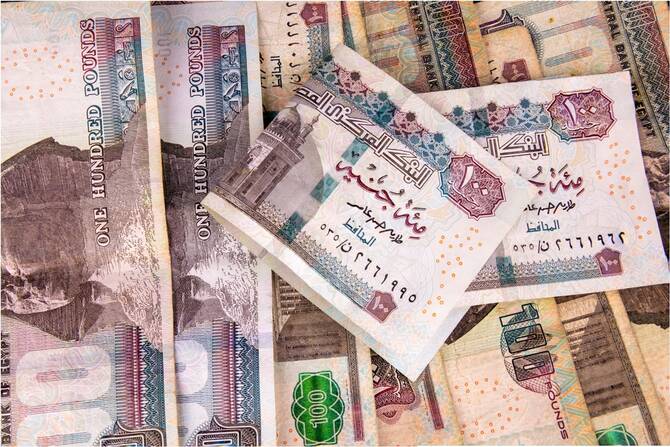
Egypt’s inflation peaked at around 33.2 percent in September 2023 but has steadily eased. Shutterstock
Short Url
Updated 08 October 2025
Follow

Egypt’s inflation eases to 10.3% in September as price pressures cool 

RIYADH: Egypt’s inflation slowed for a fourth consecutive month in September, easing to 10.3 percent year on year as consumer price pressures continued to moderate, official data showed. 

The Central Agency for Public Mobilization and Statistics said the Consumer Price Index rose 1.5 percent month on month to 260.9 points, driven mainly by higher housing and utility costs. 

Egypt’s inflation peaked at around 33.2 percent in September 2023 but has steadily eased since the government secured an $8 billion loan program from the International Monetary Fund in March 2024, which helped stabilize the currency and support policy reforms. 

In its latest release, CAPMAS stated: “Housing, water, electricity, gas and fuel section recorded an increase of 3.4 percent due to an increase in prices of the actual rental group of houses by 1.3 percent, calculated rent group of houses by 7.1 percent, and group of maintenance and repair of houses by 1.4 percent.”  

The report added that expenses for water and miscellaneous services related to housing increased by 0.2 percent, while electricity, gas, and fuel prices rose by 0.3 percent. 

Another key driver in September was the food and beverages sector, which increased by 1.9 percent. This section saw a 12.2 percent rise in vegetable prices, a 3.5 percent increase in fruits, and a 0.3 percent rise in meat and poultry expenses. 

The alcoholic beverages and tobacco segment witnessed a monthly rise of 0.8 percent, while the health care sector saw an increase of 0.4 percent. 

Within healthcare, outpatient service costs climbed 0.8 percent in September compared to the previous month, while hospital expenses rose 1 percent over the same period. 

On an annual basis, alcoholic beverages and tobacco prices surged 25.3 percent, followed by housing, water, electricity, and fuel, which went up 18.2 percent. 

The food and beverages category recorded a 0.3 percent increase year on year, while clothing and footwear costs advanced 14.4 percent during the same period. 

In February, global credit rating agency Moody’s affirmed Egypt’s Caa1 long-term foreign and local currency rating with a positive outlook. 

It stated that the positive outlook reflected the government’s measures to control inflation and interest rates. 

Earlier this month, Egypt’s Central Bank slashed interest rates by 100 basis points, marking the fourth reduction this year, citing subdued inflationary pressures amid economic growth of about 5 percent in the second quarter. 


Education spending surges 251% as students return from autumn break: SAMA

Updated 12 December 2025
Follow

Education spending surges 251% as students return from autumn break: SAMA

RIYADH: Education spending in Saudi Arabia surged 251.3 percent in the week ending Dec. 6, reflecting the sharp uptick in purchases as students returned from the autumn break.

According to the latest data from the Saudi Central Bank, expenditure in the sector reached SR218.73 million ($58.2 million), with the number of transactions increasing by 61 percent to 233,000.

Despite this surge, overall point-of-sale spending fell 4.3 percent to SR14.45 billion, while the number of transactions dipped 1.7 percent to 236.18 million week on week.

The week saw mixed changes between the sectors. Spending on freight transport, postal and courier services saw the second-biggest uptick at 33.3 percent to SR60.93 million, followed by medical services, which saw an 8.1 percent increase to SR505.35 million.

Expenditure on apparel and clothing saw a decrease of 16.3 percent, followed by a 2 percent reduction in spending on telecommunication.

Jewelry outlays witnessed an 8.1 percent decline to reach SR325.90 million. Data revealed decreases across many other sectors, led by hotels, which saw the largest dip at 24.5 percent to reach SR335.98 million. 

Spending on car rentals in the Kingdom fell by 12.6 percent, while airlines saw a 3.7 percent increase to SR46.28 million.

Expenditure on food and beverages saw a 1.7 percent increase to SR2.35 billion, claiming the largest share of the POS. Restaurants and cafes retained the second position despite a 12.6 percent dip to SR1.66 billion.

Saudi Arabia’s key urban centers mirrored the national decline. Riyadh, which accounted for the largest share of total POS spending, saw a 3.9 percent dip to SR4.89 billion, down from SR5.08 billion the previous week.

The number of transactions in the capital settled at 74.16 million, down 1.4 percent week on week.

In Jeddah, transaction values decreased by 5.9 percent to SR1.91 billion, while Dammam reported a 0.8 percent surge to SR713.71 million.

POS data, tracked weekly by SAMA, provides an indicator of consumer spending trends and the ongoing growth of digital payments in Saudi Arabia. 

The data also highlights the expanding reach of POS infrastructure, extending beyond major retail hubs to smaller cities and service sectors, supporting broader digital inclusion initiatives. 

The growth of digital payment technologies aligns with the Kingdom’s Vision 2030 objectives, promoting electronic transactions and contributing to the nation’s broader digital economy.