

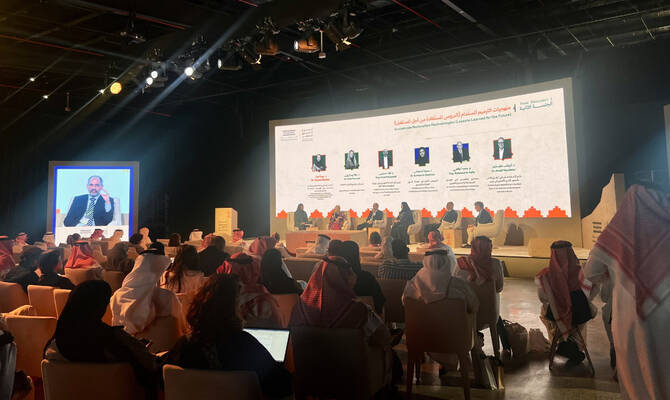
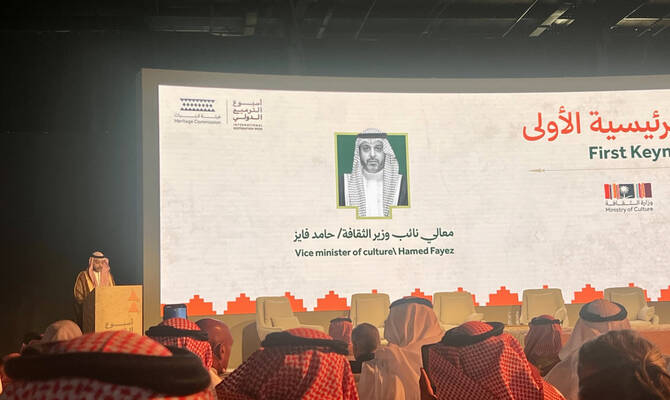


RIYADH: The first International Restoration Week exhibition has opened in Diriyah’s Jax district, bringing together world leaders in cultural preservation.
The five-day event, organized by Saudi Arabia’s Heritage Commission with the Italian Association for Restoration, runs until Oct. 5. As well as highlighting the latest architectural conservation technologies, it will foster collaboration between local and international experts.
Mohammed Al-Mandiel, general manager of Cultural Events and Activations at the Heritage Commission, told Arab News: “The aim of the exhibition is to showcase the latest technology being used in the restoration of architectural heritage sites and (advance) the exchange of knowledge and expertise among professionals, highlighting the efforts of the Heritage Commission in restoring historical sites and fostering collaboration between companies and experts.”
With 20 companies from 12 countries taking part, visitors will have access to panels, exhibitions, workshops, side discussions and cultural activities.
Al-Mandiel added: “It’s a big chance for people, companies and experts to meet in one place. Restoration is a very sensitive topic, so it’s very important that we bring the international expertise (together) with the local expertise.”
He added the event was about networking and finding chances to work towards achieving Saudi Vision 2030. The Kingdom is home to many historical sites and has eight UNESCO World Heritage sites.
The event is held in partnership with the Diriyah Gate Development Authority, the Royal Commission for AlUla, King Abdulaziz Foundation for Research and Archives, the Royal Commission for Riyadh City, Aseer Development Authority, King Fahd University of Petroleum and Minerals, Imam Turki Bin Abdullah Royal Reserve, and the Jeddah Historic District Program.
Day one opened with panel discussions featuring experts on topics such as “International Efforts in the Restoration of Architectural Heritage Landmarks and Assets,” “Sustainable Restoration Methodologies” and “Innovative Technological Solutions in Restoration.”
While the exhibition primarily targets professionals in the field, it also seeks to engage the wider public.
Workshops on Al-Qatt Al-Asiri engraving and plaster restoration carving were hosted by the Royal Institute of Traditional Arts (known as Wrth), while Misk Art Institute presented live drawing and sculpting sessions. Visitors also enjoyed the Heritage Cinema and Theater.
Carlo Baldocci, the Italian ambassador to the Kingdom, praised the initiative during his keynote speech.
“Saudi Arabia is a nation of remarkable innovation, geographically vast, culturally diverse, historically rich,” he said. “The country holds treasure of inestimable value, and what is perhaps even more inspiring is the strategic importance that the Saudi leadership has placed on culture and innovation as key pillars of Vision 2030.”
He added: “In a time of rapid transformation and growth, Saudi Arabia is sending a powerful message: The future must be built with full awareness of the past and progress must be rooted in identity.” It was a message that resonated deeply with his country, he said, which also believes cultural roots are essential to the vitality of the present and future.
The Heritage Commission has more than 34,000 registered assets under its care nationwide. It stresses the importance of restoration not only as a preservation tool, but also as a way to revitalize historic sites and strengthen cultural identity in a sustainable manner.


