

Iraq resumes Kurdish oil exports to Turkiye after 2-1/2-year halt

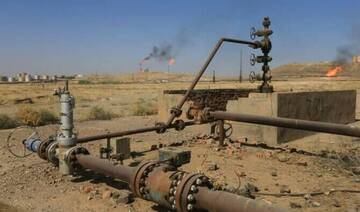
Crude oil flowed on Saturday through a pipeline from the semi-autonomous Kurdistan region in northern Iraq to Turkey for the first time in 2-1/2 years, after an interim deal broke a deadlock, Iraq's oil ministry said. (AFP/File)
Short Url
Updated 27 September 2025
Follow

Iraq resumes Kurdish oil exports to Turkiye after 2-1/2-year halt

  • “Operations started at a rapid pace and with complete smoothness without recording any significant technical problems,” the ministry said
  • Al-Najjar, said his country can export more than it is now after the resumption of flows via the Kirkuk-Ceyhan pipeline

BAGHDAD: Crude oil flowed on Saturday through a pipeline from the semi-autonomous Kurdistan region in northern Iraq to Turkiye for the first time in 2-1/2 years, after an interim deal broke a deadlock, Iraq’s oil ministry said.
The resumption started at 6 a.m. local time (0300 GMT), according to a statement from the ministry.
“Operations started at a rapid pace and with complete smoothness without recording any significant technical problems,” the ministry said.
The agreement between Iraq’s federal government, the Kurdistan regional government (KRG) and foreign oil producers operating in the region will allow 180,000 to 190,000 barrels per day of crude to flow to Turkiye’s Ceyhan port, Iraq’s oil minister told Kurdish broadcaster Rudaw on Friday.

US PRESSURE TO RESUME KURDISH FLOWS
The US had pushed for a restart, which is expected to eventually bring up to 230,000 bpd of crude back to international markets at a time when OPEC+ is boosting output to gain market share.
Iraq’s delegate to the Organization of the Petroleum Exporting Countries, Mohammed Al-Najjar, said his country can export more than it is now after the resumption of flows via the Kirkuk-Ceyhan pipeline, in addition to other planned projects at Basra port, state news agency INA reported on Saturday.
“OPEC member states have the right to demand an increase in their (production) shares especially if they have projects that led to an increase in production capacity,” he said.
Iraq’s oil ministry undersecretary Bassem Mohamed told Reuters that the resumption of Kurdish oil flows will help raise the country’s exports to nearly 3.6 million bpd in the coming days.
Iraq’s production and export levels will remain within its OPEC quota of 4.2 million bpd, he said.
Iraq, the group’s largest overproducer, was among states that submitted updated plans to OPEC in April to make further oil output cuts to compensate for pumping above agreed quotas.
Flows through the Kirkuk-Ceyhan pipeline were halted in March 2023 when the International Chamber of Commerce ordered Turkiye to pay Iraq $1.5 billion in damages for unauthorized exports by the Kurdish regional authorities.
Turkish Energy Minister Alparslan Bayraktar also confirmed the resumption of oil exports to Turkiye from Iraq in a post on X.

SETTLING OUTSTANDING DEBTS
The preliminary plan, agreed last Wednesday, calls for the KRG to commit to delivering at least 230,000 bpd to Iraq’s state oil marketer SOMO, while keeping an additional 50,000 bpd for local use, according to Iraqi officials with knowledge of the agreement.
An independent trader will handle sales from the Turkish port of Ceyhan using SOMO’s official prices.
For each barrel sold, $16 is to be transferred to an escrow account and distributed proportionally to producers, with the rest of the revenue going to SOMO, the officials said.
Norway’s DNO said it had no immediate plans to export through the pipeline but that its local buyers could still ship its crude through it. The company and its joint-venture partner Genel Energy have said the issue of Kurdistan’s around $1 billion in arrears to producers, of which DNO is owed about $300 million, needs to be addressed.
The eight oil companies that signed the deal and the KRG have agreed to meet within 30 days of exports resuming to work on a mechanism for settling the outstanding debts.


UN, aid groups warn Gaza operations at risk from Israel impediments

Updated 18 December 2025
Follow

UN, aid groups warn Gaza operations at risk from Israel impediments

  • Dozens of international aid groups face de-registration by December 31, which then means they have to close operations within 60 days

UNITED NATIONS: The United Nations and aid groups warned on Wednesday that humanitarian operations in the Palestinian territories, particularly Gaza, were at risk of collapse if Israel does not lift impediments that include a “vague, arbitrary, and highly politicized” registration process.
Dozens of international aid groups face de-registration by December 31, which then means they have to close operations within 60 days, said the UN and more than 200 local and international aid groups in a joint statement.
“The deregistration of INGOs (international aid groups) in Gaza will have a catastrophic impact on access to essential and basic services,” the statement read.
“INGOs run or support the majority of field hospitals, primary health care centers, emergency shelter responses, water and sanitation services, nutrition stabilization centers for children with acute malnutrition, and critical mine action activities,” it said.

SUPPLIES LEFT OUT OF REACH: GROUPS
While some international aid groups have been registered under the system that was introduced in March, “the ongoing re-registration process and other arbitrary hindrances to humanitarian operations have left millions of dollars’ worth of essential supplies — including food, medical items, hygiene materials, and shelter assistance — stuck outside of Gaza and unable to reach people in need,” the statement read.
Israel’s mission to the United Nations in New York did not immediately respond to a request for comment on the statement. Under the first phase of US President Donald Trump’s Gaza plan, a fragile ceasefire in the two-year-old war between Israel and Palestinian militants Hamas began on October 10. Hamas released hostages, Israel freed detained Palestinians and more aid began flowing into the enclave where a global hunger monitor said in August famine had taken hold.
However, Hamas says fewer aid trucks are entering Gaza than was agreed. Aid agencies say there is far less aid than required, and that Israel is blocking many necessary items from coming in. Israel denies that and says it is abiding by its obligations under the truce.
“The UN will not be able to compensate for the collapse of INGOs’ operations if they are de-registered, and the humanitarian response cannot be replaced by alternative actors operating outside established humanitarian principles,” the statement by the UN and aid groups said.
The statement stressed “humanitarian access is not optional, conditional or political,” adding: “Lifesaving assistance must be allowed to reach Palestinians without further delay.”