UN warns of deepening ethnic violence in Sudan

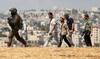
Sudan's brutal war has intensified since the start of the year, with surging numbers of summary executions and a deeply worrying increase in ethnic violence, the United Nations said Friday. (AFP/File)
Short Url
Updated 19 September 2025
Follow

UN warns of deepening ethnic violence in Sudan

  • Turk warned in a statement of “increasing ethnicization of the conflict” between the regular armed forces and RSF
  • His office detailed in a fresh report how the war had expanded and intensified further during the first six months of the year

GENEVA: Sudan’s brutal war has intensified since the start of the year, with surging numbers of summary executions and a deeply worrying increase in ethnic violence, the United Nations said Friday.

The UN rights chief Volker Turk warned in a statement of “increasing ethnicization of the conflict” between the regular armed forces and the paramilitary Rapid Support Forces (RSF), which has gripped Sudan since April 2023.

The “forgotten” conflict has already killed tens of thousands and displaced millions.

And Turk’s office detailed in a fresh report how the war had expanded and intensified further during the first six months of the year, “taking on increasingly ethnic and divisive dimensions, with a devastating impact on the civilian population.”

In North Darfur particularly, “violence is being directed on an ethnic basis,” Li Fung, the rights office representative for Sudan, told reporters in Geneva.

“This is very, very worrying,” she said.

The war has effectively split the country, with the army holding the north, east and center, while the RSF dominates parts of the south and nearly all of the western Darfur region.

The first half of the year saw “a continued pervasiveness of sexual violence, indiscriminate attacks, and the widespread use of retaliatory violence against civilians, particularly on an ethnic basis,” Friday’s report said.

New trends include the use of drones in attacks on civilian sites and in the north and east of the country, which have up to now been largely spared by the war, it said.

- ‘Reprisals’ -

The rights office said it had documented the deaths of at least 3,384 civilians in the conflict in the first six months of 2025, but acknowledged the true numbers were likely far higher.

That represents about 80 percent of the total number of killings documented in the whole of last year, it said.

Most of the civilians killed died in the hostilities, but at least 990 civilians were killed outside the fighting, including through summary executions, the office said.

It noted “a surge in summary executions” between February and April in Khartoum as government forces recaptured territory previously controlled by RSF, and “campaigns of apparent reprisals against alleged collaborators ensued.”

The conflict in Sudan has created what the UN has called the world’s worst humanitarian crisis, with famine declared in several areas and a severe cholera outbreak.

More than 2,500 people have already died of the acute intestinal infection in the country, the International Committee of the Red Cross said, citing figures from Sudanese authorities.

That “is a big, big number, ... that will certainly increase,” Patrick Youssef, ICRC’s regional director for Africa, told reporters in Geneva.

Turk urged a rapid end to the conflict.

“Many more lives will be lost without urgent action to protect civilians and without the rapid and unhindered delivery of humanitarian aid,” he said.


Trial opens in Tunisia of NGO workers accused of aiding migrants

Updated 59 min 7 sec ago
Follow

Trial opens in Tunisia of NGO workers accused of aiding migrants

  • Aid workers accused of assisting irregular migration to Tunisia went on trial on Monday, as Amnesty International criticized what it called “the relentless criminalization of civil society”

TUNIS: Aid workers accused of assisting irregular migration to Tunisia went on trial on Monday, as Amnesty International criticized what it called “the relentless criminalization of civil society” in the country.
Six staff members of the Tunisian branch of the France Terre d’Asile aid group, along with 17 municipal workers from the eastern city of Sousse, face charges of sheltering migrants and facilitating their “illegal entry and residence.”
If convicted, they face up to 10 years in prison.
Migration is a sensitive issue in Tunisia, a key transit point for tens of thousands of people seeking to reach Europe each year.
A former head of Terre d’Asile Tunisie, Sherifa Riahi, is among the accused and has been detained for more than 19 months, according to her lawyer Abdellah Ben Meftah.
He told AFP that the accused had carried out their work as part of a project approved by the state and in “direct coordination” with the government.
Amnesty denounced what it described as a “bogus criminal trial” and called on Tunisian authorities to drop the charges.
“They are being prosecuted simply for their legitimate work providing vital assistance and protection to refugees, asylum seekers and migrants in precarious situations,” Sara Hashash, Amnesty’s deputy MENA chief, said in the statement.
The defendants were arrested in May 2024 along with about a dozen humanitarian workers, including anti-racism pioneer Saadia Mosbah, whose trial is set to start later this month.
In February 2023, President Kais Saied said “hordes of illegal migrants,” many from sub-Saharan Africa, posed a demographic threat to the Arab-majority country.
His speech triggered a series of racially motivated attacks as thousands of sub-Saharan African migrants in Tunisia were pushed out of their homes and jobs.
Thousands were repatriated or attempted to cross the Mediterranean, while others were expelled to the desert borders with Algeria and Libya, where at least a hundred died that summer.
This came as the European Union boosted efforts to curb arrivals on its southern shores, including a 255-million-euro ($290-million) deal with Tunis.