

GCC central banks cut interest rates by 25 bps following Fed’s move 

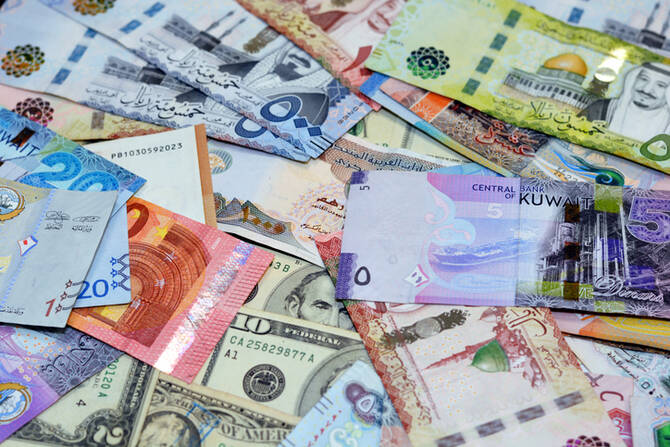
Most regional currencies are pegged to the US dollar, meaning policymakers across the Gulf mirrored the Fed’s decision. Getty
Short Url
Updated 18 September 2025
Follow

GCC central banks cut interest rates by 25 bps following Fed’s move 

RIYADH: Central banks in Gulf Cooperation Council countries cut interest rates by 25 basis points after the US Federal Reserve lowered its benchmark range to 4 percent to 4.25 percent, its first reduction since December. 

The Saudi Central Bank, also known as SAMA, reduced its repurchase agreement rate to 4.75 percent and its reverse repo to 4.25 percent. The UAE cut the base rate on overnight deposits from 4.40 percent to 4.15 percent, while Bahrain lowered its overnight deposit rate to 4.75 percent from 5 percent. 

With most regional currencies pegged to the US dollar, policymakers across the Gulf mirrored the Fed’s decision.  

Vijay Valecha, chief investment officer at Century Financial, said: “Although rate cuts generally reduce returns from traditional investments like fixed deposits, they may encourage gains in the stock market, especially for growth stocks and dividend-paying companies.”    

He added: “Dovish expectations have put additional pressure on the US dollar, pushing it below 97. A weaker dollar indirectly supports the UAE’s tourism sector by making travel more affordable for visitors from non-dollar regions. However, businesses in the UAE that rely on imports could face increased costs, as a softer dollar typically raises import prices.”  

Repo rates, which represent a form of short-term borrowing primarily involving government securities, underscore the close economic ties and financial dynamics between the GCC countries and the global economic landscape, particularly the US. 

Qatar Central Bank reduced the deposit rate by 25 basis points to 4.35 percent, cut the lending rate by 25 basis points to 4.85 percent, and lowered the repo rate by 25 basis points to 4.60 percent.  

The Central Bank of Oman also decreased its repo rate for local banks by 25 basis points to 4.75 percent. 

The Central Bank of Kuwait cut the discount rate by a quarter percentage point from 4 percent to 3.75 percent, while Jordan’s central bank also mirrored the Fed’s move. 

The rate cut is expected to boost economic activity by reducing financing costs, thereby increasing investment and consumption. 

Its objective is to maintain a balance between fostering sustainable growth across various economic sectors and reinforcing the financial and monetary stability of regulated banking units.  

The Fed’s moves come as recent data show US growth cooling in the first half of the year, with hiring slowing, unemployment edging up, and inflation remaining elevated. 

In a statement, the Fed said it would continue to assess incoming data, the economic outlook and risks before adjusting rates further, while remaining committed to bringing inflation back to 2 percent.   

“The Committee would be prepared to adjust the stance of monetary policy as appropriate if risks emerge that could impede the attainment of the Committee’s goals,” it added. 

The statement further indicated that the committee will base its evaluations on a broad set of data, including labor market trends, inflation dynamics and expectations, as well as financial and global economic developments. 


PIF-backed AviLease achieves revenue of $664m and 19% growth in 2025

Updated 27 February 2026
Follow

PIF-backed AviLease achieves revenue of $664m and 19% growth in 2025

RIYADH: Saudi Arabia’s Public Investment Fund-backed AviLease achieved exceptional performance and sustainable business growth during 2025, supported by the strategic expansion of its global platform.

According to its financial results for 2025, AviLease recorded total revenues of $664 million, an annual increase of 19 percent, driven by disciplined growth in its asset portfolio and strong performance in aircraft remarketing amid sustained global demand for modern, fuel-efficient aircraft, the Saudi Press Agency reported.

Profit before tax doubled compared to the previous year, reaching $122 million. The year witnessed an expansion in AviLease’s portfolio, reaching 202 owned and managed aircraft, leased to over 50 airline companies in more than 30 countries. 

The total value of the company’s assets stabilized at $9.3 billion. AviLease maintained a 100 percent fleet utilization rate, reflecting the resilience of its business model, the efficiency of its asset management, and the strength of its strategic relationships with airlines around the world.

AviLease concluded purchase agreements for aircraft from Airbus, including the A320neo family and A350F, and Boeing 737 aircraft, aiming to enhance its future asset portfolio with modern, fuel-efficient aircraft. This step will contribute to supporting future growth and meeting increasing customer demand for the latest aircraft, aligning with the Kingdom’s ambitions to become a leading global aviation hub.

AviLease strengthened its prestigious credit standing by obtaining a strong Baa2 credit ratings from Moody’s and BBB from Fitch, reflecting its financial solidity, managerial discipline, and efficiency in managing leverage. The company also successfully issued senior unsecured bonds worth $850 million last November under Regulation 144A/RegS. This issuance contributed to diversifying its funding sources and enhancing its financial flexibility.

Commenting on the results, AviLease CEO Edward O’Byrne said: “This exceptional performance reflects the quality of the company’s investment portfolio, the strength of its partnerships with airlines, and its strategic focus on responsibly deploying capital into highly sought-after, efficient, modern aircraft assets.”

He added: “As aviation markets continue to grow, AviLease is strategically positioned to continue its expansion plans and deliver sustainable long-term value for shareholders, contributing to the Kingdom’s ambitions.”

Throughout 2025, AviLease continued to play a pivotal role in the Kingdom’s growing aviation sector and contributed directly to the launch and scaling of the new national carrier, Riyadh Air, by completing a sale and leaseback transaction for a Boeing 787-9 aircraft, which thereby became the first aircraft to join the airline’s fleet.

AviLease also established a strategic partnership with Hassana Investment Co. This partnership aims to provide an opportunity for local and international investors to enter the aircraft financing asset class and benefit from AviLease’s technical expertise and operational capabilities to support partnership growth and enhance performance. 

Hassana Investment Co. has agreed to acquire an initial portfolio of 10 modern aircraft from AviLease.