

Saudi Arabia joins global community in marking International Ozone Day

1 / 2
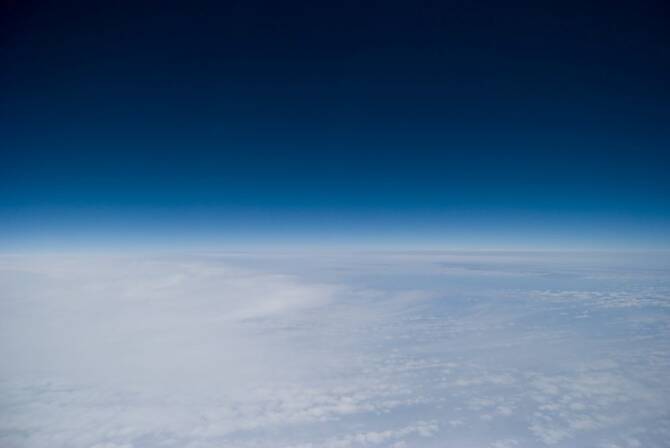
Saudi Arabia joins the global community each year on Sept. 16 to commemorate International Day for the Preservation of the Ozone Layer. (Source: Flickr/Gerald Patterson)
2 / 2
Saudi Arabia joins the global community each year on Sept. 16 to commemorate International Day for the Preservation of the Ozone Layer. (X/@MEWA_KSA)
Short Url
Updated 16 September 2025
Follow

Saudi Arabia joins global community in marking International Ozone Day

  • Ozone treaties have epitomized the concept of moving from science to global action
  • Mohammed Faisal: Beyond its direct commitments under the Montreal Protocol, the Kingdom integrates ozone layer protection within its broader environmental strategies

RIYADH: Saudi Arabia joins the global community each year on Sept. 16 to commemorate International Day for the Preservation of the Ozone Layer, marking the 1987 signing of the Montreal Protocol, one of the most successful environmental agreements in history.

Scientific confirmation of the depletion of the ozone layer prompted the international community to establish a mechanism for cooperation to take action to protect the ozone layer. This was formalized in the Vienna Convention for the Protection of the Ozone Layer, which was adopted and signed by 28 countries on March 22, 1985.

Forty years ago, nations came together under the Vienna Convention and agreed to take appropriate measures to protect people and the planet from harmful UV radiation entering through a potentially damaged ozone layer.

Two years later the Montreal Protocol was adopted in 1987 and chlorofluorocarbons — chemicals used in refrigeration, aerosol sprays and foam production — started being phased out, setting the ozone layer on the road to recovery.

The ozone treaties have epitomized the concept of moving “from science to global action,” which is the theme this year for International Day for the Preservation of the Ozone Layer.

Saudi Arabia joins the global community each year on Sept. 16, strengthening its commitment to international and regional agreements focused on preserving the ozone layer.

Through active engagement in global environmental protection and sustainability initiatives, it has established a leadership role both regionally and globally, particularly in environmental protection and ozone layer efforts.

This positive role extends to implementing technical initiatives and projects, in collaboration with the public and private sectors, aimed at gradually phasing out ozone-depleting substances, particularly in the insulation, refrigeration and air-conditioning industries.

Mohammed Faisal, a botany professor at King Saud University, told Arab News: “Beyond its direct commitments under the Montreal Protocol, the Kingdom integrates ozone layer protection within its broader environmental strategies, most notably the Saudi Green Initiative and Vision 2030. These frameworks emphasize emissions reduction, investment in clean energy and sustainable development — goals that naturally intersect with ozone preservation.

“In parallel with policy and regulatory measures, Saudi Arabia is building a vast network of protected areas and nature reserves that reflect its commitment to environmental stewardship,” he said. “These reserves conserve biodiversity, restore fragile ecosystems, and indirectly support ozone and climate protection by encouraging sustainable land use and reducing ecological stress.” 

A notable example is the Farasan Islands Marine Protected Area in the Red Sea, a biodiversity-rich sanctuary that protects coral reefs and mangroves. Such ecosystems act as natural carbon sinks and vital buffers against climate change, reinforcing the Kingdom’s broader environmental and climate goals, he added.

The ozone layer has continued to heal, putting it on track for full recovery by mid-century, the UN said on Tuesday.

Released on the International Day for the Preservation of the Ozone Layer, the latest bulletin from the World Meteorological Organization showed that the ozone hole in 2024 was smaller than in recent years. While naturally occurring atmospheric factors were responsible for low levels of depletion, the long-term trend was positive, the UN body said.

The layer’s loss was once seen as humanity’s most pressing environmental challenge. The ozone layer, a region of the earth’s stratosphere, serves as a protective shield against the sun’s ultraviolet radiation, exposure to which can result in increased risks of skin cancer, cataracts and ecosystem damage.


Saudi meteorology center warns of heavy rain across Kingdom, public told to avoid flood-prone areas

Updated 14 December 2025
Follow

Saudi meteorology center warns of heavy rain across Kingdom, public told to avoid flood-prone areas

  • Stay away from valleys and waterways at least until Thursday, Civil Defense cautions
  • National Center for Meteorology center warns of possible thunderstorms and dust storms

RIYADH: Saudi Arabia’s National Center for Meteorology (NCM) has warned of thunderstorms across the Kingdom that could lead to flash floods, and officials cautioned the public against venturing in low-lying places prone to flooding.

In its weather forecast for Sunday, the meteorology center said “moderate to heavy thunderstorms are expected, leading to flash floods, accompanied by hail showers and active winds that will stir up dust and sand” in several provinces of the Kingdom.

These include Riyadh, Qassim, Hail, Madinah, Makkah, Al-Baha, Asir, Jazan and parts of the Eastern Province. Light to moderate storms are expected in parts of the Northern Borders, Al-Jouf and Tabuk, the NCM said.

In a separate advisory, the General Directorate of Civil Defense urged the public to avoid places prone to flash floods and valleys at least until December 18.

 A lake forms in the desert following days of rain in Rafha city in the Northern Borders Province, near the Saudi border with Iraq. (SPA)

Since the past few days, various parts of Saudi Arabia had been blessed with light to moderate rain as full winter weather set in.

In separate reports, the Saudi Press Agency published images of beautiful landscapes that have emerged after being revitalized by rain.

Deserts rejuvenated

Among these are Al-Nafud (The Great Nafud Desert) in the Kingdom’s north, where moderate to heavy rainfall have “transformed the landscape, turning the golden sand dunes into stunning formations,” and also created streams and lakes.

Plants are beginning to sprout in Al-Nafud Desert after getting rain. (SPA)

“The cool weather has since made the Nafud a prime destination for desert and camping enthusiasts from inside and outside (Rafha) governorate,” SPA said.

Rain have also rejuvenated the Imam Turki Bin Abdullah Royal Reserve, the Kingdom’s second-largest nature reserve, spanning parts of the Northern Borders, Hail, Qassim, Al-Jouf and Eastern Province.

In the Northern Borders province, the Wadi Arar has come alive, refilling the province’s 11 operational dams. 

With streams flowing into Wadi Arar, dams in the Northern Borders province are being replenished. (SPA)

“The deserts of Arar City ... have become an enchanting destination for hikers and nature enthusiasts following recent rainfall. The resulting rainfalls have created a stunning scenery, with flowing streams winding through sand dunes and ravines,” SPA said.

Cool, verdant mountains 

In Asir and adjacent provinces in the southwest, fog shrouding mountain peaks and the city of Abha have resulted in beautiful winter sceneries, attracting nature lovers and photography enthusiasts.

Abha city in Asir shrouded with fog as full winter weather sets in. (SPA)

Futher south in Najran province, days of rain have increased vegetation cover and revitalized the valley’s natural streams.

One of the foremost attractions is the Wadi Mughaydid on the slopes of the Sarawat range’s Maghra Mountains in northwest Najran, renowned for its pristine natural beauty.

Stretching 25 kilometers from Bir Askar Park to Shaab Baran, the valley’s unique geography combines verdant plains with towering mountains, making it an ideal destination for hiking and nature enthusiasts, according to SPA.

View of Wadi Mughaydid in Najran coming to life following days of rain. (SPA)