
LONDON: The first people charged with supporting Palestine Action after the UK government banned it as a “terror” group appeared in court in London on Tuesday.
Hundreds of people have been arrested at protests accused of showing support for the pro-Palestinian organization since it was proscribed by the UK government in July.
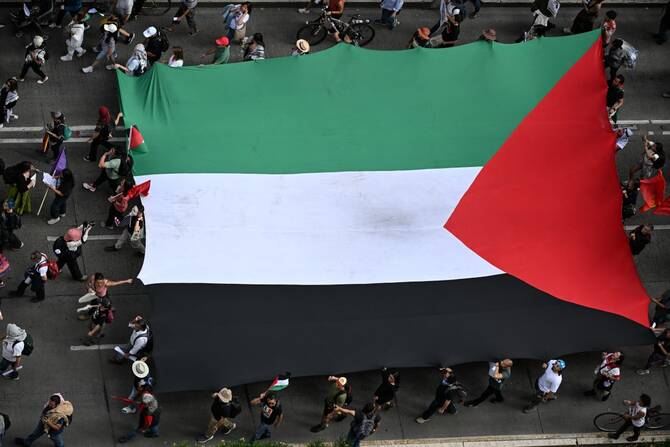
The trio who appeared on Tuesday, two of whom are in their 70s, were greeted outside Westminster Magistrates’ Court by several dozen supporters, some chanting slogans and waving Palestinian flags.
Inside, more supporters packed the public gallery.
Jeremy Shippam, 72, Judit Murray, 71, and Fiona Maclean, 53, all entered not guilty pleas and were released on bail until a trial set for March 16 next year.
They were arrested after a protest in Westminster on July 5, when London’s Metropolitan Police detained 41 people for allegedly supporting the group.
They are accused of displaying an article in a public place and arousing reasonable suspicion that they are a supporter of a proscribed organization, according to the charge sheet.
The charges come under section 13 of the Terrorism Act 2000.
They allegedly held placards reading “I oppose genocide, I support Palestine Action” prior to their arrest.
The government proscribed Palestine Action following several acts of vandalism, including against two planes at a Royal Air Force base which caused an estimated £7.0 million ($10 million) in damage.
At the time, Palestinian Action said: “Despite publicly condemning the Israeli Government, Britain continues to send military cargo, fly spy planes over Gaza and refuel US/Israeli fighter jets.”
“Britain isn’t just complicit, it’s an active participant in the Gaza genocide and war crimes across the Middle East.”
Critics of the ban, including the United Nations, have condemned it as legal overreach and a threat to free speech.
Kay Wagland, a fellow protester and friend of one of those charged, told AFP the government had banned a “non-violent direct action group as terrorist.”
“That means no-one can take any physical action. The protests are about this being a bad law,” the 66-year-old retired environmental projects manager said.
“It is a slippery slope,” warned another supporter, 69-year-old retired boat driver Sarah Green.
Since the ban came into force, there have been multiple protests and arrests.
Police said earlier this month they had arrested 890 people in one London protest on September 6, the majority under anti-terror laws.
Organizers of that protest, campaign group Defend our Juries (DOJ), said the rally had been the “picture of peaceful protest.”
Most demonstrators charged face six months in jail but organizers could be sentenced to up to 14 years if found guilty.
Six activists appeared in court on September 4 charged with “various offenses of encouraging support for a proscribed terrorist organization,” relating to 13 online meetings they attended to allegedly prepare for protests to support Palestine Action over the summer.