

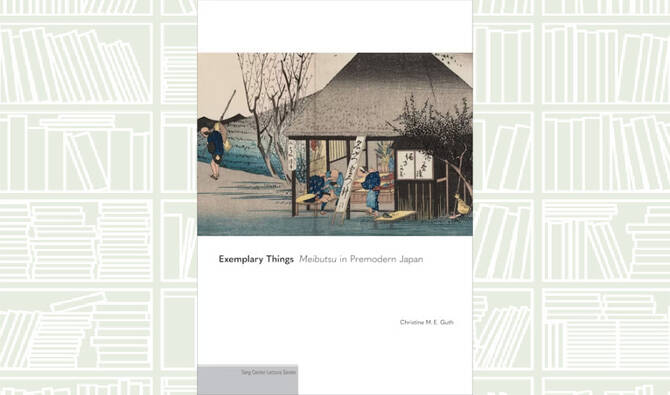
What We Are Reading Today: Exemplary Things by Christine M. E. Guth

Short Url
Updated 13 September 2025
Follow

What We Are Reading Today: Exemplary Things by Christine M. E. Guth

The Japanese term meibutsu refers to things of the highest cultural value, evolving over time to encompass both craft and fine art, high and low culture, and manufactured and natural items.

Material goods designated as meibutsu range from precious art objects to regional products like bamboo baskets and ceramics.

“Exemplary Things” traces the history of this epistemic classificatory system in Japanese culture from its elite origins in the fifteenth century to its commercial appropriation today.


Book Review: ‘Demons’ by Fyodor Dostoevsky

Updated 10 December 2025
Follow

Book Review: ‘Demons’ by Fyodor Dostoevsky

Fyodor Dostoevsky’s “Demons” (1872) is a powerful exploration of politics, ideology, and morality in 19th‑century Russia. The novel examines the rise of radical movements and their ability to destabilize personal lives and entire communities.

Set in a provincial town, the story blends first‑person and third‑person omniscient narration to portray a society losing its moral anchor. Dostoevsky presents nihilism as a force that erodes shared values, leading to alienation and unrest.

At its center is Stepan Verkhovensky, an aging scholar dependent on his patron, Varvara Stavrogina. Their strained relationship reflects an older generation of intellectuals that has lost its sense of purpose.

The return of Stepan’s son, Pyotr, brings a more dangerous energy. Charismatic and manipulative, he forms a secret revolutionary group intent on overturning the social order. Varvara’s son, Nikolay, becomes a pivotal figure. Intelligent and emotionally detached, he drifts between conscience and corruption.

Characters such as Shatov, a disillusioned former radical, and Darya, Varvara’s apprentice, struggle to find clarity amid the faction’s deceit and fanaticism.

Without revealing specifics, the novel culminates in a violent act by Pyotr’s circle that reshapes the narrative and exposes the destructive cost of unchecked ideology.

More than 150 years after its publication, “Demons” remains resonant, offering a timeless reflection on belief, ambition, and the cost of losing one’s moral compass.