



LOWER DIR, Pakistan: The wooden roof of a classroom in the Sabar Shah Primary School hung loose earlier this month, its cracked walls lined with nervous children who shuffle in every morning despite the danger.
They sit at their desks watching the ceiling instead of their books, each rumble of thunder a reminder that the roof could collapse at any time.
Since mid-August, heavy monsoon rains have battered Pakistan’s northwestern Khyber Pakhtunkhwa (KP) province, damaging 704 schools — 669 partially and 35 completely — according to the provincial Elementary and Secondary Education Department. Nationwide, over 900 people have been killed since the monsoon season started on June 26, at least 411 of them in KP.
In the province’s Lower Dir district, the worst-affected in terms of school damage, more than 100 buildings have been hit, leaving thousands of children struggling to continue their education inside unsafe classrooms.
“After the cracks occurred in the walls, we can not focus on our studies because we have the damage to the school building in our mind,” said Abdullah, a 10-year-old third grader. “Since we have no other nearby government school, I have to pursue my education in this same school, whatever the circumstances may be, but my studies are impacted, and I fear for my future.”
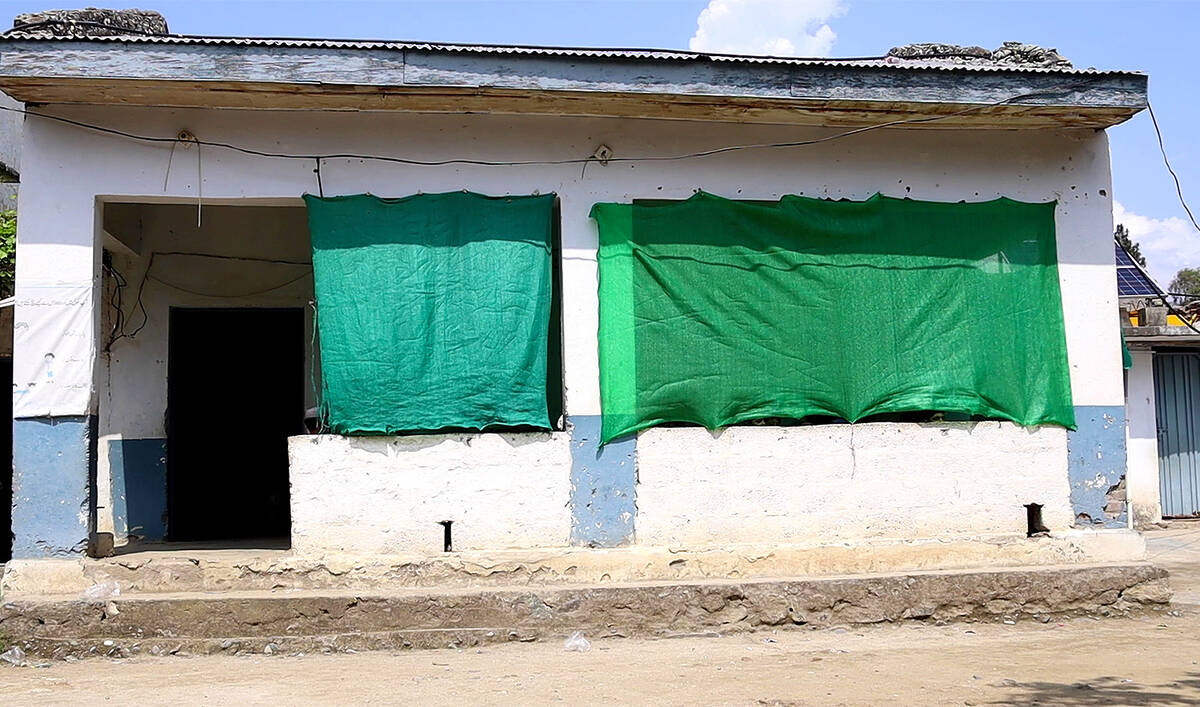
The picture taken on September 4, 2025, shows Sabar Shah Primary School destroyed by rains in Pakistan's northwestern Lower Dir district (AN Photo)
Pakistan already has one of the world’s highest numbers of out-of-school children — more than 26 million, according to UNICEF and UNESCO. Teachers and parents warn that the damage to schools in KP risks pushing even more children out of classrooms, as families weigh education against safety.
Hifza Hayat, an 11-year-old in fourth grade, recalled a frightening moment when wood from the roof fell during a lesson.
“The General Science class was in progress and there were clouds,” she said. “The dangling plywood fell on the fan and was pushed to the side.”
She said the fear has made it harder to learn.

A boy peeps through a broken classroom window of the Sabar Shah Primary School in Pakistan's northwestern Lower Dir district on September 4, 2025. (AN Photo)
“During the lessons in the classroom, we look more into the roof and walls,” she said. “We are always double-minded, we can’t remember lessons properly. The studies have been impacted badly, and the situation has left an impact on our minds. If this continues, I would not be able to study.”
Muhammad Yasir, who teaches science and is the school’s in-charge, said the building had been in poor condition even before the recent rains worsened it. Around 300 children are enrolled, and classes are often shifted outdoors when the weather turns threatening.
“When it rains, or even when we see clouds in the sky, we take the students outside and give lessons under the open sky,” he said.
“It is difficult to teach with proper concentration under such circumstances, hence the teaching and learning abilities are significantly impacted.”
“MOUTH OF DEATH”
Deputy District Education Officer Fayaz Ud Din confirmed that Lower Dir had the highest number of damaged schools in the province, adding that he had informed the provincial government that 31 schools needed urgent repair:
“The situation for the children’s education is dire after the rains, as the damage is causing the future of thousands to be in danger and keeping the children in school is a challenge. They need very rapid restoration and a lot of resources to accommodate all these children.”
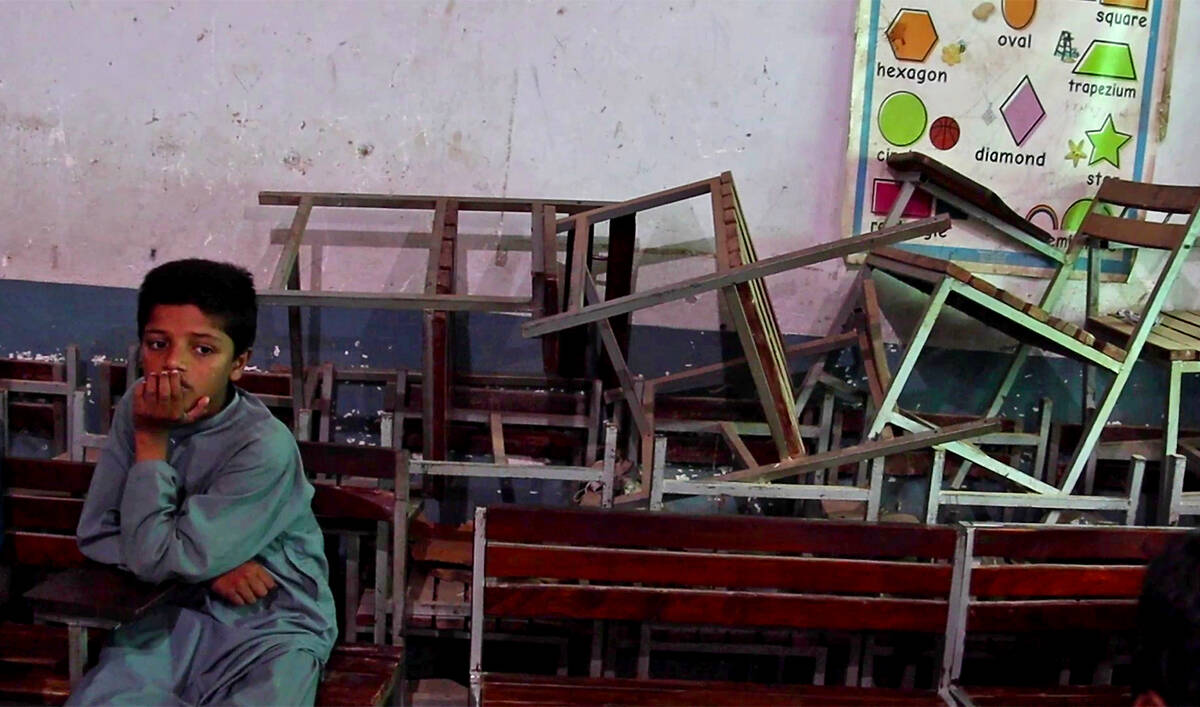
A student sits next to pile of broken chairs at the Sabar Shah Primary School in Pakistan's northwestern Lower Dir district on September 4, 2025. (AN Photo)
KP Education Minister Faisal Tarakai admitted some schools were so severely damaged that it was not possible to hold classes there. He said the provincial government was in talks with the United Nations and private institutions to ensure repairs.
“We will do whatever is possible,” Tarakai told media recently, “but we will not let a single child be deprived of education.”
Parents are not convinced and said they were torn between ensuring their children’s safety and keeping them in school.
Muhammad Islam, who has four children enrolled, described the daily anxiety of sending them into a damaged building.
“Every morning it feels like sending them into the mouth of death, not knowing whether they will return alive,” he said.
“It has become a constant trauma. I don’t want my children to die. The situation has made me think on withdrawing my children from the school. If no proper measures are taken, I will withdraw my children from the school once this annual session concludes.”

Children attend a class at Sabar Shah Primary School, destroyed by rains in Pakistan's northwestern Lower Dir district on September 4, 2025. (AN Photo)
Psychologists also warned that the dangers go beyond disrupted lessons.
“Children studying in damaged schools risk trauma and flashbacks, which can lead to Post-Traumatic Stress Disorder (PTSD),” said Khaista Nooreen, a clinical psychologist who works in a private hospital in Peshawar. “It can be seen in children who have gone through such traumas, and fears prevent them from doing well in their lives. in the future.”
For now, the fear is constant for Hayat and her classmates.
“Now when it rains, we worry the walls and the wood and the stones of the walls would fall on us,” she said. “We have no other option but to come to this school and study at God’s disposal.”


