

UN says over 200,000 Syrian refugees return from Lebanon

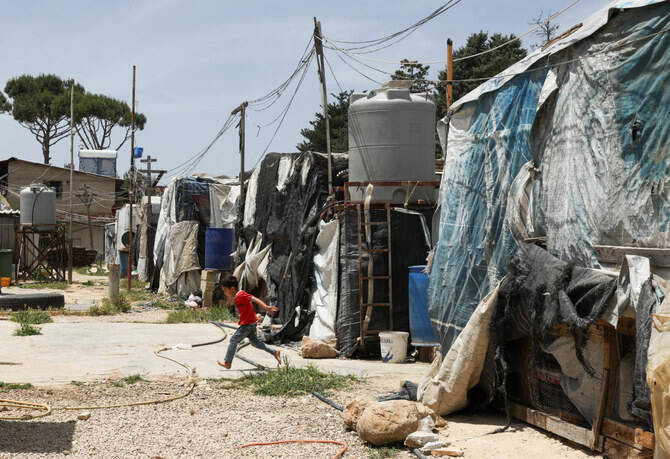
More than 200,000 Syrian refugees have returned to their homeland from neighbouring Lebanon this year following the fall of longtime ruler Bashar al-Assad, a United Nations official said. (Reuters/File)
Short Url
Updated 02 September 2025
Follow

UN says over 200,000 Syrian refugees return from Lebanon

  • Lebanese authorities recently introduced a plan offering $100 in aid and exemptions from fines for refugees leaving the country
  • “Since the beginning of this year, we’re looking at about 200,000 Syrians that have gone back,” said Clements

BEIRUT: More than 200,000 Syrian refugees have returned to their homeland from neighboring Lebanon this year following the fall of longtime ruler Bashar Assad, a United Nations official told AFP.

The Syrian civil war, which erupted in 2011 with Assad’s brutal repression of anti-government protests, displaced half of the population internally or abroad.

But the December 8 ouster of the former Syrian president at the hands of Islamist forces sparked hopes of return.

Lebanese authorities recently introduced a plan offering $100 in aid and exemptions from fines for refugees leaving the country, provided they pledge not to return as asylum seekers.

“Since the beginning of this year, we’re looking at about 200,000 Syrians that have gone back, most of them on their own,” said Kelly Clements, deputy high commissioner at the UN refugee agency (UNHCR).

“That number is increasing very quickly,” she told AFP in an interview.

While many Syrians are heading back to Hama, Homs and Aleppo, most refugees remain in Lebanon where humanitarian needs remain high amid shrinking aid budgets.

Clements stressed the UNHCR was not encouraging returns, describing it as “an individual choice for each family to make.”

Lebanese authorities estimate that the country hosts about 1.5 million Syrian refugees. The United Nations says it has registered more than 755,000.

UNHCR support for returnees includes small-scale housing repairs, cash assistance and core relief items, though more intensive reconstruction is beyond the agency’s capacity.

About 80 percent of Syrian housing was damaged during the civil war, with one in three families needing housing support, according to Clement.

The majority of Syrians who fled the 14-year civil war to Lebanon remain there, she noted, with needs remaining high as humanitarian aid decreases.

“You see the Lebanon budget decreasing, you see the Syrian budget increasing,” she said, pointing out however that the UNHCR’s 2025 plan only reached a fifth of its needed funds.

The agency is unable to determine whether Syria as a whole was safe to return to, she said, as parts of Syria were “safe and peaceful” while other parts were “less secure.”

According to the UN, over two million Syrian refugees and internally displaced people returned to their areas of origin since the Islamist-led offensive toppled Assad.

However, around 13.5 million Syrians remain displaced internally or abroad.

The new authorities are dealing with a devastated economy and destroyed infrastructure, with the majority of citizens living below the poverty line, according to the UN.

High-level Turkish team to visit Damascus on Monday for talks on SDF integration

Updated 5 sec ago
Follow

High-level Turkish team to visit Damascus on Monday for talks on SDF integration

  • The visit by Turkiye’s foreign and defense ministers and its intelligence chief comes amid efforts by Syrian, Kurdish and US officials to show some progress with the deal
ANKARA: A high-level Turkish delegation will visit Damascus on Monday to discuss bilateral ties and the implementation of a deal for integrating the Kurdish-led Syrian Democratic Forces (SDF) into ​Syria’s state apparatus, a Turkish Foreign Ministry source said.
The visit by Turkiye’s foreign and defense ministers and its intelligence chief comes amid efforts by Syrian, Kurdish and US officials to show some progress with the deal. But Ankara accuses the SDF of stalling ahead of a year-end deadline.
Turkiye views the US-backed SDF, which controls swathes ‌of northeastern Syria, as ‌a terrorist organization and has ‌warned of ⁠military ​action ‌if the group does not honor the agreement.
Last week Foreign Minister Hakan Fidan said Ankara hoped to avoid resorting to military action against the SDF but that its patience was running out.
The Foreign Ministry source said Fidan, Defense Minister Yasar Guler and the head of Turkiye’s MIT intelligence agency, Ibrahim Kalin, ⁠would attend the talks in Damascus, a year after the fall of ‌former President Bashar Assad.

TURKEY SAYS ITS ‍NATIONAL SECURITY IS AT ‍STAKE
The source said the integration deal “closely concerned Turkiye’s national ‍security priorities” and the delegation would discuss its implementation. Turkiye has said integration must ensure that the SDF’s chain of command is broken.
Sources have previously told Reuters that Damascus sent a proposal to ​the SDF expressing openness to reorganizing the group’s roughly 50,000 fighters into three main divisions and smaller ⁠brigades as long as it cedes some chains of command and opens its territory to other Syrian army units.
Turkiye sees the SDF as an extension of the outlawed Kurdistan Workers Party (PKK) militant group and says it too must disarm and dissolve itself, in line with a disarmament process now underway between the Turkish state and the PKK.
Ankara has conducted cross-border military operations against the SDF in the past. It accuses the group of wanting to circumvent the integration deal ‌and says this poses a threat to both Turkiye and the unity of Syria.