



TAIPEI: Veteran Pan Cheng-fa says he clearly remembers fighting for China against the Japanese in World War Two, but gets agitated when asked about the role of communist forces who at the time were in an uneasy alliance with his republican government.
“We gave them weapons, equipment — we strengthened them,” Pan, 99, said at an event in Taiwan’s capital Taipei to commemorate the 80th anniversary of the end of World War Two.
As China gears up for a mass military parade in Beijing next month to mark the war’s end, both Taiwan — whose formal name remains Republic of China — and the People’s Republic of China are locked in an increasingly bitter war of words about historical narrative and who should really be claiming credit for the victory.
Fighting in China began in earnest in 1937 with the full-scale Japanese invasion and continued until the surrender of Japan in 1945, when the island of Taiwan was handed over to the Republic of China after decades of Japanese rule.
“After Japan was taken down, (the communists’) next target was the Republic of China,” Pan added, referring to the resumption of the civil war which led to the victory of Mao Zedong’s forces and flight of the republican government to Taiwan in 1949.
The ruling Chinese Communist Party often reminds people of its struggle against the Japanese, but a lot of the fighting was done by the forces of Chiang Kai-shek’s republican government, and it was the Republic of China who signed the peace agreement as one of the allied nations.
“During the Republic of China’s war of resistance against Japan, the People’s Republic of China did not even exist, but the Chinese communist regime has in recent years repeatedly distorted the facts, claiming it was the Communist Party who led the war of resistance,” Taiwan’s top China-policy maker Chiu Chui-cheng said on August 15, the Japanese surrender anniversary.
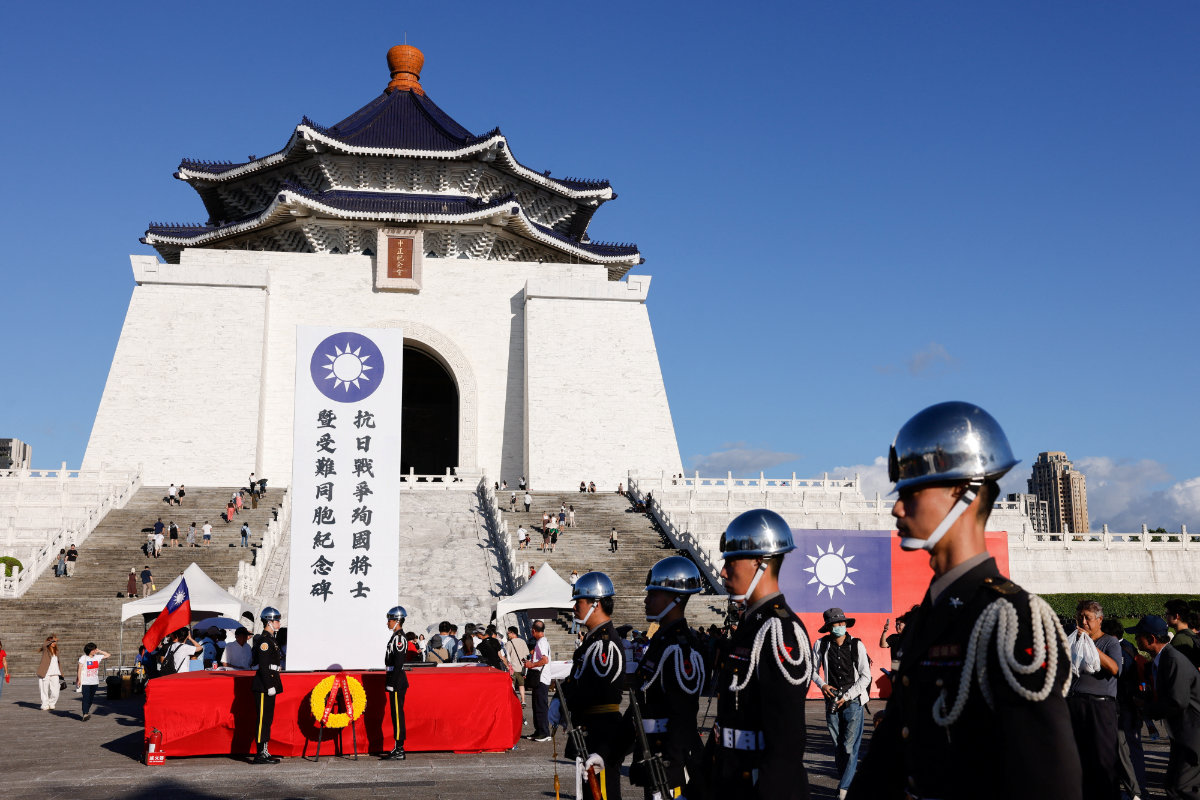
A wreath lies during an event to commemorate the 80th anniversary of the end of World War Two at Chiang Kai-shek Memorial Hall in Taipei, Taiwan, August 16, 2025. (REUTERS)
The Mainland Affairs Council, which Chiu heads, said this month that the communists’ strategy at the time was “70 percent about strengthening themselves, 20 percent dealing with republican government and 10 percent about opposing Japan,” repeating an old wartime accusation against Mao the Chinese Communist Party has denied.
Taiwan’s own anniversary events are much more low key, and don’t mention the role of the communists apart from to lambaste them.
A defense ministry concert on Thursday night in Taipei featured performers dressed as World War Two-era republican soldiers, images of the Flying Tigers — volunteer US pilots who flew for the republican Chinese air force — and rap by Taiwanese hip-hop group Nine One One.
“History affirms that the War of Resistance was led and won by the Republic of China,” the ministry said a performance program.
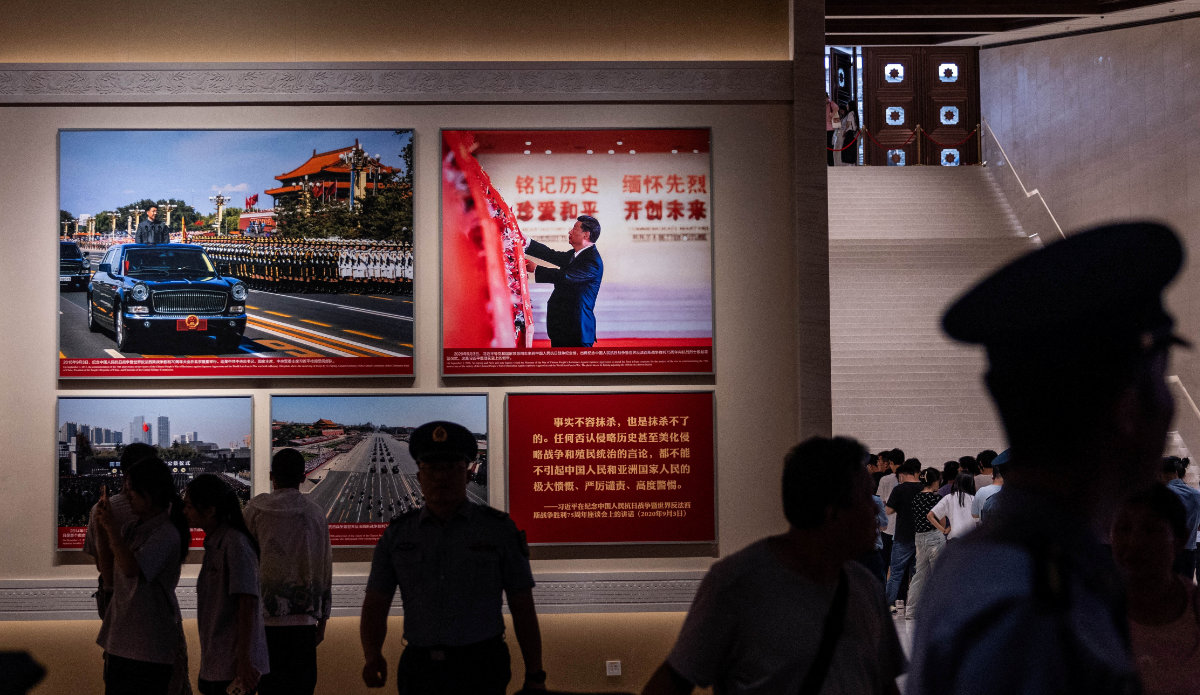
China has hit back at what it sees as misrepresentation of the Chinese Communist Party’s role.
On Tuesday, the party’s official People’s Daily wrote in an online commentary that vigilance was needed against efforts to “distort and falsify the Chinese Communist Party’s role as the country’s backbone” in fighting Japan.
China says the victory belongs to all Chinese people, including those in Taiwan, and is also celebrating the fact the war’s end in 1945 led to Taiwan — a Japanese colony from 1895 — being “returned” to Chinese rule as part of the peace agreement.
Caption
Taiwan says nothing in any agreements talked about handing over Taiwan to the Chinese Communist Party-run People’s Republic of China which was only founded in late 1949.
Taiwan’s President Lai Ching-te marked the surrender anniversary of August 15 with a Facebook post saying aggression will be defeated, in a pointed reference to Beijing’s military threats against the island.
The People’s Republic of China says it is the successor state to the Republic of China and that Taiwan is an inherent part of Beijing’s territory, a view Taipei’s government vehemently opposes.
Taiwan’s government has urged its people not to attend China’s military parade, warning against reinforcing Beijing’s territorial claims and backing its version of what the anniversary means.
Veteran Pan, who says family members left behind after the civil war were brutalized while he escaped to Taiwan, sees Beijing’s parade as having nothing to do with him.
“I can’t say anything good about the communists,” he said.


