WASHINGTON: US President Donald Trump said on Friday he would probably expand his crime crackdown to Chicago, intervening in another city governed by Democrats, and threatened to take full control of Washington, D.C., rather than only its policing.
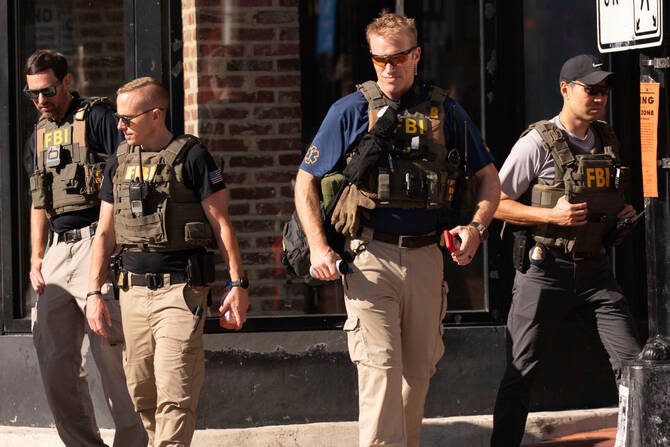
Saying without evidence that violent crime was out of control in the nation’s capital, Trump deployed D.C. National Guard soldiers and federal agents on the streets last week with a mandate to reduce crime.
“It was horrible and Mayor Bowser better get her act straight or she won’t be mayor very long, because we’ll take it over with the federal government, run it like it’s supposed to be run,” Trump told reporters, referring to Washington Mayor Muriel Bowser.
Recent statistics, which Trump dismissed, show crime has declined in the US capital since a 2023 peak.
Washington is a unique federal enclave, established in the US Constitution and falling under the jurisdiction of Congress, not belonging to any state.
In 1973, Congress passed the District of Columbia Home Rule Act, allowing residents to elect a mayor and council members.
Continuing his off-the-cuff remarks at the White House, Trump mused about extending his efforts to other cities. He has declined to explain how the federal government could intervene in local law enforcement in cities outside of the federal enclave of D.C.
“Chicago is a mess,” Trump said, deriding its mayor. “And we’ll straighten that one out probably next.”
Trump said some of his supporters in Chicago have been “screaming for us to come.”
“I did great with the Black vote, as you know, and they want something to happen,” he said. “So I think Chicago will be our next, and then we’ll help with New York.”
As in Washington, crime, including murders, has declined in Chicago in the last year.
Chicago Mayor Brandon Johnson said he took Trump’s comments seriously but has not received formal communication from the administration about federal law enforcement or military deployments.
The mayor said Trump’s approach has been “uncoordinated, uncalled for and unsound.” He added: “There are many things the federal government could do to help us reduce crime and violence in Chicago, but sending in the military is not one of them.”
New York City, also criticized by Trump, has reported a steady decline in violent crime in recent decades, and now has a relatively low murder rate among big American cities. Trump also threatened federal government intervention in San Francisco, another city governed by Democrats.
While the Republican president has cast his efforts as an urgent move to help residents feel safe again, Democrats and other critics say he aims to expand the powers of the president beyond the bounds of the Constitution and assert federal control over cities run by Democratic officials.
The US Constitution’s Tenth Amendment generally prevents the federal government from commandeering state or municipal officials and from intervening in states’ legal and criminal justice systems unless citizens’ constitutional rights are being violated.

Trump threatens federal intervention in Chicago, government takeover in D.C.
Short Url
https://arab.news/mwyxp
Trump threatens federal intervention in Chicago, government takeover in D.C.
- Chicago, other cities do not share D.C.’s federal status
- Violent crime has fallen in Washington, Chicago, data shows
Venezuela says exiles welcome to return following mass amnesty
QUATIRE: Interim president Delcy Rodriguez promised Monday that Venezuelans in exile would be welcomed back with open arms following a new amnesty law passed after the US ouster of Nicolas Maduro, as authorities continued to slowly release prisoners.
“I am telling you: the doors of Venezuela, the arms of the Venezuelan people, are open to those who want to return in this process of healing from hatred,” she said in a televised address.
An estimated seven million Venezuelans have fled their homeland due to the political and economic crisis and many opposition figures live in exile.
A total of 34 prisoners were released Monday from the Rodeo I penitentiary east of Caracas to scenes of joy from waiting relatives.
Among those freed were military cadets accused of plotting a coup, as well as civilians linked to alleged assassination conspiracies — categories of prisoners some fear the amnesty law wouldn’t cover.
Grecia Arana ran and leapt into the arms of her husband Reinardo Morillo as he crossed the threshold into freedom.
“This is how I dreamed it,” she told AFP, laughing.
Scenes of celebration at the prison gates included several prisoners with shaved heads who shouted “We are free!” as they exited, ending an anguished wait by their families.
“We are completely free, without any restrictions,” Luis Viera, one of the released prisoners, told AFP. He had been locked up for 13 months.
At the same time, the country’s authorities are pressing for the release of Maduro, who is jailed in the United States.
Addressing the UN Human Rights Council in Geneva, Venezuela’s Foreign Minister Yvan Gil Pinto demanded the toppled president’s immediate release.
Maduro, who was captured in a January 3 raid by the United States, is in custody in New York along with his wife, awaiting trial on drug trafficking charges.
The 63-year-old has pleaded not guilty and declared that he is a “prisoner of war.”
“January 3, 2026, marked a turning point of extreme gravity,” Gil told the top UN rights body, adding that the “illegal military action” by US forces left over 100 people killed.
- ‘Reconciliation’ aim -
Gil stressed that his country was “working toward a process of acknowledging past wounds, forgiveness and reconciliation,” referring to the amnesty law.
The country’s legislature unanimously adopted the landmark law last Thursday, and interim leader Rodriguez hailed its passage, describing it as a step toward “a more democratic, fairer, freer Venezuela.”
Rodriguez’s brother, parliament chief Jorge Rodriguez, said 1,500 people had applied for the amnesty, which covers a range of charges used to lock up dissidents during 27 years of hard-line socialist rule.
Some 600 political prisoners remain behind bars throughout the country, according to Foro Penal — an NGO dedicated to the defense of political prisoners.
Approximately 500 people have been released since January.
- Thaw with West -
Opposition figures have criticized the new legislation, which appears to exclude some offenses previously used to target Maduro’s political opponents. Nor does it include military offenses, such as attempted coups.
Since Maduro’s ouster, Rodriguez has worked closely with the United States, and the amnesty law has helped accelerate a thaw in Venezuela’s ties with the broader West.
The European Union’s top diplomat Kaja Kallas said Monday she would propose lifting EU sanctions on Rodriguez, who previously served as Maduro’s vice president.
Elsewhere, the UN rights office said it was in talks with Caracas to reopen its mission in Venezuela. Its staff were expelled in February 2024.
In a further sign of a break with the past, Rodriguez dismissed from her cabinet the wife of Alex Saab, a businessman accused of serving as Maduro’s frontman in corruption schemes.
Saab was indicted in the United States for money laundering but returned to Venezuela in 2024 as part of a prisoner swap to take up the role of industry minister.
Rodriguez removed him from his position in January.
On Monday, she sacked his wife, Camilla Fabri, who served as deputy minister for international communication.
“I am telling you: the doors of Venezuela, the arms of the Venezuelan people, are open to those who want to return in this process of healing from hatred,” she said in a televised address.
An estimated seven million Venezuelans have fled their homeland due to the political and economic crisis and many opposition figures live in exile.
A total of 34 prisoners were released Monday from the Rodeo I penitentiary east of Caracas to scenes of joy from waiting relatives.
Among those freed were military cadets accused of plotting a coup, as well as civilians linked to alleged assassination conspiracies — categories of prisoners some fear the amnesty law wouldn’t cover.
Grecia Arana ran and leapt into the arms of her husband Reinardo Morillo as he crossed the threshold into freedom.
“This is how I dreamed it,” she told AFP, laughing.
Scenes of celebration at the prison gates included several prisoners with shaved heads who shouted “We are free!” as they exited, ending an anguished wait by their families.
“We are completely free, without any restrictions,” Luis Viera, one of the released prisoners, told AFP. He had been locked up for 13 months.
At the same time, the country’s authorities are pressing for the release of Maduro, who is jailed in the United States.
Addressing the UN Human Rights Council in Geneva, Venezuela’s Foreign Minister Yvan Gil Pinto demanded the toppled president’s immediate release.
Maduro, who was captured in a January 3 raid by the United States, is in custody in New York along with his wife, awaiting trial on drug trafficking charges.
The 63-year-old has pleaded not guilty and declared that he is a “prisoner of war.”
“January 3, 2026, marked a turning point of extreme gravity,” Gil told the top UN rights body, adding that the “illegal military action” by US forces left over 100 people killed.
- ‘Reconciliation’ aim -
Gil stressed that his country was “working toward a process of acknowledging past wounds, forgiveness and reconciliation,” referring to the amnesty law.
The country’s legislature unanimously adopted the landmark law last Thursday, and interim leader Rodriguez hailed its passage, describing it as a step toward “a more democratic, fairer, freer Venezuela.”
Rodriguez’s brother, parliament chief Jorge Rodriguez, said 1,500 people had applied for the amnesty, which covers a range of charges used to lock up dissidents during 27 years of hard-line socialist rule.
Some 600 political prisoners remain behind bars throughout the country, according to Foro Penal — an NGO dedicated to the defense of political prisoners.
Approximately 500 people have been released since January.
- Thaw with West -
Opposition figures have criticized the new legislation, which appears to exclude some offenses previously used to target Maduro’s political opponents. Nor does it include military offenses, such as attempted coups.
Since Maduro’s ouster, Rodriguez has worked closely with the United States, and the amnesty law has helped accelerate a thaw in Venezuela’s ties with the broader West.
The European Union’s top diplomat Kaja Kallas said Monday she would propose lifting EU sanctions on Rodriguez, who previously served as Maduro’s vice president.
Elsewhere, the UN rights office said it was in talks with Caracas to reopen its mission in Venezuela. Its staff were expelled in February 2024.
In a further sign of a break with the past, Rodriguez dismissed from her cabinet the wife of Alex Saab, a businessman accused of serving as Maduro’s frontman in corruption schemes.
Saab was indicted in the United States for money laundering but returned to Venezuela in 2024 as part of a prisoner swap to take up the role of industry minister.
Rodriguez removed him from his position in January.
On Monday, she sacked his wife, Camilla Fabri, who served as deputy minister for international communication.
© 2026 SAUDI RESEARCH & PUBLISHING COMPANY, All Rights Reserved And subject to Terms of Use Agreement.