Indonesia to make plastic recycling mandatory for producers

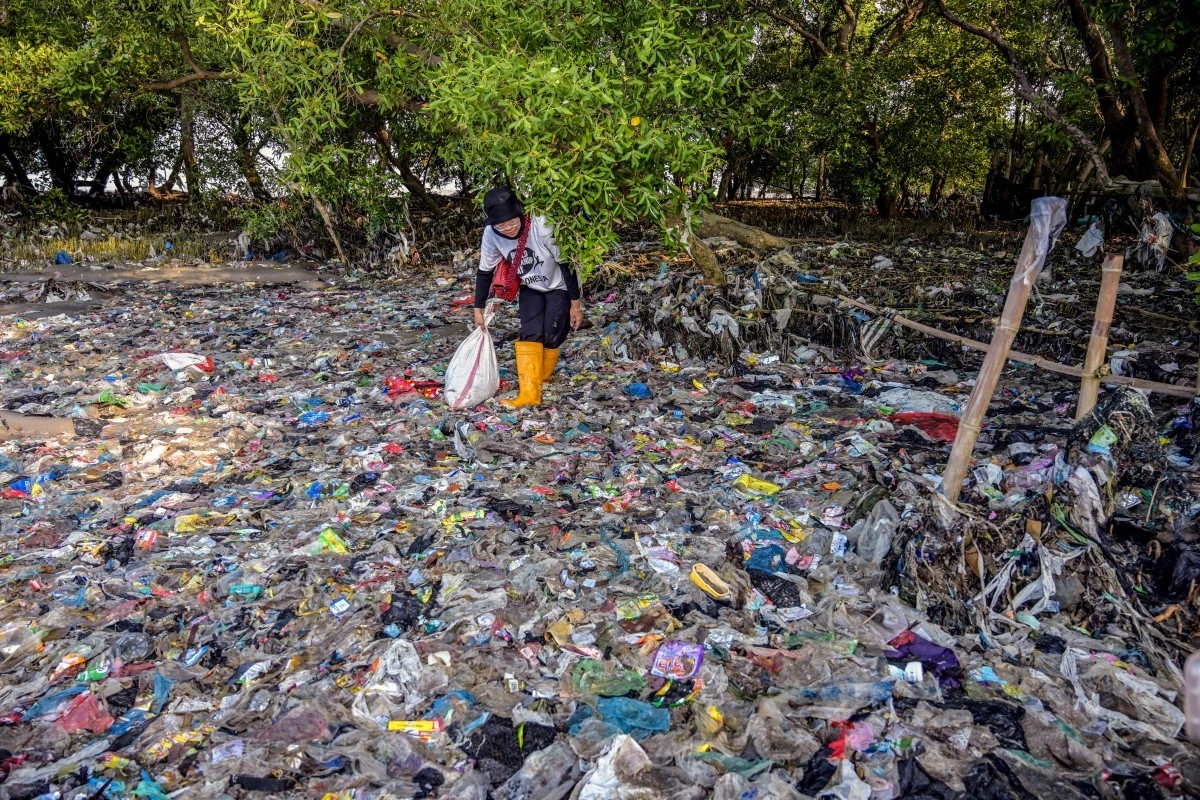
A volunteer from the Ecological Observation and Wetlands Conservation (ECOTON) collects plastic waste from a mangrove swamp in Surabaya. (File/AFP)
Short Url
Updated 20 August 2025
Follow

Indonesia to make plastic recycling mandatory for producers

  • Indonesia started to ban imports of plastic waste from developed countries on Jan. 1
  • Indonesians are the top global consumers of microplastics, according to a 2024 study

JAKARTA: Indonesia, one of the world’s nations most affected by plastic pollution, will make recycling mandatory for producers, the government has announced in a new move to tackle the crisis, following a ban on shipments of plastic waste from developed countries.

Indonesia produces around 60 million tonnes of waste annually, government data shows, around 12 percent of which is plastic. Less than 10 percent of waste is recycled in the country, while more than half ends up in landfills.

Indonesians are also the top global consumers of microplastics, according to a 2024 study by Cornell University, which estimated that they ingest about 15 grams of plastic particles per month.

“Plastic is problematic for the environment, especially the single-use ones. It creates various problems, and contains hazardous toxic materials,” Environment Minister Hanif Faisol Nurofiq told reporters earlier this week. Nurofiq was speaking after a UN summit in Geneva failed to produce the world’s first legally binding treaty to tackle plastic pollution.

“We are making an intervention through the Extended Producer Responsibility, or EPR, which is still voluntary at the moment, but we are working to make it mandatory.”

The rules of EPR are in place under a 2019 Ministerial Regulation, which requires producers in Indonesia to take full responsibility for the plastic waste generated by their products.

But the mechanism also encourages producers to design environmentally friendly products and packaging, said Muharram Atha Rasyadi, urban campaigner at Greenpeace Southeast Asia.

“EPR is not only about recycling, it’s also about prioritizing reduction schemes from the very start of the production process, including redesigning the products or transitioning to reuse alternatives,” he told Arab News on Wednesday. 

“The producer responsibility scheme should be made into an obligation that needs to be regulated in the management of plastic pollution and waste. If it’s voluntary in nature as we currently have with the 2019 Ministerial Regulation, implementation will be slow and less than ideal.”

As both a major producer and consumer of plastics, Indonesia has poor waste-management practices that has contributed to its plastic pollution problem over the years.

The country of more than 270 million people is the second-largest ocean plastic polluter, just behind China, according to a 2015 study published in the journal Science.

As the government seeks to tackle the crisis by 2029, it started to ban imports of plastic waste on Jan. 1. This comes after years of being among other Southeast Asian nations receiving this plastic scrap from developed countries including the US, UK and Australia.

Indonesia has also introduced measures to reduce single-use plastics, including Bali province’s 2019 ban on single-use plastic bags, straws, and Styrofoam, and a similar one enforced in the capital, Jakarta, in 2020.
US will respond to Rwanda’s violation of peace pact, says Rubio

Secretary of State Marco Rubio. (AP file photo)
Updated 58 min 34 sec ago
Follow

US will respond to Rwanda’s violation of peace pact, says Rubio

  • Waltz told the Security Council meeting that the US “is deeply concerned and increasingly disappointed” by this resurgence of violence

WASHINGTON: Top US diplomat Marco Rubio said on Saturday that Rwanda had clearly violated the peace agreement it signed with the Democratic Republic of Congo in Washington last week and vowed unspecified “action” in response.
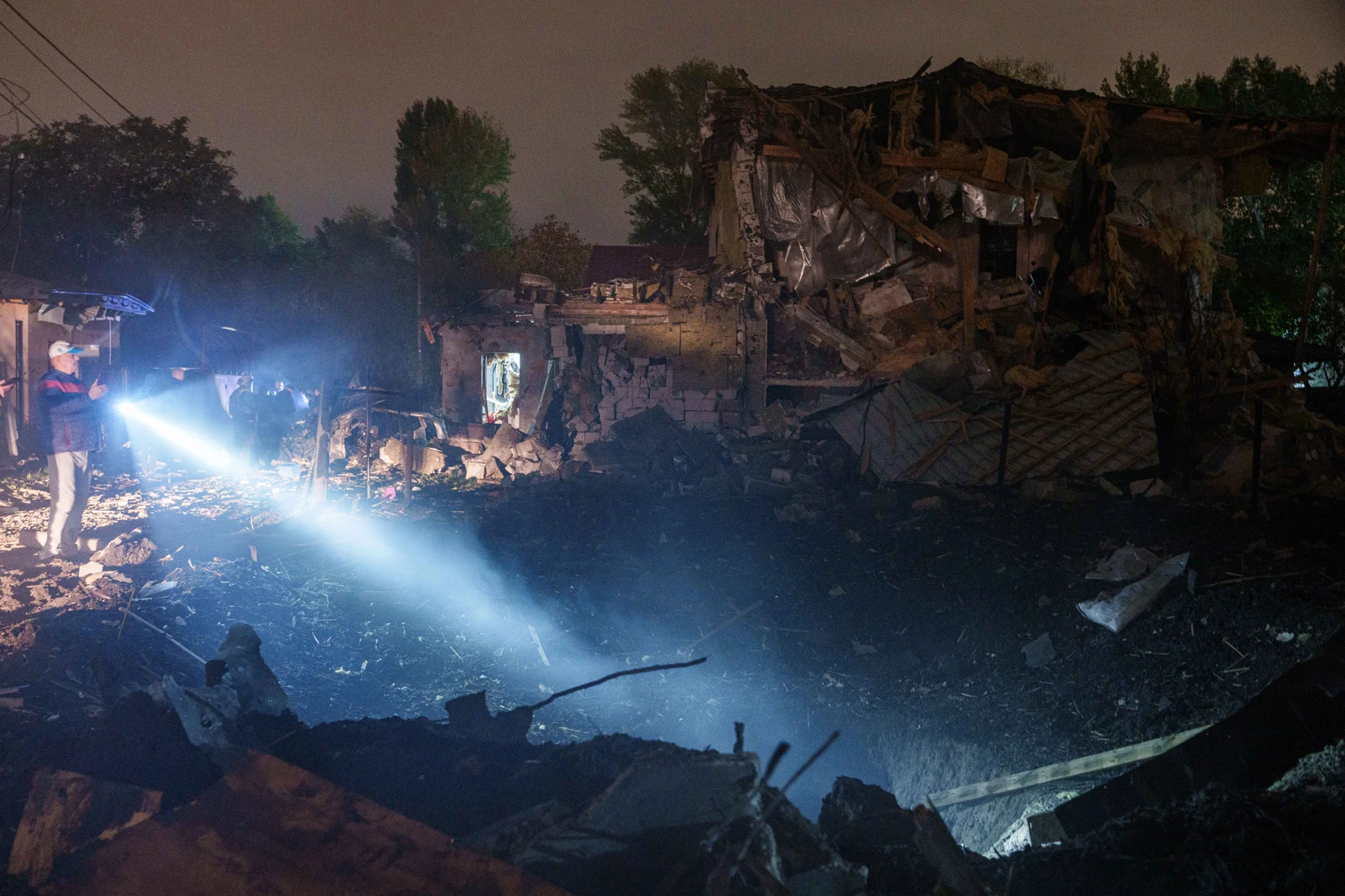
The Rwandan-backed M23 armed group advanced in eastern DRC and seized the key border city of Uvira, just days after the leaders signed the “Washington Accords” on Dec. 4.

Mike Waltz, US ambassador to the UN. (REUTERS)

“Rwanda’s actions in eastern DRC are a clear violation of the Washington Accords, and the US will take action to ensure promises made to the President are kept,” Secretary of State Rubio wrote on X.

FASTFACT

UN peacekeeping chief Jean-Pierre Lacroix warned the new offensive ‘has revived the specter of a regional conflagration with incalculable consequences.’

The capture of Uvira, along the border with Burundi, has raised fears that the conflict could escalate into a regional war.
As part of an offensive launched at the beginning of December in South Kivu province, the armed group’s takeover follows its earlier this year capture of Goma and Bukavu, other major cities in the DRC’s mineral-rich east.

On Friday, US Ambassador to the UN Mike Waltz accused Rwanda of “leading the region toward more instability and toward war.”
“The Rwandan defense forces have provided materiel, logistics, and training support to M23 as well as fighting alongside M23 in DRC with roughly 5,000 to 7,000 troops,” not including possible reinforcements during the latest offensive, Waltz told the UN Security Council.
The Rwandan firepower has included surface-to-air missiles, drones, and artillery, he added.
Since taking up arms again in 2021, the M23 has seized swaths of territory, displacing tens of thousands and leading to a spiraling humanitarian crisis.
Earlier this month, UN experts said Rwanda’s army and the M23 had carried out summary executions and forced mass displacements of people in the region.
Waltz told the Security Council meeting that the US “is deeply concerned and increasingly disappointed” by this resurgence of violence. 
The envoy denounced “the scale and sophistication” of Rwanda’s involvement in eastern DRC.
UN peacekeeping chief Jean-Pierre Lacroix warned the new offensive “has revived the specter of a regional conflagration with incalculable consequences.”
“Recent developments pose a serious risk of the progressive fragmentation of the Democratic Republic of Congo, particularly its eastern part,” he said.
Burundi on Friday accused Rwanda of bombing its territory, and its ambassador, Zephyrin Maniratanga, told the council it “reserves the right to use self-defense.”
He warned that if the attacks continue, it would be extremely difficult to avoid an escalation between the two African countries.
“Rwanda is not waging war against the Republic of Burundi and has no intention of doing that,” Ambassador Martin Ngoga said.
Meanwhile, Congolese Foreign Minister Therese Kayikwamba Wagner criticized the Security Council for its “lack of action” and called for sanctions against Rwanda.

Despite a resolution adopted in February demanding the withdrawal of Rwandan troops and a ceasefire, “the situation is undeniable: another city has fallen, a parallel administration has consolidated itself, thousands more families have fled, and others have been killed, raped, and terrorized,” she said.