- The statement came after a high-level Azerbaijan delegation visited the Air Headquarters in Islamabad to discuss bilateral defense collaboration
- It follows a Pakistan-India standoff in May, during which officials said the PAF conducted multi-domain operations to down six Indian fighter jets
ISLAMABAD: Azerbaijan has expressed a keen interest in learning the Pakistan Air Force’s (PAF) multi-domain air warfare to strengthen its defense capabilities, the Pakistani military said on Tuesday.
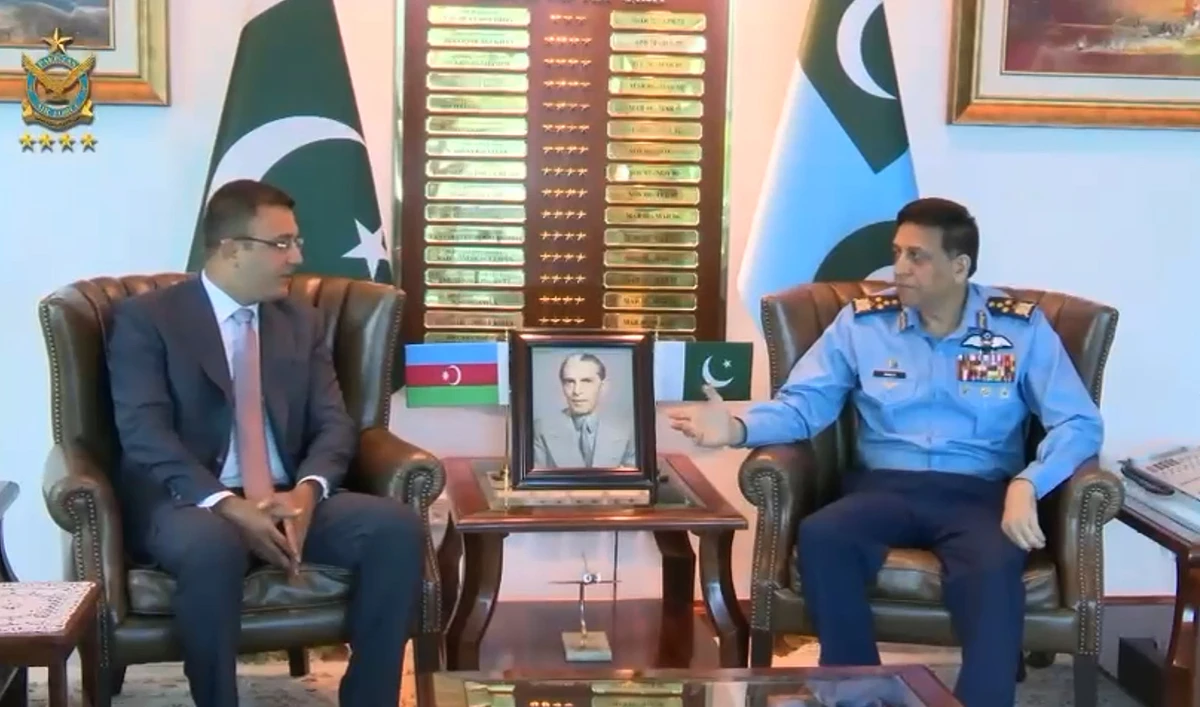
The statement came after a high-level Azerbaijan delegation, led by Deputy Minister and Director-General of Defense Agil Gurbanov, called on the PAF chief, Air Chief Marshal Zaheer Ahmed Baber Sidhu, at the Air Headquarters in Islamabad.
The visit follows a four-day Pakistan-India military standoff in May, during which officials said the PAF successfully conducted multi-domain operations to down six Indian fighter jets, including the French-made Rafale jets. While India has acknowledged losses in the air, it has not specified the number of aircraft lost.
During Tuesday’s meeting in Islamabad, both sides engaged in extensive discussions and underscored a shared commitment to fostering defense collaboration in training, modernization and technical expertise, according to the Inter-Services Public Relations (ISPR), the Pakistani military’s media wing.
Deputy Minister Gurbanov “conveyed Azerbaijan’s strong desire for collaboration across Multi-Domain Operations, noting that Pakistan Air Force’s rich operational experience provides a valuable model for Azerbaijan,” the ISPR said in a statement after the meeting.
“He added that his country is especially eager to learn PAF’s complete methodology of Multi Domain warfare to strengthen its own capabilities.”
The hour-long India-Pakistan fight, which took place in darkness, involved some 110 aircraft, experts estimate, making it the world’s largest air battle in decades.
Pakistan’s Chines-made J-10s shot down at least one Rafale, Reuters reported in May, citing US officials. Its downing surprised many in the military community and raised questions about the effectiveness of Western military hardware against untested Chinese alternatives.
Deputy Minister Gurbanov termed the PAF’s seamless integration of multi-domain operations a “hallmark of modern air warfare” and conveyed Azerbaijan’s “keen interest” in learning from PAF’s battle-proven experience. Underscoring the importance of joint training initiatives through bilateral exercises between the two air forces, the visiting dignitary emphasized that such cooperation would enhance shared learning, interoperability and professional excellence, according to the ISPR.
During the meeting, Air Chief Marshal Sidhu shared insight into the PAF’s various ongoing modernization projects, operational construct, force goals and plans for the force structure, with a focus on future warfare. He reiterated the PAF’s unwavering support to provide capacity-building assistance to the Azerbaijan Air Force in upgradation of its human resource, maintenance parameters and operational training.
“The dignitary reiterated Azerbaijan’s intent to revamp its entire training system, beginning from the academy level, and acknowledged Pakistan Air Force as a trusted partner in guiding this transformation,” the ISPR said.
“He expressed confidence that cooperation with PAF would significantly contribute to the modernization and professional growth of Azerbaijan Air Force.”
Pakistan and Azerbaijan maintain close brotherly, trade and defense ties. In July 2024, Azerbaijan announced a $2 billion investment in Pakistan during a visit by President Ilham Aliyev to Islamabad. In September last year, Pakistan signed a contract to supply JF-17 Block III fighter jets to Azerbaijan, marking the deepening of defense cooperation.
“The visit of the Azerbaijani defense delegation to Air Headquarters, Islamabad reflects the mutual commitment of Pakistan and Azerbaijan to further deepen their strategic partnership, while reinforcing the shared aspirations for regional peace, security and stability,” the ISPR added.