

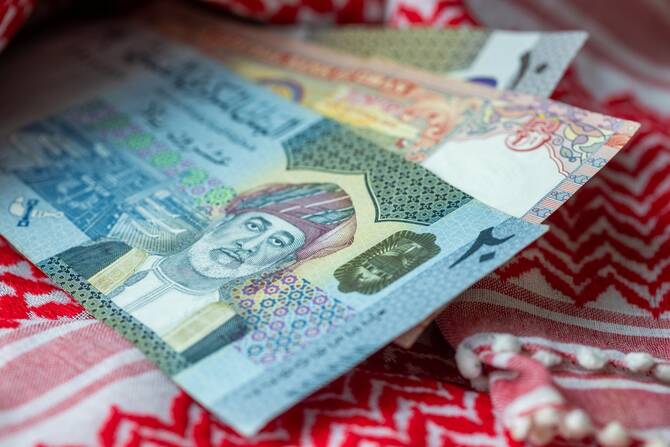
Oman’s public debt drops to $36.7bn in Q2

Short Url
Updated 18 August 2025
Follow

Oman’s public debt drops to $36.7bn in Q2

  • Net oil revenue amounted to 3.02 billion rials
  • Current revenue rose 2% year on year to 1.93 billion rials

RIYADH: Oman’s public debt fell 2.08 percent year on year to 14.1 billion rials ($36.7 billion) in the second quarter of 2025, supported by Finance Ministry payments to the private sector. 

The ministry disbursed over 749 million Omani rials during the period, with transactions settled within an average of five working days, helping boost liquidity in local markets, the Oman News Agency reported. 

The decline in debt highlights Muscat’s ongoing fiscal consolidation drive, supported by higher non-oil revenue and spending discipline. 

Fitch Ratings recently affirmed the sultanate’s long-term foreign-currency issuer default rating at BB+ with a positive outlook, citing stronger fiscal tools and an improved debt profile. 

Oman’s public revenue by the end of the second quarter totaled 5.84 billion rials, “reflecting a 6 percent decrease from 6.20 billion rials recorded during the same quarter of 2024,” ONA said. 

It added: “The decline is largely due to a fall in hydrocarbon revenue.” 

Net oil revenue amounted to 3.02 billion rials, a 10 percent decline from 3.36 billion rials a year earlier, reflecting lower average oil prices and production. Net gas revenue fell 6 percent to 884 million rials. 

In contrast, current revenue rose 2 percent year on year to 1.93 billion rials. 

Public spending reached 6.09 billion rials, up 5 percent from a year earlier, driven mainly by higher development expenditure. Current expenditure stood at 4.12 billion rials, marking a 1 percent decline. 

By the end of the quarter, ministries and government units had spent 688 million rials on development projects, accounting for 76 percent of the 900 million rials allocated for the year, reflecting faster progress on ongoing initiatives. 

Contributions and other expenses climbed 7 percent year on year to 1.16 billion rials. Subsidy allocations included 339 million rials for the electricity sector, 289 million for the social protection system, and 44 million for fuel support. An additional 200 million rials was directed to the future debt obligations budget. 

Spending on social sectors and basic services totaled 3.12 billion rials during the period. 


Saudi Arabia, WEF launch initiative to reshape global travel landscape

Updated 11 November 2025
Follow

Saudi Arabia, WEF launch initiative to reshape global travel landscape

  • ‘Beyond Tourism’ is global framework advancing sustainability, inclusivity, and resilience in the sector

RIYADH: Saudi Arabia has partnered with the World Economic Forum to launch the “Beyond Tourism” initiative, a global framework designed to drive a more sustainable, inclusive, and resilient future for the travel and tourism sector.

Announcing the initiative on his X account, Saudi Minister of Tourism Ahmed Al-Khateeb said he was “thrilled to announce the launch,” noting that it is “dedicated to shaping the future of travel and tourism and is built around 10 core principles.”

Al-Khateeb emphasized that Beyond Tourism underscores the sector’s vital role as “a bridge between cultures, a means to empower communities, and a source of opportunities for future generations.”

The initiative comes as the global travel and tourism industry undergoes a major structural shift — moving away from fragmented, business-as-usual models toward integrated, ecosystem-based strategies.

According to the World Economic Forum, the sector is projected to reach 30 billion tourist visits and contribute $16 trillion to global gross domestic product by 2034. Yet, it continues to face complex challenges including rising tension between visitors and residents, environmental pressures, workforce shortages, and exposure to geopolitical and climate disruptions.

“The global travel and tourism sector is entering a period of profound transformation, moving decisively from a fragmented, business-as-usual operating model to a holistic, ecosystem-based paradigm,” the WEF said in a statement.

The forum noted that past reliance on siloed policies — a weakness underscored during the COVID-19 pandemic — has proven insufficient to address today’s global challenges.

Its proposed ecosystem approach focuses on five key enablers: infrastructure, finance, technology and innovation, people and skills, and policy and governance. The model aims to convert systemic challenges into opportunities for inclusive and sustainable growth.

Several destinations have already demonstrated the benefits of this approach. Countries such as Portugal, New Zealand, Costa Rica, Singapore, and Indonesia have leveraged it to improve conservation outcomes, diversify economies, and strengthen sustainable tourism development.

By promoting global cooperation among governments, private-sector leaders, and local communities, the Beyond Tourism initiative seeks to unlock the full potential of the industry while safeguarding cultural and natural heritage for generations to come.