SRINAGAR, India: Flash floods caused by torrential rains in a remote village in India-controlled Kashmir have left at least 44 people dead and dozens missing, authorities said Thursday, as rescue teams scouring the devastated Himalayan village brought at least 200 people to safety.
Following a cloudburst in the region’s Chositi village, which triggered floods and landslides, disaster management official Mohammed Irshad estimated that at least 50 people were still missing, with many believed to have been washed away.
India’s deputy minister for science and technology, Jitendra Singh, warned that the disaster “could result in substantial” loss of life.
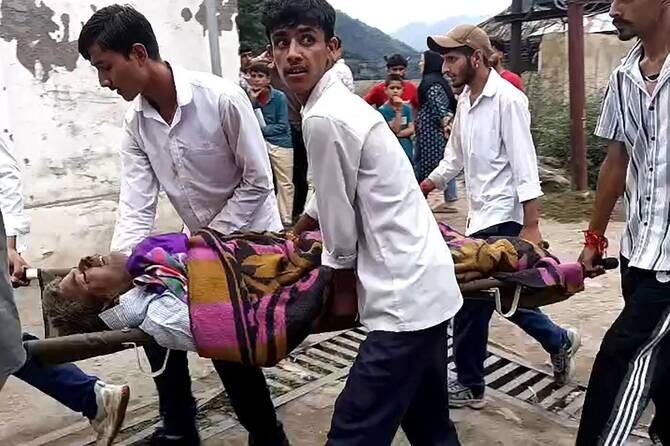
Susheel Kumar Sharma, a local official, said that at least 50 seriously injured people are being treated in local hospitals. Many were rescued from a stream filled with mud and debris.
Chositi is a remote Himalayan village in Kashmir’s Kishtwar district and is the last village accessible to motor vehicles on the route of an ongoing annual Hindu pilgrimage to a mountainous shrine at an altitude of 3,000 meters (9,500 feet) and about an 8-kilometer (5-mile) trek from the village.
Multiple pilgrims were also feared to be affected by the disaster. Officials said that the pilgrimage had been suspended and more rescue teams were on the way to the area to strengthen rescue and relief operations. The pilgrimage began on July 25 and was scheduled to end on Sept. 5.
The first responders to the disaster were villagers and local officials who were later joined by police and disaster management officials, as well as personnel from India’s military and paramilitary forces, Sharma said.
Abdul Majeed Bichoo, a local resident and a social activist from a neighboring village, said that he witnessed the bodies of eight people being pulled out from under the mud. Three horses, which were also completely buried alongside them under debris, were “miraculously recovered alive,” he said.
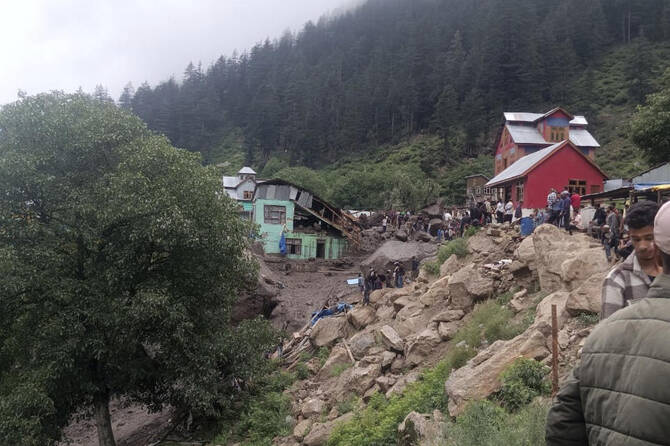
The 75-year-old Bichoo said Chositi village had become a “sight of complete devastation from all sides” following the disaster.
“It was heartbreaking and an unbearable sight. I have not seen this kind of destruction of life and property in my life,” he said.
The devastating floods swept away the main community kitchen set up for the pilgrims as well as dozens of vehicles and motorbikes, officials said. They added that more than 200 pilgrims were in the kitchen when the tragedy struck. The flash floods also damaged and washed away many homes, clustered together in the foothills.
Photos and videos circulating on social media showed extensive damage caused in the village with multiple vehicles and homes damaged.
Indian Prime Minister Narendra Modi said that “the situation is being monitored closely” and offered his prayers to “all those affected by the cloudburst and flooding.”
“Rescue and relief operations are underway. Every possible assistance will be provided to those in need,” he said in a social media post.
Sudden, intense downpours over small areas known as cloudbursts are increasingly common in India’s Himalayan regions, which are prone to flash floods and landslides. Cloudbursts have the potential to wreak havoc by causing intense flooding and landslides, impacting thousands of people in the mountainous regions.
Experts say cloudbursts have increased in recent years partly because of climate change, while damage from the storms also has increased because of unplanned development in mountain regions.
Kishtwar is home to multiple hydroelectric power projects, which experts have long warned pose a threat to the region’s fragile ecosystem.


![]()
![]()

Flash floods kill 44 in Kashmir
Short Url
https://arab.news/mv82h
Flash floods kill 44 in Kashmir
- Torrential rain in Chositi village triggered floods and landslides
- At least 50 people were seriously injured with many rescued from a stream filled with mud and debris


Latest updates


Recommended


© 2026 SAUDI RESEARCH & PUBLISHING COMPANY, All Rights Reserved And subject to Terms of Use Agreement.