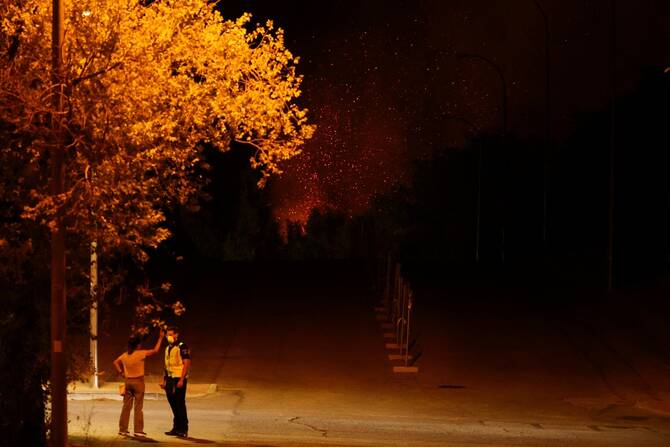
MADRID: A man died from burns and thousands of people were forced to flee as wildfires swept through parts of Spain on Tuesday, fueled by strong winds during a searing heatwave.
The victim suffered serious burns as winds of up to 70 kilometers (43 miles) per hour whipped the flames through Tres Cantos, a wealthy suburb north of the capital Madrid, officials said.
He later died in hospital, in the first fatality from dozens of wildfires to have hit the country since the heatwave began last week.
The head of the regional government of Madrid, Isabel Diaz Ayuso, said she “deeply regretted” the man’s death in a message on X.
Hundreds of residents in Tres Cantos were evacuated from their homes.
“In barely 40 minutes, the fire advanced six kilometers,” Carlos Novillo, Madrid’s regional environment chief, told reporters.
By Tuesday morning, regional officials said the blaze had been contained.
Elsewhere, about 2,000 people were evacuated from hotels and homes near the popular beaches of Tarifa in the southern region of Andalusia.
The wildfire broke out near where a similar blaze forced evacuations earlier this month.
“We managed to save the residential area at the very last second,” said Antonio Sanz, the interior minister in the regional government of Andalusia.
A Civil Guard police officer was injured when struck by a car while helping with the evacuation, he added.
In the northwestern region of Castile and Leon, more than 30 blazes were reported Monday, including one threatening Las Medulas, a UNESCO World Heritage site known for its ancient Roman gold mines.
The wildfires coincide with what meteorologists expect to be the most intense day yet of the ongoing heatwave, with all regions under weather alerts.
Forecasters warn of highs around 40 Celsius and overnight lows that remain above 25 Celsius.


![]()

Wildfires in Spain kill one and force thousands to flee
Short Url
https://arab.news/475yt
Wildfires in Spain kill one and force thousands to flee
- The victim suffered serious burns and later died in a hospital being the first fatality from dozens of wildfires to have hit the country since the heatwave began last week
- About 2,000 people were evacuated from hotels and homes near the popular beaches of Tarifa in the southern region of Andalusia


Latest updates


Recommended


© 2026 SAUDI RESEARCH & PUBLISHING COMPANY, All Rights Reserved And subject to Terms of Use Agreement.