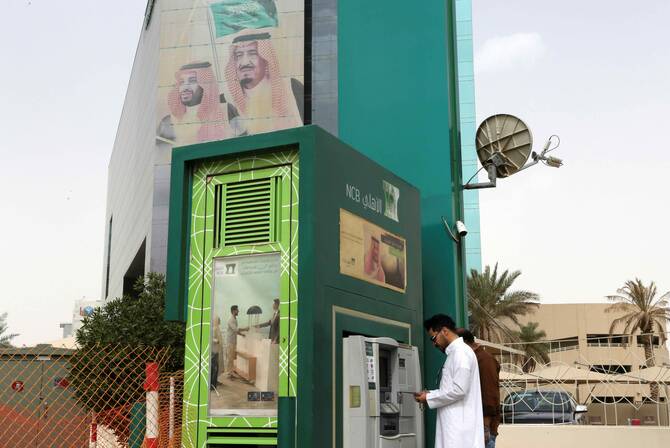

RIYADH: Saudi Arabia’s banking sector maintained its momentum in June, as aggregate profits before zakat and taxes climbed to SR 9.9 billion ($2.63 billion) — the highest monthly result on record.
Data from the Saudi Central Bank, known as SAMA, shows that profits were approximately 28 percent higher than the same month last year, the fastest annual growth in six months, highlighting the sector’s resilience despite global challenges.
For the first half of 2025, cumulative profits reached SR51 billion, roughly 20 percent higher than the SR42.5 billion during the same period in 2024.
The strong performance builds on a solid first half for the Kingdom’s banking industry, which has benefited from Saudi Arabia’s robust macroeconomic fundamentals and policy reforms.
Supported by steady credit demand from both corporate and retail segments, healthy liquidity levels, and Vision 2030-linked infrastructure and private sector projects, lenders have maintained profitability despite global interest rate uncertainty.
Analysts attribute the rise in profits in the second quarter to robust lending growth, lower impairment charges, and the sector’s embrace of digital banking.
AInvest noted in a July article that Saudi National Bank, the Kingdom’s largest lender, delivered 17.3 percent higher net profit in the second quarter, supported by increased net special commission income and reduced credit-loss provisions.
Across the sector, net profits rose 18 to 25 percent as lenders benefited from fintech integration, deeper capital markets, and broader economic diversification under Vision 2030.
The report highlighted that more than 261 fintech firms now operate in the Kingdom and 79 percent of retail transactions are processed digitally, boosting fee‑based income and lowering costs.
SAMA’s June bulletin showed the banking system’s assets reach SR4.8 trillion and claims on the private sector stood at SR3.1 trillion, reflecting strong corporate and consumer credit demand. Capital adequacy ratios remained robust at 19.3 percent, well above the regulatory minimum.
The banking sector’s strength has been reflected on the Saudi Exchange. Tadawul’s second quarter report showed that banks accounted for SR61.58 billion of traded value — the highest among all sectors.
This leadership in trading activity, ahead of most other sectors, signals strong investor confidence in banks’ earnings momentum and their pivotal role in financing Vision 2030 projects.
Saudi banks enter the second half of 2025 with solid capital buffers, growing fee‑based income, and a clear role in the Kingdom’s economic diversification agenda.
Continued reforms, including the National Debt Management Center’s restructuring of $32 billion in sukuk to deepen capital markets and ongoing fintech proliferation, will support earnings.
However, analysts at AInvest cautioned that geopolitical tensions, potential margin compression as global interest rates ease, and regulatory hurdles in construction financing could moderate growth.
Even so, with digital adoption surging and non-oil sectors expanding, the banking industry appears well-positioned to sustain strong profitability while supporting Saudi Arabia’s transformation into a diversified, knowledge‑based economy.