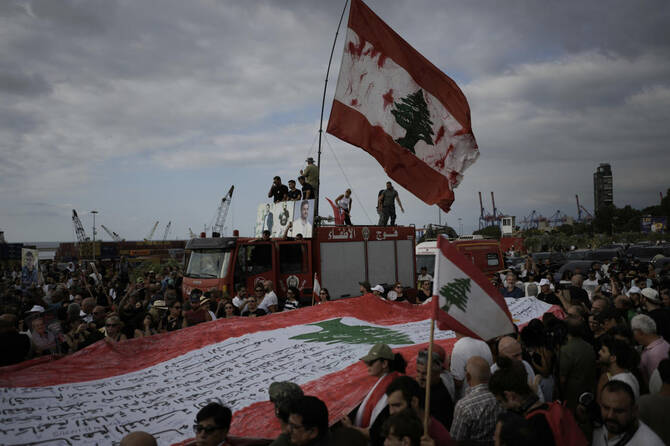
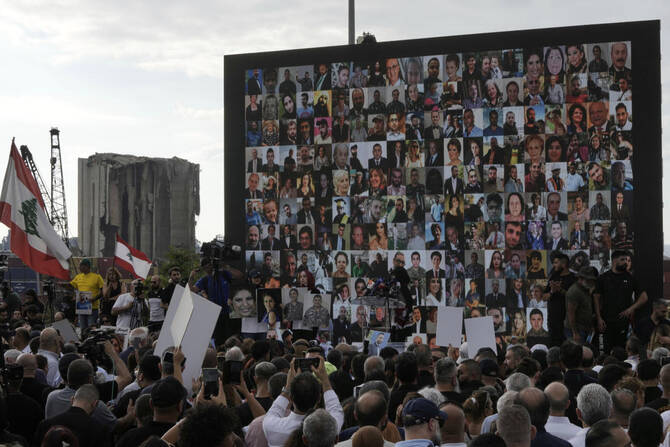
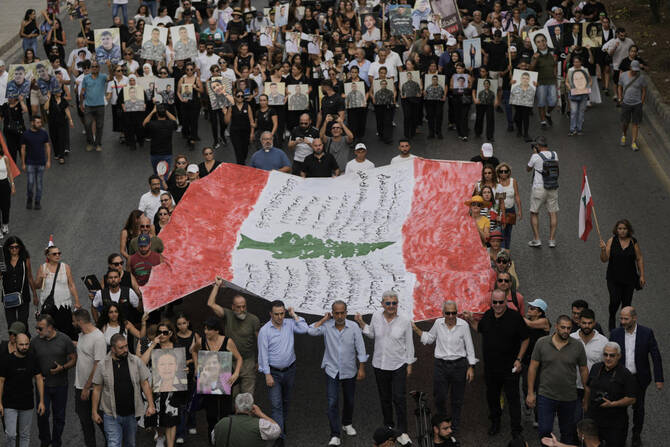
BEIRUT: Hundreds of Lebanese gathered solemnly near Beirut’s coast on Monday to commemorate a half-decade since the cataclysmic port blast of 2020, when more than 200 people were killed in one of the largest non-nuclear explosions in history. Carrying Lebanese flags and portraits of some of the victims, many of those standing said they felt deeply disappointed that no one has been held to account for the devastating explosion.
“Can someone tell me why five years on we’re still standing here? If everyone stands with this cause, then who’s against us?” said William Noun, whose brother Joseph, a firefighter, was killed by the blast.
“This file needs to close. It’s been five years and we don’t want to have a sixth,” Noun said from a stage set up near the port.
The blast destroyed large swathes of Beirut, leaving tens of thousands of people homeless.
The names of all those killed were read out as protesters stood facing the wreckage of the Beirut grain silos, which were heavily damaged in the blast and continued to deteriorate and collapse for years after. At 6:07 p.m. — the time of the blast five years ago — the few hundred gathered stood for a moment of silence.
“I’m here because I find it crazy that five years later, we still don’t know exactly what happened,” said Catherine Otayek, 30. “I had hope for answers in 2020. I didn’t think we’d still be here.”
Although she did not lose anyone herself, the Lebanese expatriate living in France said she made it a point to return to Beirut every year for the commemoration as a duty to fellow Lebanese.
The port blast came nearly a year into Lebanon’s catastrophic economic collapse, and was followed by a political crisis that paralyzed government and a devastating war between Hezbollah and Israel starting in 2023.
Investigation stymied
The blast is thought to have been set off by a fire at a warehouse on the evening of August 4, 2020, detonating hundreds of tons of ammonium nitrate. Lebanese officials promised at the time that an investigation into the blast’s root causes would be completed in five days. But years of political interference stymied the probe, with judicial officials and then-ministers continually raising legal challenges against the investigating judges, effectively paralysing the investigation. Some Lebanese have drawn hope from pledges by President Joseph Aoun and Prime Minister Nawaf Salam — both of whom came to power at the beginning of this year — to prioritize justice for blast victims.
On Monday, Aoun pledged to hold those responsible for the blast accountable, regardless of their position or political affiliation. “Justice will not die, and accountability will inevitably come,” he said.
The president and prime minister did not attend Monday’s commemoration. Judge Tarek Bitar resumed his investigation earlier this year and has questioned several officials in recent months — but he has yet to issue a preliminary indictment, which many Lebanese were hoping for ahead of the fifth anniversary.
“We want a preliminary indictment that is complete and comprehensive,” said Paul Naggear, whose three-year-old daughter Alexandra was killed in the blast. “We want to know who was supposed to evacuate our neighborhoods, so that we could get to the hospital, and so my daughter could have survived.”
Naggear and his wife Tracy have been among the most vocal advocates for accountability for the blast.
Rights groups have pressed for a full investigation that will establish the full chain of responsibility. “Justice delayed is justice denied,” said Reina Wehbi, Amnesty International’s Lebanon campaigner. “The families of those killed and injured in the Beirut explosion have waited an intolerable five years. They must not be forced to endure another year of impunity.”


![]()
![]()
![]()

Hundreds gather to mark five years since Beirut blast, but justice still elusive
Short Url
https://arab.news/y3w6s
Hundreds gather to mark five years since Beirut blast, but justice still elusive
- Carrying flags and portraits of some of the victims, many of those standing said they felt deeply disappointed that no one has been held to account for the explosion


Latest updates


Recommended


© 2026 SAUDI RESEARCH & PUBLISHING COMPANY, All Rights Reserved And subject to Terms of Use Agreement.