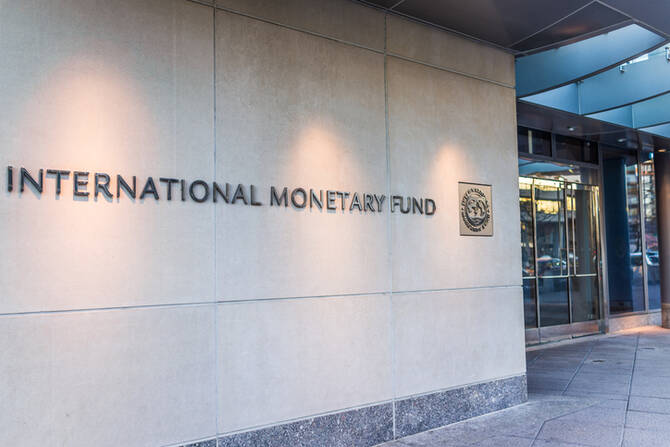

RIYADH: The International Monetary Fund has commended Saudi Arabia for its resilience to global shocks, citing its expanding non-oil sector, contained inflation, and record-low unemployment.
In its 2025 Article IV Consultation, the IMF recognized the Kingdom’s robust non-oil growth and strong reform momentum, crediting ongoing efforts under Vision 2030 for diversifying the economy amid heightened international uncertainty and declining oil revenues.
Saudi Arabia’s appraisal comes as neighboring Gulf economies face mixed outlooks amid global tensions.
The IMF highlighted the UAE’s robust non-oil growth, while Kuwait grapples with fiscal pressures from OPEC+ production cuts and a call for gradual consolidation. Qatar and Oman continue to advance diversification under their respective national visions, focusing on private sector growth and fiscal reforms.
Despite external shocks, the region’s ample reserves, structural reforms, and strong financial systems are seen as key stabilizing factors.
IMF executive directors highlighted the Kingdom’s economic progress, noting that “robust non-oil growth, low inflation, and record-low unemployment” have been achieved through “appropriate macroeconomic policies, strong buffers, and impressive reform momentum.”
The IMF cautioned that fiscal and current account deficits persist, emphasizing the need for continued structural adjustments to ensure long-term sustainability.
In 2024, Saudi Arabia’s non-oil real gross domestic product expanded by 4.5 percent, driven by growth in the retail, hospitality, and construction sectors.
This was offset by a 4.4 percent contraction in oil GDP, as OPEC+ production cuts held crude output at 9 million barrels per day, moderating overall GDP growth to 2 percent.
Inflation remained under control, averaging 1.7 percent, while unemployment among Saudi nationals fell to its lowest level on record, with youth and female unemployment rates halving over the past four years.
The IMF noted that despite a shift in the current account to a deficit of 0.5 percent of GDP, the Kingdom’s fiscal and external buffers remain substantial.
The Saudi Central Bank’s foreign assets stabilized at $415 billion, covering 187 percent of the IMF’s reserve adequacy metric.
“The banking sector remained strong, marked by high capitalization, profitability, and nonperforming loans at their lowest since 2016,” the IMF stated.
Looking ahead, the IMF projects the Kingdom’s real GDP growth to accelerate to 3.9 percent by 2026, with non-oil growth expected to exceed 3.5 percent.
The continued implementation of Vision 2030 projects, combined with government-led infrastructure initiatives, is expected to sustain domestic demand and mitigate external pressures.
The IMF stressed that “pursuing a countercyclical fiscal policy in the near term” is essential to maintain economic stability, given ample fiscal buffers and persistent global uncertainties.
Directors of the organization recommended a gradual fiscal consolidation strategy to achieve intergenerational equity, urging Saudi Arabia to advance “broader tax policy reforms to increase non-oil revenue, wage bill containment, energy subsidy reform, and streamlining of non-essential expenditures.”
Directors also encouraged the operationalization of an expenditure-based fiscal rule, enhanced budgetary transparency, and strengthened sovereign asset-liability management frameworks.
The IMF welcomed the Kingdom’s progress in strengthening its banking sector resilience.
Executives commended reforms in banking regulation and supervision, the swift adoption of the Banking Law, and the establishment of a crisis management framework.
They also recognized the Saudi Arabian Monetary Authority’s vigilance in monitoring financial risks and its introduction of a 100 basis points countercyclical capital buffer to support stability.
Additionally, directors noted continued progress in developing domestic capital markets to diversify funding sources.
Directors emphasized the importance of maintaining reform momentum irrespective of oil price developments.
They highlighted improvements in the regulatory and business environment, female labor participation, and governance.
Sustained enhancements in small and medium-sized enterprises’ access to finance, regional trade integration, and climate resilience were also recognized as key pillars for advancing economic diversification.
The IMF affirmed that Saudi Arabia’s currency peg to the US dollar remains appropriate, commending improvements in the Kingdom’s liquidity management framework.
Directors stressed that monetary operations should continue to focus on smoothing short-term liquidity without fueling asset and credit bubbles.
IMF directors acknowledged Saudi Arabia’s leadership role in regional stability and its contributions in multilateral forums, including the G20 and the IMF’s International Monetary and Financial Committee.
They expressed confidence that the Kingdom’s ongoing reforms will further strengthen its economic resilience and global standing.