

Abu Dhabi’s non-oil foreign trade rises 34.7% to $53.2bn in H1

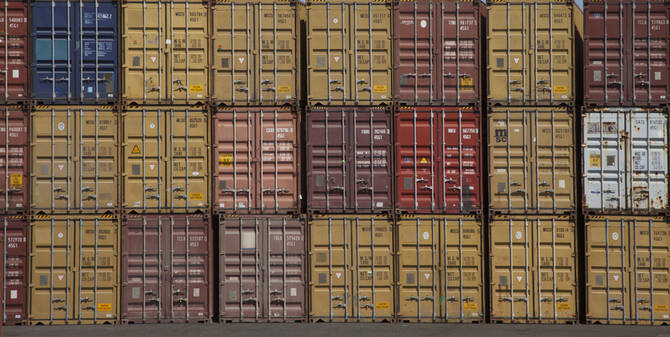
A stack of containers at Abu Dhabi port. Getty
Short Url
Updated 04 August 2025
Follow

Abu Dhabi’s non-oil foreign trade rises 34.7% to $53.2bn in H1

RIYADH: Abu Dhabi’s non-oil foreign trade saw an annual rise of 34.7 percent during the first half of 2025 to reach 195.4 billion dirhams ($53.2 billion).

The increase from 145 billion dirhams over the same period in 2024 reflects the strength and resilience of Abu Dhabi’s economy, driven by the efficiency of its infrastructure, advanced logistics services, and strategic investments across key sectors, according to a statement from Abu Dhabi Media Office.

These factors have helped facilitate trade flows and ensure the smooth movement of goods through border crossings.

This comes as the UAE aims to hit a 4 trillion dirhams target for non‑oil foreign trade by 2031, but officials say it is now poised to reach that milestone within two years, four years ahead of schedule.

Non-oil exports surged 64 percent to 78.5 billion dirhams from 47.9 billion dirhams in the first half of 2025, while imports rose 15 percent to 80 billion dirhams compared to 70 billion dirhams in the first half of 2024, according to figures released by the General Administration of Abu Dhabi Customs.

Re-exports recorded a 35 percent growth, reaching over 36 billion dirhams, up from 26.6 billion dirhams in the same period last year.

“Our consistent growth, amid the challenges in international trade and the global economy, reflects the strength of our long-term economic planning, decisive policy execution, and our commitment to enabling the free and fair exchange of goods, services, and innovations,” Ahmed Jasim Al-Zaabi, chairman of the Abu Dhabi Department of Economic Development, said in the media office report.

He added: “We are doubling down our efforts to position Abu Dhabi among the world’s most business-ready economies by streamlining trade procedures, deploying smart systems, and integrating services to enhance flow and accelerate efficiency, cementing Abu Dhabi’s position as a global trade and investment center, and a key node on international supply chains.”

Rashed Lahej Al-Mansoori, director general of Abu Dhabi Customs, explained how the growth in non-oil foreign trade reflects the success of the emirate’s economic strategies.

He added: “Abu Dhabi Customs remains dedicated to delivering best-in-class services and procedures that accelerate customs clearance and promote integration with both local and international partners, thereby supporting sustainable growth, enabling the future economy, and reinforcing Abu Dhabi’s position on the global trade map.”

Cruise Saudi strengthens global ties as Celestyal makes maiden calls to Jeddah

Updated 10 December 2025
Follow

Cruise Saudi strengthens global ties as Celestyal makes maiden calls to Jeddah

JEDDAH: Saudi Arabia is accelerating its push to become a global cruise hub, with Cruise Saudi — a wholly owned Public Investment Fund subsidiary — expanding international partnerships to draw more travelers to the Kingdom’s Red Sea and Arabian Gulf ports.

The latest milestone came as award-winning Greek cruise line Celestyal completed its first-ever calls to Jeddah, signaling rising global interest in Saudi Arabia’s cultural and natural attractions.

The visits form part of Cruise Saudi’s strategy to build a year-round cruise ecosystem that supports tourism growth, boosts local supply chains, and contributes to the Kingdom’s broader economic diversification.

Three UNESCO World Heritage Sites — AlUla, Jeddah Historic District, and Al-Ahsa Oasis — are now accessible by sea, with curated shore excursions designed to deepen visitor engagement.

Cruise Saudi aims to welcome 1.3 million cruise passengers annually by 2035, creating 50,000 direct and indirect jobs and positioning the Kingdom as a premier international cruise destination.

The 1,360-passenger Celestyal Discovery arrived in Jeddah on Dec. 5, following the 1,260-passenger Celestyal Journey, which made its maiden call on Nov. 29. The Journey concluded a seven-night Athens–Jeddah itinerary with stops in Turkiye and Egypt, marked by a traditional plaque exchange ceremony attended by Cruise Saudi executives, port officials and Celestyal representatives.

Passengers were welcomed with traditional Saudi hospitality and toured Jeddah’s historic Al-Balad district, bustling souks, and cultural sites. Some Muslim travelers also visited Makkah to perform Umrah.

“We are honored to celebrate our maiden call in Jeddah alongside our partners at Cruise Saudi, marking the beginning of a long and effective relationship,” said Lee Haslett, chief commercial officer at Celestyal.

He added that Jeddah’s role as “the cultural heart of Saudi Arabia” presents strong potential for cruise tourism.

Barbara Buczek, chief destination experiences officer at Cruise Saudi, told Arab News: “This maiden Red Sea sailing highlights the strong appeal of the region and aligns with Cruise Saudi's commitment to developing seamless, high-quality cruise experiences in Saudi Arabia.”

She noted that Celestyal’s expanded itineraries reflect rising demand for distinctive Red Sea and Arabian Gulf voyages.

Since its launch in 2021, Cruise Saudi has activated five cruise ports, introduced Aroya Cruises, the Kingdom’s first homegrown cruise line, and established Aman at Sea, an ultra-luxury JV with Aman Group set to launch in 2027. The company manages the full value chain — from terminals and berths to curated excursions — and has already welcomed more than 600,000 passengers of over 120 nationalities.

Celestyal, which carries more than 140,000 passengers annually across two refurbished vessels, is aligning with the Kingdom’s Vision 2030 ambition to transform coastal tourism. After departing Jeddah, both Celestyal ships continued to Abu Dhabi to begin the company’s second Arabian Gulf season.

Aroya Cruises has also launched a new seasonal program featuring stops in Mykonos, Athens, Crete, and coastal cities in Turkiye, expanding on a successful inaugural season that attracted over 95,000 guests.

The growing activity underscores Saudi Arabia’s emergence as a world-class cruise destination, supported by modern infrastructure, expanding routes, and experiences that highlight the Kingdom’s culture, heritage and hospitality.