

Pakistan approves Skills Impact Bond for youth employment through private investment

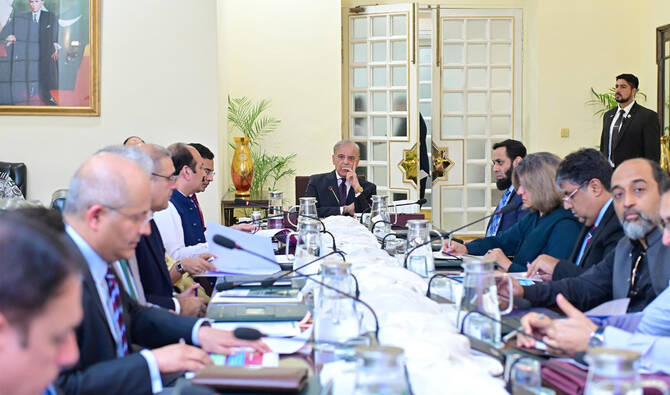
Prime Minister Shehbaz Sharif (center) chairs a meeting to review progress regarding productive employment opportunities for youth, in Islamabad on July 25, 2025. (PID)
Short Url
Updated 25 July 2025
Follow

Pakistan approves Skills Impact Bond for youth employment through private investment

  • New ‘pay-for-success’ model will fund market-relevant skills training for youth
  • PM Sharif calls for roadmap to boost domestic and overseas job opportunities

ISLAMABAD: Prime Minister Shehbaz Sharif on Friday approved Pakistan’s first Skills Impact Bond, a new financing model aimed at mobilizing private investment to equip young people with market-relevant skills and improve their access to employment, both at home and abroad.

The approval came during a high-level meeting in Islamabad focused on youth employment. According to a statement from the Prime Minister’s Office, the initiative is part of a broader government effort to align vocational training with labor market demands and make Pakistani youth self-reliant through entrepreneurship and income-generating opportunities.

The model, also known as “pay-for-success,” links funding to independently verified outcomes such as job placement or minimum income levels.

“Pakistan’s talented youth are the country’s greatest asset,” the prime minister said at the meeting. “By equipping them with education and skills tailored to market needs, we will transform the future of this nation.”

Sharif instructed federal ministries and agencies to accelerate skills training, expand employment outreach through digital platforms and present a comprehensive roadmap based on estimates of domestic and overseas job opportunities for Pakistani youth.

The prime minister approved a public awareness campaign to promote the use of the Digital Youth Hub, which has already registered over 500,000 users.

The platform currently lists over 47,000 job openings in Pakistan and more than 100,000 overseas, along with 2,000 scholarship opportunities.

He also emphasized preparing skilled workers specifically for international job markets and directed relevant departments to offer foreign language training for countries with high demand for labor.


Pakistan PM briefs parliamentary leaders on Middle East tensions, Afghanistan fighting

Updated 04 March 2026
Follow

Pakistan PM briefs parliamentary leaders on Middle East tensions, Afghanistan fighting

  • Leaders of major parties attend meeting on regional security and Pakistan’s military campaign
  • Government is expected to update lawmakers on diplomatic efforts amid Gulf conflict escalation

ISLAMABAD: Prime Minister Shehbaz Sharif on Wednesday started briefing leaders of parliamentary parties on rising regional tensions, including fighting along the Pakistan-Afghanistan border and the escalating war in the Middle East, according to a statement by his office.

The meeting comes as Pakistan has intensified military operations against the Afghan Taliban and militant groups targeting its civilians and security forces along its western frontier while the wider region faces growing instability after recent US-Israeli strikes on Iran and subsequent attacks across the Gulf.

Sharif decided to convene the session to update political leaders on the security situation and Pakistan’s diplomatic outreach as tensions spread across the region.

“The prime minister will take parliamentary leaders into confidence regarding the Pakistan-Afghanistan situation and the recent tensions in the region, particularly in the Middle East and the Gulf,” Sharif’s office said in a statement.

“The meeting will also highlight Pakistan’s diplomatic efforts during the recent escalation,” it added.

Representatives of major political parties, including the ruling Pakistan Muslim League-Nawaz, Pakistan Peoples Party, Jamiat Ulema-e-Islam, Muttahida Qaumi Movement and other parliamentary groups are attending the meeting.

Pakistan has accused Afghanistan’s Taliban authorities of allowing militant groups such as the Tehreek-e-Taliban Pakistan (TTP) to operate from Afghan territory, allegations Kabul denies. Islamabad says it has targeted militant hideouts across the border after repeatedly raising the issue with Afghan officials.

The briefing also comes as the government closely monitors developments in the Middle East, where regional tensions have heightened concerns about energy supplies and broader security implications for the country.