

British surgeon alleges ‘target practice’ shootings of Gazans by Israeli forces

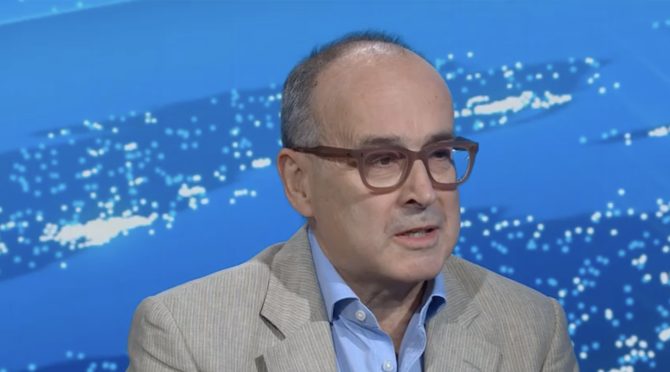
Dr. Nick Maynard, a veteran of humanitarian missions in Gaza over the past 15 years, spent four weeks working at Nasser Hospital in the south of the Strip. (Screenshot/Sky News)
Short Url
Updated 25 July 2025
Follow

British surgeon alleges ‘target practice’ shootings of Gazans by Israeli forces

  • Dr. Nick Maynard, a veteran of humanitarian missions in Gaza over the past 15 years, spent four weeks working at Nasser Hospital

LONDON: A British surgeon who recently returned from Gaza has claimed Israeli soldiers are shooting civilians at aid distribution points “almost like a game of target practice,” allegations the Israeli military have strongly denied.

Dr. Nick Maynard, a veteran of humanitarian missions in Gaza over the past 15 years, spent four weeks working at Nasser Hospital in the south of the Strip.

He told Sky News that the population is suffering from “profound malnutrition” and described the medical crisis facing patients and healthcare workers.

Speaking to The World with Yalda Hakim on Sky News, Maynard said: “I met several doctors who had cartons of formula feed in their luggage — and they were all confiscated by the Israeli border guards. Nothing else got confiscated, just the formula feed.

“There were four premature babies who died during the first two weeks when I was in Nasser Hospital — and there will be many, many more deaths unless the Israelis allow proper food to get in there.”

Maynard, who has now visited Gaza three times since the war began, said the paediatric unit is relying on sugar water to feed children due to a lack of baby formula.

“They’ve got a small amount of formula feed for very small babies, but not enough,” he said.

The effects of the crisis have also been severe on his colleagues.

“I saw people I’d known for years and I didn’t recognise some of them,” he said.

“Two colleagues had lost 20kg and 30kg respectively. They were shells, they’re all hungry.

“They’re going to work every day, then going home to their tents where they have no food.”

In the most serious allegation, Maynard claimed civilians were being shot by Israeli forces while they were collecting food at aid points.

“Israeli soldiers are shooting civilians at aid points almost like a game of target practice,” he said.

Israel’s military “categorically rejects the claims of intentional harm to civilians, particularly in the manner described. For the sake of clarity, the army’s binding orders prohibit forces operating in the area from intentionally firing at civilians,” it said.

“We are aware of reports of casualties among those who arrived at the aid distribution sites. These incidents are under examination by the relevant (military) authorities. Any allegation of a violation of the law or regulations will be thoroughly investigated, including taking appropriate action if necessary.”

The military said it was “working to facilitate and ease the distribution of humanitarian aid in the Gaza Strip by the Gaza Humanitarian Foundation at the designated distribution centres, as well as through other international actors. These efforts are being conducted under difficult and complex operational conditions.”

Maynard claimed to have operated on boys as young as 11 who had been shot while collecting food at distribution sites run by the US and Israel-backed Gaza Humanitarian Foundation.

“They had gone to get food for their starving families and they were shot,” he said. “I operated on one 12-year-old boy who died on the operating table because his injuries were so severe.”

He also alleged a disturbing pattern in the injuries observed during his time at the hospital.

“What was even more distressing was the pattern of injuries that we saw, the clustering of injuries to particular body parts on certain days,” he said.

“One day they’d be coming in predominately with gunshot wounds to the head or the neck, another day to the chest, another day to the abdomen.

“Twelve days ago, four young teenage boys came in, all of whom had been shot in the testicles and deliberately so. This is not coincidental.

“The clustering was far too obvious to be coincidental, and it seemed to us like this was almost like a game of target practice. I would never have believed this possible unless I'd witnessed this with my own eyes.”


As Iran conflict spills over, Iraq’s Kurds say ‘this war is not mine’

Updated 5 sec ago
Follow

As Iran conflict spills over, Iraq’s Kurds say ‘this war is not mine’

  • The Kurds, an ethnic minority with a distinct culture and language, are rooted in the mountainous region spread across Turkiye, Syria, Iraq and Iran
  • American bases there have come under fire, as have positions held by Iranian Kurdish parties — the same ones US President Donald Trump said it would be “wonderful” to see storm Iran

SORAN, Iraq: On a deserted road not too far from the border between Iran and Iraqi Kurdistan, Satar Barsirini looked up at the sky, now streaked with jets and drones.
Iraq’s Kurdish region has found itself caught in the crossfire of a regional war triggered by US and Israeli attacks on the Islamic republic.
Dressed like the Kurdish fighters he once served alongside, Barsirini still wears the khaki shalwar, fitted jacket and scarf wrapped around his waist.
Though recently retired, he refuses to give up his peshmerga uniform as he tills his small plot of land.
The rumble of jets and hum of drones “come from everywhere. Especially at night,” he told AFP in the hamlet of Barsirini, dozens of kilometers from the border.
He described the “shiver in our flesh” as the drones hit the ground outside.
“I feel bad for the people, because we have paid a lot in blood to liberate Kurdistan... We just want to live.”
Irbil, the autonomous region’s capital, and the valleys leading to the border have been targeted by Tehran and the Iraqi armed groups it supports.
American bases there have come under fire, as have positions held by Iranian Kurdish parties — the same ones US President Donald Trump said it would be “wonderful” to see storm Iran.
But Iran warned on Friday it would target facilities in Iraqi Kurdistan if fighters crossed into its territory.
“This isn’t my war,” said 58-year-old Barsirini.
He recalled the brutal repression and flight into the snowy mountains after the 1991 Kurdish uprising that followed the first Gulf War.

- ‘Dangerous people’ -

The uprising was repressed, leading to an exodus of two million Kurds to Iran and Turkiye.
“When we fled the cities for our lives, we went to Iran. They helped us, they gave us shelter and food,” he said.
The Kurds would not forget that, Barsirini stressed, adding that they could not just “turn against them” now to support the US and Israel.
“I don’t trust (Americans). They are dangerous people,” he said.
The Kurds, an ethnic minority with a distinct culture and language, are rooted in the mountainous region spread across Turkiye, Syria, Iraq and Iran.
They have long fought for their own homeland, but for decades suffered defeats on the battlefield and massacres in their hometowns.
They make up one of Iran’s most important non-Persian ethnic minority groups.
A week of war has gripped daily life in Iraqi Kurdistan, residents told AFP.
“People are afraid,” said Nasr Al-Din, a 42-year-old policeman who, as a child, lived through the 1991 exodus — “thrown on a donkey’s back with my sister.”
“This generation is different from the older ones” that have seen “seen fighting.”
Now, he said, you could be “sitting down in your home... and all of a sudden a drone hits your house.”
“We may have to go into town or somewhere safer,” said Issa Diayri, 31, a truck driver waiting in a roadside garage, his lorry idle for lack of deliveries from Iran.

- ‘Shouldn’t get involved’ -

Soran, a small town of 3,000 people about 65 kilometers (40 miles) from the border, was hit Thursday by a drone that fell in the middle of a street.
There, baker Yussef Ramazan, 42, and his three apprentices, hurriedly made bread before breaking their fast.
But, living so close to the Iranian border, he said “people are afraid to come and buy it.”
He told AFP he did not think it was a good idea “for the Kurdish region to get involved in this war.”
“We are not even an independent country yet. We would like to become one, but we are nothing for now, so we shouldn’t get involved in these situations.”
Across the street, Hajji watched from his empty dry cleaning shop as the road cleared.
Before the war, the town was crowded as evening fell, he said, declining to give his full name.
“But after the drone explosion, no one was here. In five minutes, everyone left the street and no one was out.”