Pregnant Palestinian journalist killed in Israeli strike

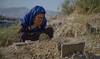
More than 180 journalists — almost all Palestinians — have been killed in Gaza since the start of the Israeli offensive, according to the Committee to Protect Journalists. Other organizations estimate the toll to be as high as 231. (X/File)
Short Url
Updated 24 July 2025
Follow

Pregnant Palestinian journalist killed in Israeli strike

  • Walaa Al-Jaabari was killed along with her husband, 4 children and unborn child during a bombing on her house in southwest Gaza City
  • According to local reports not independently verifiable, the explosion was so powerful it reportedly ejected the fetus from her womb

LONDON: Palestinian journalist Walaa Al-Jaabari, who was reportedly pregnant, was killed along with her immediate family in an Israeli airstrike on Wednesday.

Al-Jaabari, a newspaper editor for several local media outlets, died when her home in the Tal Al-Hawa neighborhood in southwest Gaza City was bombed. The strike also killed her husband, Amjad Al-Shaer, their four children, and her unborn baby.

According to local reports, the explosion was so powerful it reportedly ejected the fetus from her womb. Arab News could not independently verify this claim or the authenticity of photos circulating online that appear to show a fetus wrapped in a shroud.

Her death is the latest in what human rights and press freedom organizations have described as the systematic targeting of journalists in Gaza.

On Wednesday, the International Federation of Journalists renewed its call for Israel to stop killing media workers and to allow international reporters access to the territory, which has been under an Israeli-imposed blockade for 21 months.

More than 180 journalists — almost all Palestinians — have been killed in Gaza since the start of the Israeli offensive, according to the Committee to Protect Journalists. Other organizations estimate the toll to be as high as 231.

In at least a dozen cases, rights groups say there is evidence that Israeli forces deliberately targeted journalists, which they warn may constitute war crimes.

No independent reporters have been permitted entry into Gaza throughout the war, apart from a handful of tightly controlled, brief “embed” visits with Israeli troops.

Israeli authorities have repeatedly refused to lift the ban, citing security concerns and the risks of allowing journalists to operate freely in the conflict zone.

The blockade has placed immense pressure on local reporters, who face extreme working conditions, including limited access to electricity, food, and Internet connectivity.

On Thursday, the Associated Press, Agence France-Presse, Reuters and the BBC issued a joint statement urging Israel to allow journalists access to Gaza and permit the entry of humanitarian supplies.

“We are desperately concerned for our journalists in Gaza, who are increasingly unable to feed themselves and their families,” the statement said. “For many months, these independent journalists have been the world’s eyes and ears on the ground in Gaza. They are now facing the same dire circumstances as those they are covering.”


Study finds nearly half of UK news stories on Muslims show signs of bias

Updated 09 March 2026
Follow

Study finds nearly half of UK news stories on Muslims show signs of bias

  • Centre for Media Monitoring finds 20,000 out of 40,913 articles from 30 major news outlets contain bias and 70% link Muslims to negative behaviors or themes
  • Findings reveal ‘deeply concerning evidence of structural bias’ in portrayal of Muslims by UK press and point to ‘systemic problem’ within the media, says center’s director

LONDON: Nearly half of news articles published in the UK in 2025 that referenced Muslims or Islam contained some degree of bias, according to a report issued on Monday by the Centre for Media Monitoring. It also found that about 70 percent of stories linked Muslims to negative behaviors or themes.

The nonprofit organization, which tracks the ways in which Muslims and Islam are portrayed in the media, examined 40,913 articles from 30 major news outlets and found that about 20,000 showed some form of bias.

The study looked at “structural patterns” in coverage that “shape public narratives” about Muslims amid rising hostility toward the community.

“As the largest study of its kind ever conducted in the UK, this report presents deeply concerning evidence of structural bias in how Muslims are portrayed in the UK press,” said Rizwana Hamid, the director of the organization.

It found that 70 percent of the articles it reviewed highlighted negative aspects related to Muslims, though not all of the stories were biased in themselves. The wider patterns were also troubling: 44 percent of the coverage omitted key context, 17 percent relied on generalizations, and 13 percent included outright misrepresentation.

Taken together, the monitoring center said, the findings amounted to evidence of an “information integrity crisis” that distorts public understanding, and “a deeply concerning trend” in reporting on Muslims.

The research points to a “systemic problem within our media ecosystem,” Hamid said.

“When entire communities are repeatedly framed through lenses of suspicion or threat, it inevitably shapes public attitudes, political debate and the everyday lives of British Muslims,” she added.

News brands targeting right-wing audiences were more likely to produce biased coverage, the report found.

The Spectator magazine and GB News were identified as having the highest proportion of “very biased” articles, and as the “worst across all five bias categories”: negative framing, generalizations, misrepresentation, lack of context, and problematic headlines.

Other outlets highlighted for displaying high levels of biased content about Muslims included The Telegraph, The Jewish Chronicle, Daily Express, The Sun, Daily Mail and The Times.

In contrast, the BBC, other broadcasters and left-leaning outlets recorded the lowest rates of bias in the study.

The research comes as British Muslims report rising levels of discrimination. Official figures published in October revealed that religious hate crimes against Muslims rose by 19 percent in the year to March 2025 compared with the previous 12 months.