Afghanistan to send 700 workers to Qatar in first labor deal under Taliban

Short Url
Updated 23 July 2025
Follow

Afghanistan to send 700 workers to Qatar in first labor deal under Taliban

  • Ministry of Labor and Social Affairs says registration for Qatar jobs to ‘start very soon’
  • Many Afghan households rely on remittances sent by relatives as unemployment rate is high

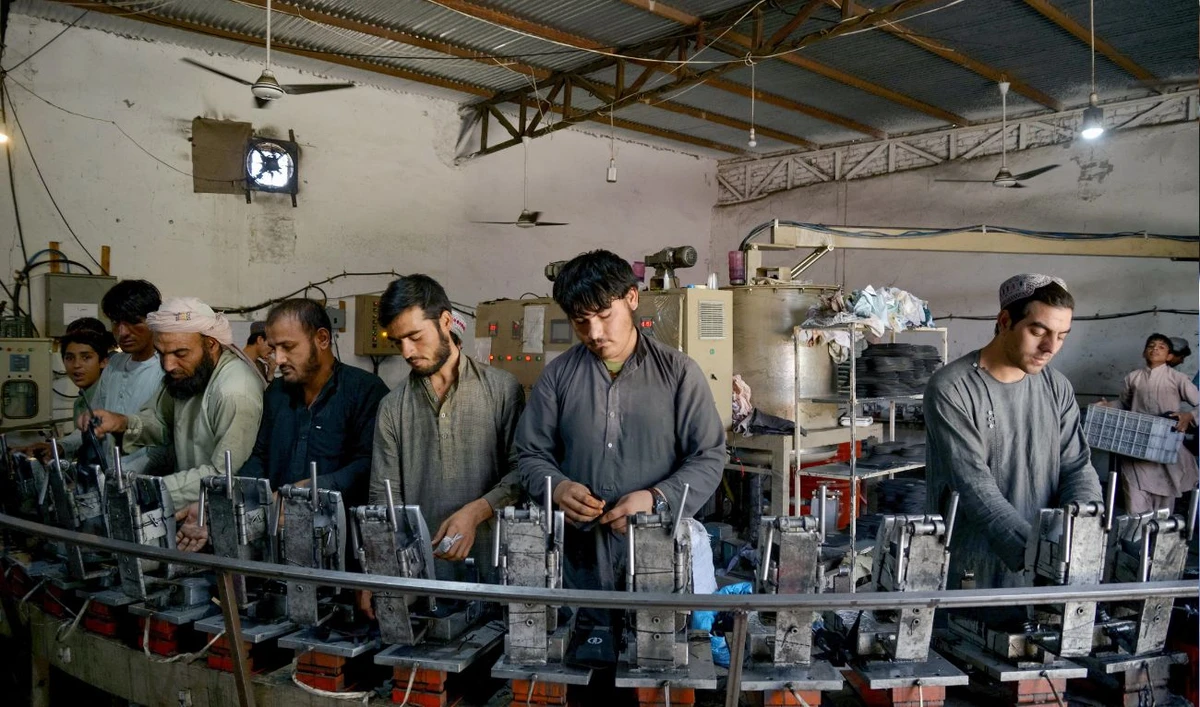
KABUL: Afghanistan is set to send 700 workers to Qatar under a new agreement marking the first formal deployment abroad since the Taliban takeover in 2021.

The Afghan Ministry of Labor and Social Affairs said on Monday that the agreement was reached between a joint public-sector company from Qatar and private employment firms in Afghanistan and the placement process will be supervised by the Afghan government.

“Based on this agreement, an initial 700 job opportunities have been allocated for Afghan workers,” it said. “The core objective is the legal, safe, and dignified deployment of Afghan workers abroad, with the necessary future support to uphold their rights.”

Samiullah Ebrahimi, the ministry’s spokesman, told Arab News on Wednesday that the “registration process will start very soon” and that the government “will identify in which sectors Qatar needs laborers.”

As Afghanistan faces very high unemployment, with many daily wage earners struggling to find work or earn a living inside the country, sending labor abroad could provide immediate economic relief.

“This agreement will bring continued and sustainable income to Afghan families. A major factor is that our economy is currently based on remittance. With more labor going abroad, the volume of remittance gets increased, helping the economy stabilize,” Abdul Hameed Jalili, former refugee affairs attache to Pakistan, told Arab News.

The new agreement will not only provide jobs but also help elevate Afghanistan’s standing in the international labor market, potentially opening doors for more Afghan workers abroad.

“Afghanistan is home to a skilled and talented workforce and enabling these individuals to work overseas can showcase the strength and professionalism of our labor force. This, in turn, could enhance the country’s reputation and encourage other nations to consider recruiting Afghan workers,” Jalili said.

Remittances have played a vital role in supporting both Afghan households and the national economy and used to contribute 4 percent to GDP, according to data from the Assessment Capacities Project, a non-governmental organization hosted by the Norwegian Refugee Council, which provides humanitarian analysis.

They dropped in 2021, when Afghanistan was hit with sanctions after US-led forces left the country and its Western-backed administration collapsed as the Taliban took control.

While since 2022 they have been on the rise, they are still below the pre-2021 level, according to ACAPS, also due to the reliance on unofficial hawala transfers, which are difficult to track.

Many households are reliant on these transfers as job opportunities in Afghanistan have shrunk.
 
It is unclear how high the unemployment rate currently is, but various reports suggest it has skyrocketed over the past four years with the withdrawal of foreign projects and aid. The UN Development Program warned in May that 75 percent of the Afghan population was subsistence-insecure, lacking access to adequate housing, health care, and essential goods.

With no job prospects at home and no labor deals between the Taliban administration and foreign governments, many Afghans have illegally traveled abroad in search of employment, often taking dangerous routes.

According to the International Organization for Migration, over 1.6 million Afghans left the country between 2021 and 2023.

Agreements like the one signed with Qatar could pave the way for essential protections of those working abroad.

“Expanding official labor agreements with additional countries could help slow the migration trend that followed the collapse of the former government by offering safe and legal pathways for work abroad,” Jalili said.

“This would also reduce the risks associated with human trafficking and irregular migration, allowing Afghans to pursue opportunities overseas through regulated and secure channels.”
Afghan barbers under pressure as morality police take on short beards

Updated 4 sec ago
Follow

Afghan barbers under pressure as morality police take on short beards

KABUL: Barbers in Afghanistan risk detention for trimming men’s beards too short, they told AFP, as the Taliban authorities enforce their strict interpretation of Islamic law with increasing zeal.
Last month, the Ministry for the Propagation of Virtue and Prevention of Vice said it was now “obligatory” to grow beards longer than a fist, doubling down on an earlier order.
Minister Khalid Hanafi said it was the government’s “responsibility to guide the nation to have an appearance according to sharia,” or Islamic law.
Officials tasked with promoting virtue “are obliged to implement the Islamic system,” he said.
With ministry officials patrolling city streets to ensure the rule is followed, the men interviewed by AFP all spoke on condition of anonymity due to security concerns.
In the southeastern province of Ghazni, a 30-year-old barber said he was detained for three nights after officials found out that one of his employees had given a client a Western-style haircut.
“First, I was held in a cold hall. Later, after I insisted on being released, they transferred me to a cold (shipping) container,” he said.
He was eventually released without charge and continues to work, but usually hides with his clients when the patrols pass by.
“The thing is that no one can argue or question” the ministry officials, the barber said.
“Everyone fears them.”
He added that in some cases where both a barber and clients were detained, “the clients have been let out, but they kept the barber” in custody.
Last year, three barbers in Kunar province were jailed for three to five months for breaching the ministry’s rules, according to a UN report.

‘Personal space’

Alongside the uptick in enforcement, the religious affairs ministry has also issued stricter orders.
In an eight-page guide to imams issued in November, prayer leaders were told to describe shaving beards as a “major sin” in their sermons.
The religious affairs ministry’s arguments against trimming state that by shaving their beards, men were “trying to look like women.”
The orders have also reached universities — where only men study because women have been banned.
A 22-year-old Kabul University student said lecturers “have warned us... that if we don’t have a proper Islamic appearance, which includes beards and head covering, they will deduct our marks.”
In the capital Kabul, a 25-year-old barber lamented that “there are a lot of restrictions” which go against his young clients’ preference for closer shaves.
“Barbers are private businesses, beards and heads are something personal, they should be able to cut the way they want,” he said.
Hanafi, the virtue propagation minister, has dismissed such arguments, saying last month that telling men “to grow a beard according to sharia” cannot be considered “invading the personal space.”

Business slump

In Afghanistan, the majority are practicing Muslims, but before the Taliban authorities returned to power in 2021, residents of major cities could choose their own appearance.
In areas where Taliban fighters were battling US-backed forces, men would grow beards either out of fear or by choice.
As fewer and fewer men opt for a close shave, the 25-year-old Kabul barber said he was already losing business.
Many civil servants, for example, “used to sort their hair a couple of times a week, but now, most of them have grown beards, they don’t show up even in a month,” he said.
A 50-year-old barber in Kabul said morality patrols “visit and check every day.”
In one incident this month, the barber said that an officer came into the shop and asked: “Why did you cut the hair like this?“
“After trying to explain that he is a child, he told us: ‘No, do Islamic hair, not English hair’.”