Taste of exile: Beloved Afghan street food disappears from Pakistani cities amid deportation drive

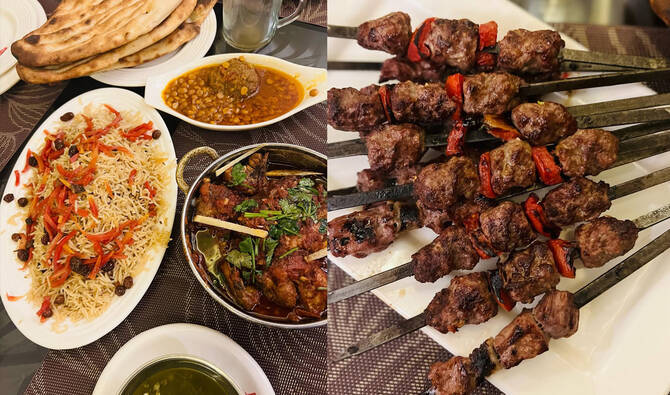
This combination of photos, created on July 19, 2025, shows Afghan cuisine at a local restaurant in Islamabad on February 11, 2023. (Photo courtesy: Instagram/Asma Naveed)
Short Url
Updated 19 July 2025
Follow

Taste of exile: Beloved Afghan street food disappears from Pakistani cities amid deportation drive

  • Vendors, recipes and memories vanish as nearly a million Afghans forced to leave Pakistan
  • In Islamabad and Karachi, Pakistani customers say flavor are fading and so is a shared culture

ISLAMABAD/KARACHI: In a bustling corner of Islamabad’s F-10 Markaz, the scent of sizzling oil and green chili chutney once signaled the presence of Afghan street food.

Today, the aroma is gone and so are the stalls that created it — the hum of grills and laughter and life.

“There used to be a few [Afghan fries stalls] around my neighborhood and then one morning, they just upped and left,” said Hamza Nofil, 28, who used to daily have the crinkle-cut, ridged, and golden chips, always served with the signature green chutney.

“So, you know, it breaks my heart.”


This combination of photos shows two Afghan-run food stalls in Islamabad. (AN Photo)

The heartbreak is shared by many in Pakistan’s urban centers where those fries, and the people who served them, were part of a larger story — of exile, adaptation and community — that is now vanishing as a result of a sweeping deportation drive targeting Afghan nationals.

Since November 2023, Pakistan has expelled nearly one million Afghans as part of a crackdown on undocumented foreigners. The government has also not renewed Proof of Registration (PoR) cards for 1.4 million Afghan refugees, allowing their legal stay to lapse in June 2024.

While the policy has drawn criticism from rights groups and international powers, it is the quieter losses, of flavor, memory, and a sense of belonging, that now echo through city markets and street corners.

Among the casualties are the street food stalls, modest, smoky kitchens on wheels, where generations of Afghan refugees introduced Pakistanis to flavors from across the border: the fries dunked in secret chutney, paratha-wrapped burgers and mounds of Kabuli Pulao rice heaped with raisins, nuts and slow-cooked beef.

Shahid Ali, 22, a Pakistani vendor in F-10, said he remembered when there were six or seven Afghan fries stalls in the area, as well as those selling Afghan burgers wraps packed with shredded chicken or kebab, slathered with sauces and served in paratha.

“You won’t see any Afghans around here because the government sent them back to Afghanistan,” Ali said.

As Afghan families depart, Pakistani vendors have tried to mimic the recipes but something vital has been lost.

“We are missing them [Afghan food stalls],” said Iqra, 29, a banker who only gave her first name. “I will definitely miss them, especially their green chutney. I loved that.”

“A WORLD IS GOING”

In Karachi’s Al-Asif Square, nicknamed “Small Kabul” for its long-settled Afghan community, the losses are not just culinary. They are existential.

“The craftsmen are going, the shopkeepers are leaving,” said Sayed Abdul Wali, a 27-year-old shopkeeper. “A world is going to Afghanistan.”


This combination of photos shows Afghan dresses in Karachi. (AN Photo)

Abdul Kabir, a Pakistani who sells traditional Afghan naan flatbreads, said demand had plummeted.

“Where once three sacks of flour would be used, now we only use one,” he said. “Even the morning batch is still lying here.”

Anthropologist Saeed Husain warned of cultural erasure, saying more than flavor was being lost. He described Afghan food culture as a form of lived knowledge, passed down from generation to generation, evolving with each retelling.

“All these traditions will be lost,” Husain said. “And then we’ll just have copies, really cheap copies… all of that will be lost too now.”

Afghans began arriving in Pakistan in large numbers after the Soviet invasion of 1979, with successive waves fleeing war, drought, and political instability. In urban Pakistan, cities like Karachi and Islamabad, they became traders, laborers, mechanics, and cooks, helping build the very urban fabric from which they are now being erased.
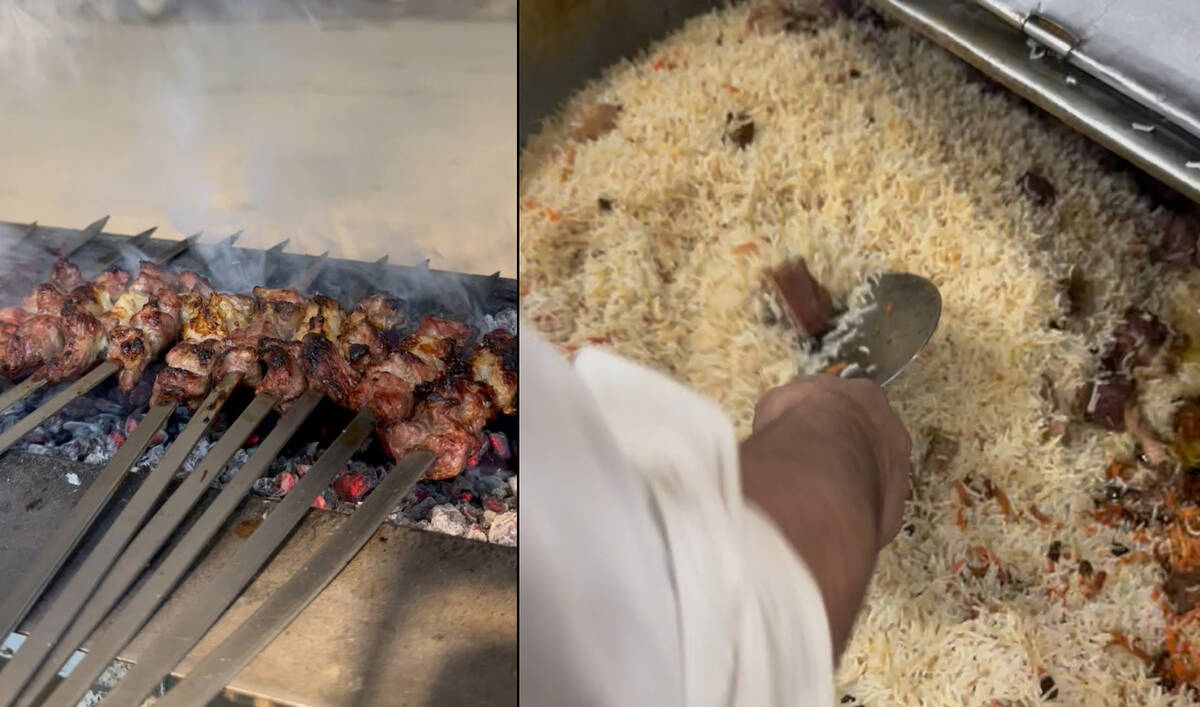


This combination of photos shows populare Afghan Boti (left) and Kabuli Pulao (right) in Karachi. (AN Photo)

“Pakistan is a country founded in 1947 and made by refugees,” said Dr. Sanaa Alimia, author of Refugee Cities: How Afghans Changed Urban Pakistan.

The professor said Afghans were deeply woven into the economic and cultural fabric of urban centers and played a foundational role in shaping the cities of Pakistan, building homes, laying roads, running businesses — and serving food.

“There are many examples, from agricultural production and farming techniques, to mechanics, to doctors… artists, tandoor wallas, and so much more,” Dr. Alimai said.

But she cautioned against reducing the worth of Afghans to their economic value.

“Human and political rights are about protecting and valuing people irrespective of if they contribute to the economy or not.”

Back in Karachi, Mohsin, a local customer, feared not just the loss of food but of taste, tradition, and togetherness.

“If our Afghan brothers leave,” he said, “then perhaps the taste and flavor will leave too.”


Draped in history, Saudi fashion designers look to the future

Updated 22 February 2026
Follow

Draped in history, Saudi fashion designers look to the future

  • Saudi designers are reimagining the Kingdom’s heritage through modern fashion

RIYADH: The fast-growing fashion industry in Saudi Arabia is looking through the lens of history and heritage to produce clothing draped in the history of traditional garb worn during the time of the Kingdom’s founding.

At the Saudi Cup on Feb. 13, a number of designers showcased their couture inspired by the country’s rich history.

Saudi designer Fahda Al-Battah, one of the minds behind brand Adara by Fa alongside Abeer Al-Moammar, spoke to Arab News about their debut collection “Journey Through Time.”

Saudi designers showcased their couture inspired by the Kingdom’s rich history at the recent Saudi Cup in Riyadh, which is becoming  a hotspot for the latest styles. (Supplied)

The emerging brand’s collection was designed with the intention of displaying the country’s diversity.

The collection’s six pieces each represent a region of the Kingdom, either through motifs, symbolism, or patterns that are hand drawn by Al-Battah and her team.

The first dress is heavily inspired by the Qassim and Al-Ahsa regions, and features illustrated scenes of people collecting dates from palm trees and using them in various ways. “It’s a story, basically,” Al-Battah said.

“Heritage must be preserved and if anything new comes up now, we must create new heritage and not replicate the past,”

Amar Al-Amdar, Saudi designer

Another piece uses the patterns and colors that are prominent in the Southern region as motifs, with a backdrop of lush mountains and colorful architecture.

A drapey blue piece is inspired by the coasts of both Jeddah and the Eastern Province. “It's very fluid, even in design,” she said.

Adara by Fa's debut collection "Journey Through Time" highlights the beauty of Saudi Arabia's various regions. (AN photo by Abdulrahman bin Shalhoub)

Two other pieces are inspired by the central Najd region, the designer said, a dark green ensemble with wing sleeves and another white dress, each elevated with decorative pieces resembling a string of dates.

The hero piece is an extravagant gown that displays every part of Saudi Arabia chronologically along the trim, starting with Najd and meshing into the other regions.

“The last dress has each part of Saudis, any culture and heritage, and it unifies us with the sheila (headscarf), which has King Abdulaziz’s quote, ‘We united on the word of monotheism, and so our hearts and lands united,’ which shows unification of us as a whole region,” she said.

MD29, another brand supported by the Fashion Commission, was inspired by the Saudi spirit of hospitality, taking Saudi coffee as a central element in their latest collection. (AN photo by Abdulrahman bin Shalhoub)

“Saudi is very rich in heritage. So, most of the designers right now are looking for a way to identify themselves in the global market and showcase the beauty of what Saudi has.

“Each designer in Saudi is paving the way in a new field, which makes it very exciting and very creative,” Al-Battah said.

ASL Line, for example, was inspired by the lavender found in the heart of the desert. The soul of the plant was translated into a story through stitching and colorful motifs.

“We don’t look for inspiration from far away … we go back to our land,” according to a post on the brand’s social media account.  

MD29, another brand supported by the Fashion Commission, was inspired by the Saudi spirit of hospitality, taking Saudi coffee as a central element in their latest collection.

“You can see in the collection the color variations from the plant to the grind. This time, they wanted to highlight the character more, not just in the silhouettes, but in the fabrics, in the Arab spirit,” Manal Al-Dawood, founder of the brand, told Arab News.

Through their technique of layering the fabric, the prints used in the collection try to show the journey of coffee beans, from the moment they are planted into the earth to making it to the grinding process.

Saudi designer Amar Al-Amdar shared with Arab News his thoughts on the art scene through his experience of being a prominent figure in the industry.

He said: “We are now in phases of focusing on respecting the identity and culture in Saudi designs across all its regions, of course.

“And that’s a beautiful thing, but an important thing to focus on in this phase is that, in the past, when they were working on creating our pieces and wearing these (traditional) designs, that was considered innovation. That was the new look.

“When there was a swift pause on the development of our clothing, our past became heritage. But heritage must be preserved and if anything new comes up now, we must create new heritage and not replicate the past.”

He did not mince words about the wave of amateur designers that are adapting traditional clothing to use as decorative elements for newer, unconventional designs.

“For example, some of the worst things I’ve seen is taking something like the shemagh (scarf) and incorporating it into pants, or taking the agal (headwear) and making it a belt.

“This mix and crossing is wrong. Long ago, when they designed something for the head, it was intended to serve a purpose. It wasn’t decorative,” he said.

He felt it was important to caution novel fashion designers to innovate for the future and not simply look to the past for inspiration, and not create pieces that use heritage as merely a decorative motif.

“We need to form new paths, some renewal. There was a functionality to things, everything served a purpose in its design.

“But when design only becomes shifting a placement of something, that’s the biggest misuse of the original Saudi design … heritage is made to serve a purpose, so if we want to innovate it, it must have a functionality to it,” he said.