UK police hunt suspects after anti-migrant protests turn violent

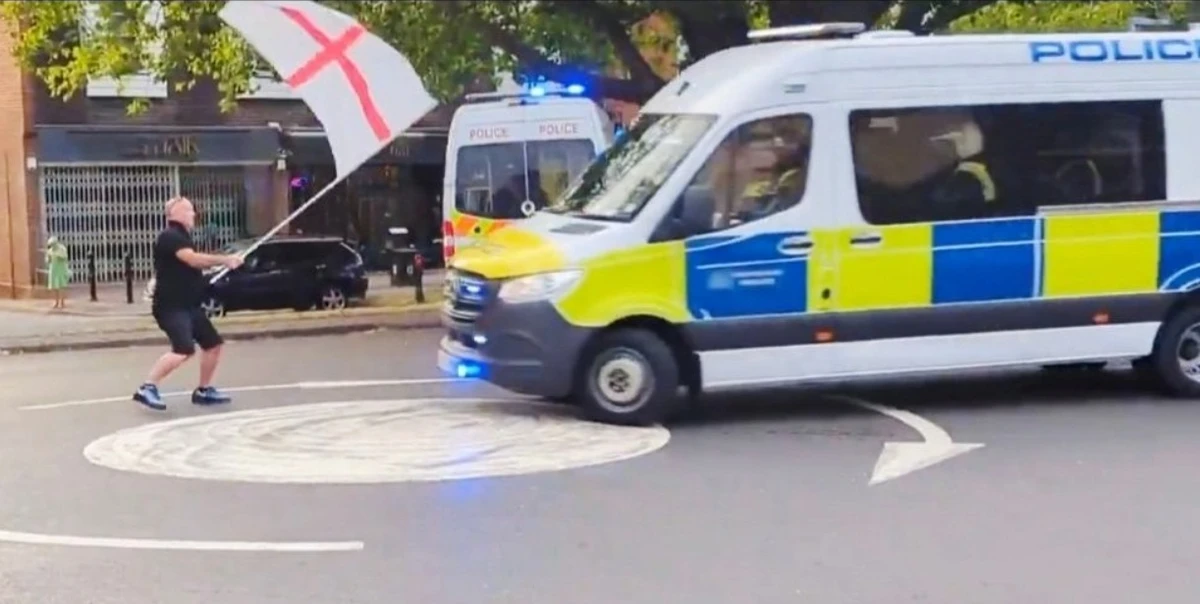
Police promised Friday to track down suspects behind violence at a protest outside a southeast England hotel believed to house asylum seekers, after officers and vehicles were attacked. (X/@OneSixTwoThree1)
Short Url
Updated 18 July 2025
Follow

UK police hunt suspects after anti-migrant protests turn violent

  • Eight police officers were injured and three vehicles were damaged, Essex police said
  • Essex police on Friday insisted officers would “continue to support those communities that want to peacefully protest“

EPPING, UK: Police promised Friday to track down suspects behind violence at a protest outside a southeast England hotel believed to house asylum seekers, after officers and vehicles were attacked.

The violence followed several demonstrations in recent days in the town of Epping which flared after police charged an asylum seeker with sex offenses.

Eight police officers were injured and three vehicles were damaged, Essex police said.

The unrest, which police blamed on people from “outside of our community,” comes a year after anti-immigration riots rocked the UK in the wake of the fatal stabbings of three young girls in the northern town of Southport.

Then, rioters targeted hotels housing asylum seekers in several different English cities, infamously attempting to set fire to one in Rotherham, northeast England.

Essex police on Friday insisted officers would “continue to support those communities that want to peacefully protest” but would not tolerate “acts of violence and vandalism.”

“After last night I’ve got a team of specialist detectives today that are combing through the body-worn video CCTV to identify those who are responsible,” Assistant Chief Constable Stuart Hooper told AFP.

“And what I can say is if you’re one of those individuals you can expect a knock on the door.”

Hooper said the “selfish individuals” behind the violence were mostly “from outside of the area” and had traveled to Epping “intent on causing criminality.”

Right-wing agitators, including far-right activist Tommy Robinson, have been sharing posts and videos about the situation on social media.

Footage of Thursday’s protests showed masked people pelting police vans and jumping on them, as well as clashing with officers.

The disturbances came after police charged 38-year-old asylum seeker Hadush Gerberslasie Kebatu with three counts of sexual assault, one count of inciting a girl to engage in sexual activity and one count of harassment without violence.

The charges stem from allegations he tried to kiss a 14-year-old girl as she ate pizza at a restaurant in Epping, just northeast of London, on July 7 and again the following day.

He has pleaded not guilty, and appeared in court for a hearing on Thursday.

An asylum seeker from Ethiopia, he arrived in the UK irregularly after crossing the Channel on a small boat at the end of last month.

In the wake of the incident, local officials have called for the Bell Hotel to no longer house asylum seekers.

Isolated Kremlin critics lament lost future at Nemtsov memorial

Updated 4 sec ago
Follow

Isolated Kremlin critics lament lost future at Nemtsov memorial

  • Hundreds used to flock to the makeshift memorial on the anniversary of his death
  • Since Russia ordered troops into Ukraine it has intensified a crackdown on dissent, with almost no opposition to the Kremlin visible on the street

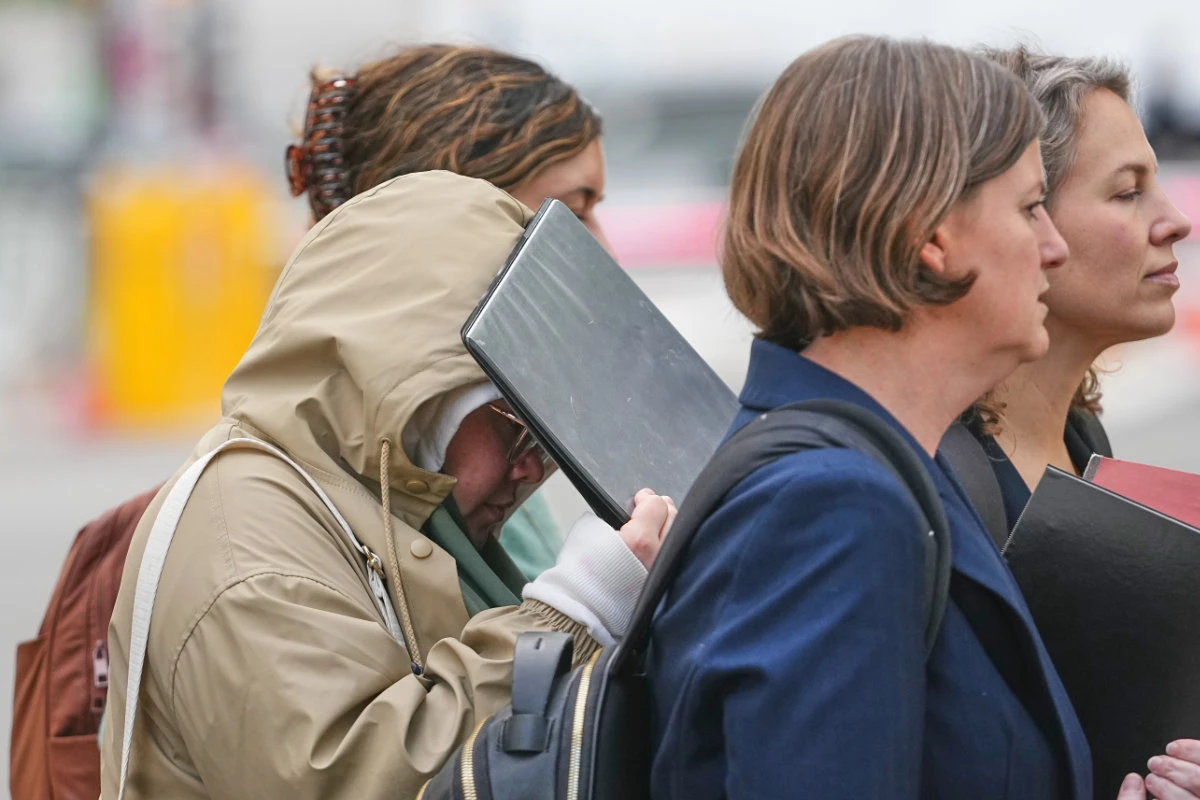
MOSCOW: On a bridge next to the Kremlin on a drizzly Friday morning, a lone Russian police officer stood looking at the half-dozen bunches of flowers laying in memory of slain opposition figure Boris Nemtsov.
The symbolism was almost too much.
Four years into Moscow’s full-scale offensive on Ukraine, which has seen President Vladimir Putin eradicate all forms of dissent and usher in strict military censorship laws that have silenced his critics, few Russians dared, or wanted, to pay tribute.
Nemtsov, a longtime Putin opponent, was shot and killed on February 27 2015, meters from the Kremlin’s red walls. He was 55.
Hundreds used to flock to the makeshift memorial on the anniversary of his death, which came on Friday.
This year, there was barely a trickle. Those who turned up were visibly nervous.
“So few people, they’ve all forgotten,” lamented one elderly man, who refused to give his name.
“Everybody is afraid,” a woman standing nearby added.
Since Russia ordered troops into Ukraine it has intensified a crackdown on dissent, with almost no opposition to the Kremlin visible on the street.
AFP reporters on Friday morning saw only around a dozen mourners alongside Western ambassadors laying red carnations.
“Keep moving, don’t gather in a crowd, don’t block the way for other citizens,” a police officer said through a megaphone.
Three days after Russia launched its offensive on Ukraine in 2022, protesters had staged an impromptu rally against the war at the memorial on the anniversary of Nemtsov’s death.
Nemtsov’s supporters have always accused Chechen leader and key Putin ally Ramzan Kadyrov of ordering his killing.
Kadyrov has rejected the claims.
Five Chechens were convicted of a contract killing but investigators never said who it was ordered by.

- ‘Everything is persecuted’ -

For his followers, Nemtsov is a totemic figure in Russian political life — seen as a once-future leader who might have taken the country on a different path.
“I come here every year,” said 79-year-old scientist Sergei at the bridge on Friday.
“Russia should have had — though unfortunately it didn’t work out — a leader exactly like Nemtsov,” he told AFP, declining to give his surname.
“Right now everything here is suppressed, everything is persecuted, people are sitting in prisons.”
A physicist by education, Nemtsov rose to fame in the 1990s as a young, liberal provincial governor, and was widely tipped to take over from Boris Yeltsin.
He gave his hesitant backing to Putin when the ex-KGB spy was tapped to enter the Kremlin instead, but became an early — and fierce — opponent of what he cast as the Russian leader’s creeping authoritarianism.
He had largely lost popularity and was only a marginal figure in Russian politics when he was killed in 2015. Still, his murder shocked the country and the world.
“The hopes of the whole country were pinned on him — of all the people who wanted it to be free here,” said Olga Vinogradova, a 66-year-old volunteer who tends to the pop-up memorial to Nemtsov on the bridge.
“When this man was killed, naturally, all of us were, we were all just executed at that moment. Because our hopes were destroyed,” she said.
“With this memorial, we remind people that there was a different path for Russia. And that there was a real person who could have led us down this path.”

- ‘Forced out’ -

Nemtsov had strongly opposed Putin’s 2014 annexation of Crimea from Ukraine and Moscow’s military backing for pro-Russian separatists in eastern Ukraine.
He was also a close and early ally of Alexei Navalny, who died in 2024 in an Arctic prison in what his supports say was a poisoning.
Open opposition to the Kremlin is unheard of inside Russia since the first days of the Ukraine offensive — when riot police cracked down hard on the thousands that took to the streets to protest.
All major critics of the Kremlin are in exile, prison or dead.
Those that remain have been silenced.
“Many have been forced out of the country, some have been killed,” said Gleb, a 23-year-old photographer.
A movement or person like Nemtsov was “impossible” to imagine right now, he said.
Still, he held on to a slither of hope.
“But everything can change at any moment.”