Pakistan signs rail project pact with Afghanistan, Uzbekistan in push for regional connectivity

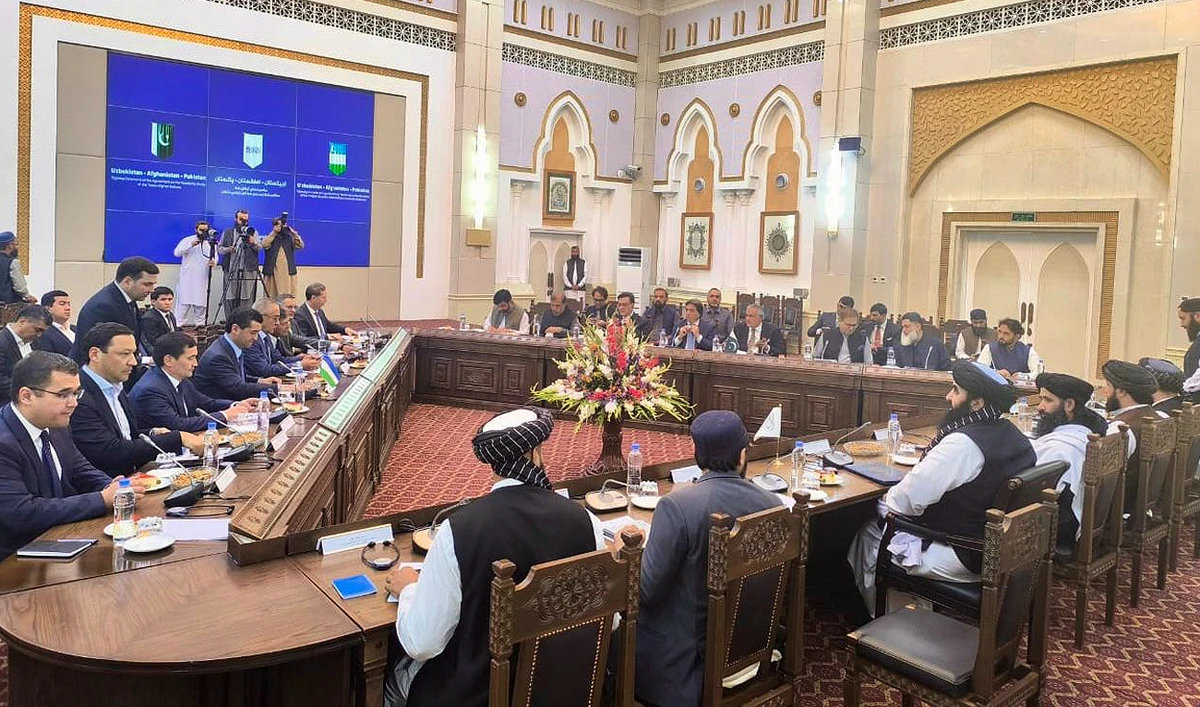
Pakistan Foreign Minister Ishaq Dar meets his Afghan and Uzbek counterparts in Kabul on July 17, 2025, ahead of the signing of a framework agreement on a joint railway project. (Handout/MOFA)
Short Url
Updated 17 July 2025
Follow

Pakistan signs rail project pact with Afghanistan, Uzbekistan in push for regional connectivity

  • Agreement will launch joint feasibility study for UAP railway link connecting Central Asia to Pakistani ports
  • Pact seen as one of the first tangible outcomes of renewed engagement between Islamabad and Kabul

ISLAMABAD: Pakistan’s Deputy Prime Minister Ishaq Dar on Thursday signed a framework agreement to conduct a joint feasibility study for the Uzbekistan-Afghanistan-Pakistan (UAP) Railway Project in Kabul, in a major push for regional connectivity with Central Asia.

The UAP Railway Project aims to establish a vital trade and transit corridor linking Uzbekistan with Pakistan via Afghanistan, offering the Central Asian republics direct access to Pakistani seaports. The rail link is expected to significantly boost regional connectivity, facilitate trade and contribute to long-term economic integration and political stability in the broader region.

For Pakistan, which seeks to position itself as a regional connectivity hub, the UAP railway is also strategically important in strengthening economic ties with Central Asia and securing stable transit through Afghanistan, a country whose internal security dynamics continue to impact broader regional development goals.

“I congratulate the people & governments of Pakistan, Afghanistan, and Uzbekistan on the signing of the Framework Agreement on the Joint Feasibility Study for the Naibabad–Kharlachi rail link under the Uzbek–Afghan–Pak (UAP) Railway Corridor,” Dar wrote on social media platform X.

Dar described the signing of the agreement as a “major milestone” for advancing regional connectivity and economic integration, pointing out that the project would connect Central Asian countries to Pakistani seaports through Afghanistan.

He thanked the foreign minister of Uzbekistan and Afghanistan for their support in ensuring the timely signing of the framework agreement.

Uzbekistan and Afghanistan signed an agreement in 2017 to extend a railroad connecting the two countries that would eventually give Uzbekistan a direct link to seaports. Landlocked Uzbekistan’s access to marine shipping is very limited.

DAR MEETS AFGHAN LEADERS

Dar, who also serves as Pakistan’s foreign minister, met his Afghan counterpart Amir Khan Muttaqi at the sidelines of the framework agreement signing to discuss bilateral cooperation and security.

He also met Afghan Prime Minister Muhammad Hassan Akhund to discuss trade, security and other matters between the two countries.

“The two leaders exchanged views on issues of mutual interest, including peace and security, trade and transit cooperation and regional connectivity,” Pakistan’s foreign office said in an earlier statement.
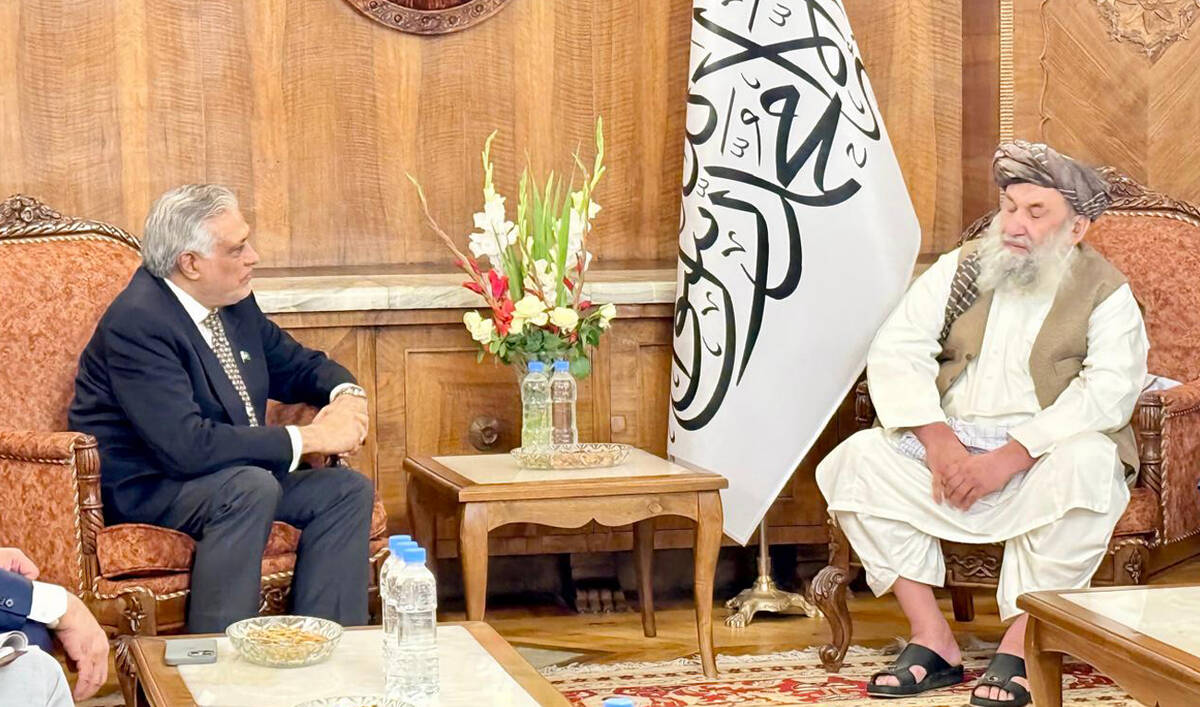


Pakistan Deputy Prime Minister Ishaq Dar meets Afghan Prime Minister Mullah Muhammad Hassan Akhund in Kabul on July 17, 2025, on the sidelines of the signing of the Uzbek-Afghan-Pak railway agreement. (Handout/MOFA)

Talks between the two countries’ officials took place amid a tentative thaw in Pakistan-Afghanistan relations, which have been strained in recent years due to a surge in militancy in Pakistan that Islamabad blames on Afghan-based insurgent groups. Kabul denies the allegations.

Efforts to repair the fractured ties between Islamabad and Kabul gained momentum during a China-hosted trilateral dialogue in Beijing in May between the foreign ministers of Pakistan, Afghanistan and China.

Islamabad and Kabul agreed in principle to send ambassadors to each other’s countries as soon as possible, Chinese Foreign Minister Wang Yi had announced after the summit.

The upcoming signing of the UAP railway pact, a long-discussed infrastructure project championed by all three governments, is also being seen as one of the first tangible outcomes of renewed engagement between Islamabad and Kabul.
Pakistan’s president defends ongoing strikes in Afghanistan, urges Kabul to dismantle militants

Updated 02 March 2026
Follow

Pakistan’s president defends ongoing strikes in Afghanistan, urges Kabul to dismantle militants

  • Afghanistan on Thursday launched attacks in retaliation for Pakistani airstrikes the previous Sunday
  • Pakistan’s military says it is only targeting Afghan military installations to avoid civilian casualties

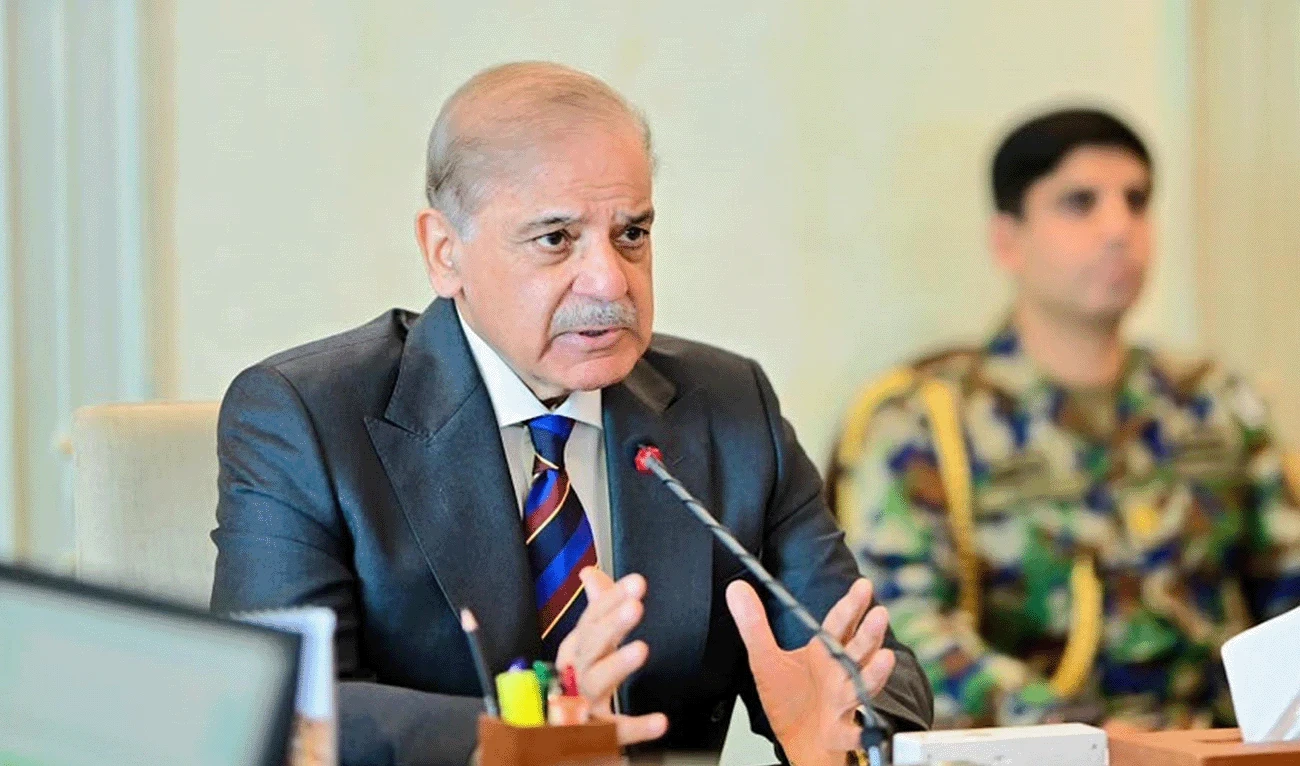
ISLAMABAD: Pakistan’s president on Monday defended his country’s ongoing military strikes in neighboring Afghanistan, saying Islamabad tried all forms of diplomacy before targeting militants operating from Afghan territory, and called on the Taliban government in Kabul to disarm groups responsible for attacks in Pakistan.

Pakistan earlier said it is in “open war” with Afghanistan, alarming the international community. The border area remains a stronghold for militant organizations including Al-Qaeda and the Daesh (Islamic State) group.

“(The Afghan Taliban) must choose to dismantle the terror groups that survive on conflict and its war economy,” Asif Ali Zardari said during a speech to lawmakers, adding that “no state accepts serial attacks on its soil.”

Afghanistan on Thursday launched attacks in retaliation for Pakistani airstrikes the previous Sunday. Since then, Pakistan has carried out operations along the border, with Information Minister Attaullah Tarar claiming the killing of 435 Afghan forces and the capture of 31 Afghan positions.

Kabul has denied such claims.

In Afghanistan, the deputy government spokesman Hamdullah Fitrat said Pakistan’s military fired mortar shells at a refugee camp in eastern Kunar province, killing three children and injuring three others.

Afghanistan’s defense ministry said Afghan forces carried out strikes targeting a Pakistani military facility near Paktia province, causing “substantial losses and heavy casualties.”

Pakistan’s military did not respond to questions. It has said Pakistan is only targeting Afghan military installations to avoid civilian casualties.

Pakistan has witnessed a surge of violence in recent months and blames it on the outlawed Pakistani Taliban, known as Tehreek-e-Taliban Pakistan or TTP. It operates both inside Pakistan and from Afghan territory.
Islamabad accuses Afghanistan’s Taliban government of providing safe havens for the TTP, which Kabul denies.

The latest cross-border fighting ended a ceasefire brokered by Qatar and Turkiye in October. The two sides failed to reach a permanent agreement during talks in Istanbul.

Zardari reiterated Pakistan’s call for talks, saying, “We have never walked away from dialogue.”

The Pakistani leader again accused Afghanistan of acting as a proxy for India by sheltering militant groups.

“Stop being used by another country as a battlefield for their ambitions,” he said.

Zardari cited a recent report from the United Nations Security Council’s monitoring team that described the presence of militant groups in Afghanistan as an extra-regional threat.