

Awami National Party leader killed as militant violence escalates in northwest Pakistan

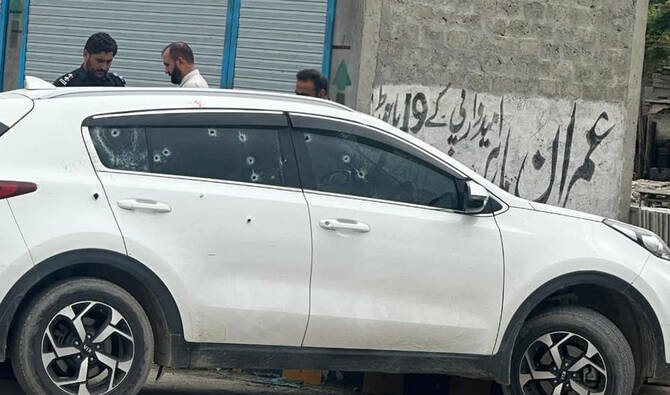
Security officials inspect the vehicle of Maulana Zeb Khan, a senior Awami National Party leader, following an attack in Bajaur, Khyber Pakhtunkhwa, on July 10, 2025. Khan was shot dead by unidentified assailants in the tribal district, according to the chief minister’s office. (Photo courtesy: X/@samanthaleaning)
Short Url
Updated 11 July 2025
Follow

Awami National Party leader killed as militant violence escalates in northwest Pakistan

  • Another person with ANP’s Maulana Zeb Khan shot dead by unidentified militants, says CM Office
  • ANP spokesperson Ihsan Ullah pays tribute to Khan, says he spoke out against militants frequently

ISLAMABAD: Two people, including a senior leader of the Awami National Party (ANP), were shot dead by unidentified assailants in Pakistan’s northwestern Khyber Pakhtunkhwa (KP) province on Thursday, the chief minister’s office said.

Maulana Zeb Khan, a leader of the Awami National Party (ANP), was shot dead along with another person in KP’s Bajaur tribal district by unknown persons, the chief minister’s office said. English language newspaper Dawn quoted police as saying that the politician was shot dead in Bajaur’s Shindai Mor while campaigning for a peace parade scheduled for July 13 when he was attacked.

ANP spokesperson Ihsan Ullah paid tribute to Khan, saying he frequently spoke out against militants and was a key member of the party, serving as its central secretary of ulema affairs.

“Two people, including Maulana Khan Zeb, were killed in Bajaur in a firing incident by unidentified assailants,” KP Chief Minister’s Office said in a statement, adding that Chief Minister Ali Amin Gandapur condemned the incident.
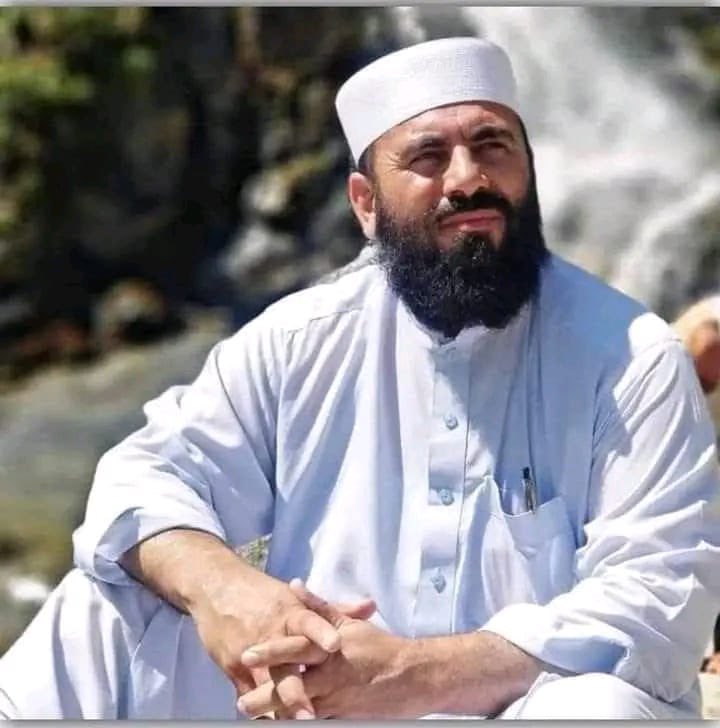


This handout photo, released by Awami National Party, shows ANP’s senior leader Maulana Zeb Khan. (Photo courtesy: ANP)

No group has so far claimed responsibility for the incident. 

The KP chief minister directed authorities to prepare a report on the incident and ordered immediate action against those responsible for Khan’s killing.

The incident takes place amid an alarming surge in militant attacks, especially in KP’s tribal districts such as Bajaur, in recent years. Despite past military operations, recent attacks on security forces, clerics and politicians highlight growing instability in the area.

Pakistan says Afghanistan-based militant groups launch attacks inside Pakistani territory, a claim Kabul has strongly denied. Islamabad also blames New Delhi for funding and arming these militant groups, which India also denies.


EU, Pakistan sign €60 million loan agreement for clean drinking water in Karachi

Updated 17 December 2025
Follow

EU, Pakistan sign €60 million loan agreement for clean drinking water in Karachi

  • Project will finance rehabilitation, construction of water treatment facilities in Karachi city, says European Investment Bank
  • As per a report in 2023, 90 percent of water samples collected from various places in city was deemed unfit for drinking

ISLAMABAD: The European Investment Bank (EIB) and Pakistan’s government on Wednesday signed a €60 million loan agreement, the first between the two sides in a decade, to support the delivery of clean drinking water in Karachi, the EU said in a statement. 

The Karachi Water Infrastructure Framework, approved in August this year by the EIB, will finance the rehabilitation and construction of water treatment facilities in Pakistan’s most populous city of Karachi to increase safe water supply and improve water security. 

The agreement was signed between the two sides at the sidelines of the 15th Pak-EU Joint Commission in Brussels, state broadcaster Radio Pakistan reported. 

“Today, the @EIB signed its first loan agreement with Pakistan in a decade: a €60 million loan supporting the delivery of clean drinking water for #Karachi,” the EU said on social media platform X. 

Radio Pakistan said the agreement reflects Pakistan’s commitment to modernize essential urban services and promote climate-resilient infrastructure.

“The declaration demonstrates the continued momentum in Pakistan-EU cooperation and highlights shared priorities in sustainable development, public service delivery, and climate and environmental resilience,” it said. 

Karachi has a chronic clean drinking water problem. As per a Karachi Water and Sewerage Corporation (KWSC) study conducted in 2023, 90 percent of water from samples collected from various places in the city was deemed unsafe for drinking purposes, contaminated with E. coli, coliform bacteria, and other harmful pathogens. 

The problem has forced most residents of the city to get their water through drilled motor-operated wells (known as ‘bores’), even as groundwater in the coastal city tends to be salty and unfit for human consumption.

Other options for residents include either buying unfiltered water from private water tanker operators, who fill up at a network of legal and illegal water hydrants across the city, or buying it from reverse osmosis plants that they visit to fill up bottles or have delivered to their homes.

The EU provides Pakistan about €100 million annually in grants for development and cooperation. This includes efforts to achieve green inclusive growth, increase education and employment skills, promote good governance, human rights, rule of law and ensure sustainable management of natural resources.