

Pakistan launches location-based SMS alerts to warn millions amid deadly monsoon floods

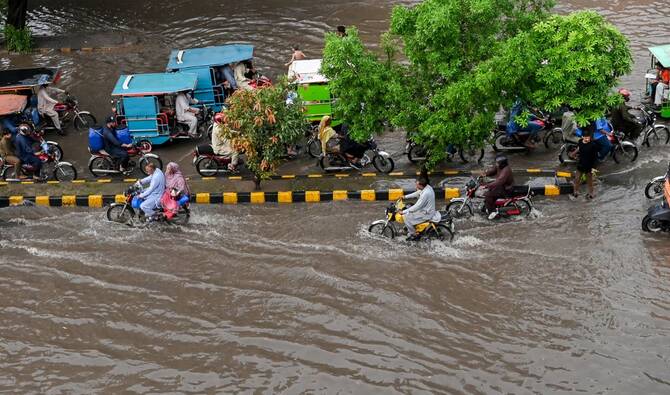
Commuters cross a flooded street after heavy monsoon rains in Lahore on July 9, 2025. (AFP)
Short Url
Updated 10 July 2025
Follow

Pakistan launches location-based SMS alerts to warn millions amid deadly monsoon floods

  • Over 23 million people in high-risk areas receive alerts via Pakistan’s largest telecom network Jazz
  • NDMA using geo-fencing and mobile apps to expand real-time disaster communication nationwide

ISLAMABAD: Pakistan has launched a location-based SMS alert system to warn citizens in flood-prone areas of imminent weather threats, state media reported on Thursday, as the country grapples with deadly monsoon rains.

The system, developed under the Disaster Early Warning System (DEW-3 – Monsoon), is a collaboration between the National Disaster Management Authority (NDMA) and Jazz, Pakistan’s largest digital telecom operator. It uses geo-fencing technology to deliver real-time alerts to millions of mobile users living in high-risk zones, enabling timely evacuations or precautionary action.

The move comes as torrential rains continue to batter parts of Pakistan, with over 80 killed since the start of the monsoon season in June.

Over 23 million Jazz subscribers live in areas identified by the NDMA as vulnerable to flooding and other climate-related disasters.

“This is a powerful demonstration of how public-private collaboration can leverage technology to protect lives and strengthen communities,” Aamir Ibrahim, CEO of Jazz, was quoted as saying in the APP statement.

“Our [Jazz] nationwide reach and location-based capabilities make us uniquely positioned to support NDMA in its mission to minimize disaster-related risks. As the monsoon season continues, this remains an ongoing effort aimed at reaching and protecting even more people in harm’s way.”

According to APP, the system sends out targeted SMS alerts using advanced geo-fencing techniques to people located directly within affected areas. These messages include clear, actionable instructions to help the public respond effectively to natural disasters.

NDMA acknowledged the partnership with Jazz, “which has enabled them to reach vulnerable populations quickly and effectively, using geo-fenced alerts to ensure no one is left uninformed in times of crisis,” APP reported.

The partnership was formalized in March 2025 to enhance Pakistan’s disaster preparedness using digital infrastructure. The system is designed to be scalable and responsive as weather patterns shift or new emergency zones emerge.

NDMA officials say the alerts are part of a wider effort to modernize disaster response by integrating digital tools and expanding risk communication channels. The authority also disseminates information through the Pak NDMA Disaster Alert mobile app, social media, and mainstream news outlets.

Pakistan has faced increasingly severe climate-related disasters in recent years, from catastrophic floods in 2022 to recurring heatwaves and droughts. The country ranks among the top ten nations most vulnerable to climate change, according to the Global Climate Risk Index, underscoring the urgent need for improved early warning and resilience systems.


Pakistani president arrives in Iraq to deepen trade, energy cooperation

Updated 20 December 2025
Follow

Pakistani president arrives in Iraq to deepen trade, energy cooperation

  • Visit follows recent high-level contacts as Islamabad seeks to expand limited commercial ties with Baghdad
  • Talks are expected to cover investment, manpower and facilitation of Pakistani pilgrims visiting holy sites in Iraq

ISLAMABAD: President Asif Ali Zardari arrived in Iraq on Saturday on an official visit aimed at expanding cooperation in trade, energy and investment, as Pakistan seeks to deepen ties with Baghdad after years of limited engagement.

Pakistan and Iraq established diplomatic relations in 1947 and have traditionally maintained cordial ties, though commercial links remain modest, with officials and business groups identifying scope for cooperation in construction services, pharmaceuticals, manpower and agricultural exports.

“President Asif Ali Zardari arrived in Baghdad on a four-day official visit to Iraq,” his office said in a post on X. “He was received by Culture Minister Dr. Ahmed Fakkak Al-Badrani. During the visit, meetings with senior Iraqi leadership are expected to advance cooperation and further strengthen Pakistan-Iraq relations.”

Zardari’s visit follows a series of recent high-level contacts between the two countries, reflecting efforts to broaden bilateral engagement beyond traditional diplomatic ties and explore collaboration across economic, political and people-to-people domains.

According to Pakistan’s foreign office, the president is expected to hold meetings with Iraq’s senior leadership to discuss cooperation in various areas such as trade and investment, energy, technology, education and manpower.

He is also expected to discuss regional and international issues with Iraqi officials.

Earlier this month, Pakistan’s Interior Minister Mohsin Naqvi met his Iraqi counterpart, Abdul Ameer Al-Shammari, on the sidelines of meetings in Brussels, where both sides agreed to enhance cooperation on security and facilitate travel for Pakistani Shia pilgrims to Najaf and Karbala.

The two officials discussed measures to ensure the smoother movement of these pilgrims and their compliance with visa regulations.