JERUSALEM: As Israel and Hamas move closer to a ceasefire agreement, Israel says it wants to maintain troops in a southern corridor of the Gaza Strip — a condition that could derail the talks.
An Israeli official said an outstanding issue in the negotiations was Israel’s desire to keep forces in the territory during a 60-day truce, including in the east-west axis that Israel calls the Morag corridor. The official spoke on condition of anonymity because they weren’t authorized to talk with the media about the negotiations.
Keeping a foothold in the Morag corridor is a key element in Israel’s plan to drive hundreds of thousands of Palestinians south toward a narrow swath of land along the border with Egypt, into what it has termed a “humanitarian city.”
Critics fear the move is a precursor to the coerced relocation of much of Gaza’s population of some 2 million people, and part of the Israeli government’s plans to maintain lasting control over the territory.
Hamas, which still holds dozens of hostages and refuses calls by Israel to surrender, wants Israel to withdraw all of its troops as part of any permanent truce. It is adamantly opposed to any lasting Israeli presence inside Gaza.
As part of the proposed truce, Israel and Hamas would hold fire for 60 days, during which time some hostages would be freed and more aid would enter Gaza.
Previous demands by Israel to maintain troops in a separate corridor stalled progress on a ceasefire deal for months.
The office of Prime Minister Benjamin Netanyahu declined to comment on how the Morag corridor was playing into ceasefire talks. Netanyahu was in Washington this week to discuss the ceasefire and other matters with US President Donald Trump, who has pushed both sides to bring an end to the war in Gaza.
Israel’s desire to keep troops in Gaza was among the ceasefire sticking points discussed Tuesday by senior officials from the US, Israel and Qatar, according to a White House official who spoke on condition of anonymity because they were not authorized to comment publicly.
“We want to have peace. We want to get the hostages back. And I think we’re close to doing it,” Trump said Wednesday in response to a question about the officials’ meeting.
Hamas said in a statement late Wednesday that Israeli troop withdrawal from Gaza was one of several remaining sticking points in the talks, without mentioning Morag specifically.
Morag corridor is one of three that carve up Gaza
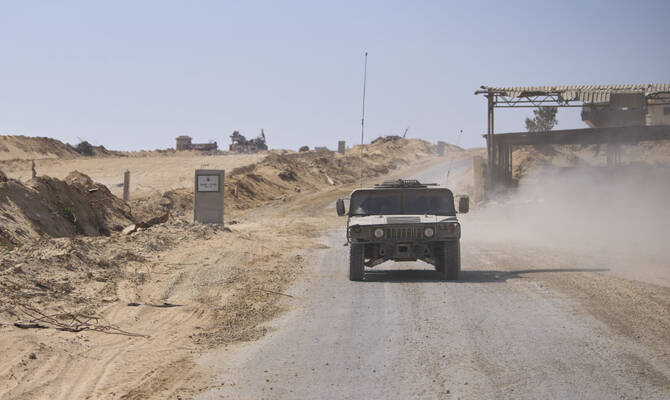
During their 21-month campaign in Gaza, Israeli forces have seized wide swaths of land, including three east-west corridors that have carved up the Palestinian enclave.
In April, Israel seized the Morag corridor — named after a Jewish settlement that existed in Gaza before Israel withdrew from the territory in 2005.
The corridor, located between Gaza’s southernmost city of Rafah and its second-largest city Khan Younis, stretches about 12 kilometers (7 miles) from Israel to the Mediterranean coast and is about 1 kilometer (half a mile) wide.
At the time, Netanyahu said it was part of a strategy of “increasing the pressure step by step” on Hamas.
Netanyahu called Morag a “second Philadelphi,” referring to another corridor that runs along Gaza’s border with Egypt. Israel has repeatedly insisted it must maintain control of Philadelphi to prevent cross-border arms smuggling. Egypt denies arms are moved through its territory.
Since the collapse of the last ceasefire in March, Israel has also reasserted control of the Netzarim corridor, which cuts off Gaza’s northern third from the rest of the territory and which it used to prevent Palestinians from returning to northern Gaza before the last truce.
It was not immediately clear how Israeli troops in the Netzarim and Philadelphi corridors factor into the ceasefire negotiations.
Morag allows Israel to set its population movement plan into motion
The foothold in Morag has effectively cut the Rafah area off from the rest of Gaza.
Rafah, once a city of tens of thousands of people, is currently all but flattened and emptied of its population following Israeli evacuation orders.
With those conditions in place, Israel says it seeks to turn the Rafah area into a “sterile zone” free of Hamas militants where it wants to move hundreds of thousands of Palestinians into a “humanitarian city.”
Most of Gaza’s population has already been displaced multiple times throughout the war and squeezed into ever smaller pieces of land. Rights groups see the planned new push to get them to head south as forcible displacement.
Israel’s idea is to use Morag as a screening zone for Palestinians being moved south, to prevent Hamas from infiltrating the area, according to Kobi Michael, a senior researcher at two think tanks, the Institute for National Security Studies and Misgav. That would allow Israeli troops to operate further north without Palestinian civilians getting caught in the crossfire, he said.
A no-go for Hamas
Michael said the move might allow Israel to ramp up the pressure on — and possibly defeat — Hamas in northern Gaza, where guerilla-style fighting continues to dog Israeli troops. And that, he added, could lay the groundwork for an end to the war, which Israel has vowed to continue until Hamas is destroyed.
But critics say the plan to move Palestinians south paves the way for the expulsion of Palestinians from the territory and for Israel to assert control over it, a priority for Netanyahu’s powerful far-right governing partners.
Netanyahu has said that any departures would be “voluntary.” But Palestinians and human rights groups fear that concentrating the population in an area hard-hit by the war with little infrastructure would create catastrophic conditions that leave Palestinians no choice but to leave.
Michael Milshtein, an Israeli expert on Palestinian affairs and former military intelligence officer, called the plan to move Palestinians south through the Morag corridor a “crazy fantasy.” He said the current negotiations could crumble over the Israeli demand because it signaled to Hamas that Israel does not intend to withdraw forces after the ceasefire expires, something Hamas will not accept.
“For Hamas, it’s a no-go,” he said. “If those are the terms, I can’t see Hamas agreeing.”


![]()
![]()

Israel insists on keeping troops in Gaza, complicating truce talks with Hamas

Short Url
https://arab.news/jh2wb
Israel insists on keeping troops in Gaza, complicating truce talks with Hamas
- Keeping a foothold in the Morag corridor is a key element in Israel’s plan to drive hundreds of thousands of Palestinians south toward a narrow swath of land along the border with Egypt


Latest updates


© 2026 SAUDI RESEARCH & PUBLISHING COMPANY, All Rights Reserved And subject to Terms of Use Agreement.