JERUSALEM: Israel’s military said Wednesday its troops entered southern Lebanon as part of targeted operations to dismantle infrastructure belonging to the Iran-backed militant group Hezbollah.
“Following intelligence information and the identification of Hezbollah weapons and terrorist infrastructure in several areas of southern Lebanon, the soldiers launched special, targeted operations to dismantle them and prevent Hezbollah from reestablishing itself in the area,” an army statement said.
The military did not immediately respond to an AFP request for comment on whether this was the first time Israeli troops had operated on the ground in Lebanon since a November ceasefire.
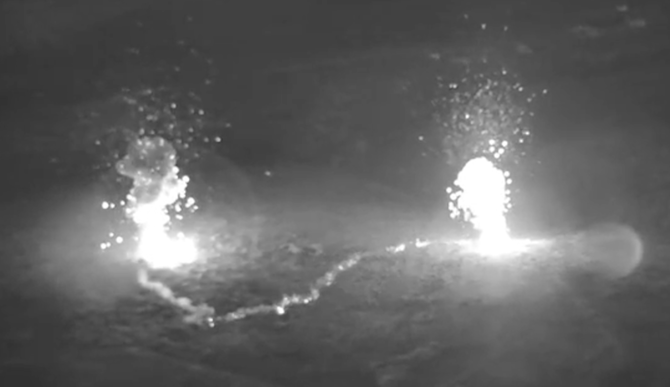
But the army shared a video captioned “footage from a targeted nighttime operation of the 9th Brigade in southern Lebanon,” showing troops walking on the ground.
AFP was unable to verify the footage, the time or location it was shot.
The army statement said the 9th Brigade was in the Labbouneh area, just over the border. Troops from the 300th Brigade operated in the Jabal Blat area further west, also within sight of the frontier.
Despite a November truce with Hezbollah, Israel has kept up its strikes on Lebanon, mainly saying it is targeting the group’s sites and operatives but also occasionally members of their Palestinian ally Hamas.
The November 27 ceasefire sought to end more than a year of hostilities with Hezbollah, including two months of all-out war that left the group severely weakened.
Under the ceasefire deal, Hezbollah was to pull its fighters back north of the Litani river, about 30 kilometers (20 miles) from the Israeli border, leaving the Lebanese army and United Nations peacekeepers as the only armed parties in the region.
Israel was required to fully withdraw its troops from the country but has kept them in five places it deems strategic.


![]()

Israel army says it launched ‘special, targeted operations’ in south Lebanon
Short Url
https://arab.news/yshyz
Israel army says it launched ‘special, targeted operations’ in south Lebanon
- Israel has kept up its strikes on Lebanon, despite a November truce with Hezbollah
- Israel's military claimed it carried out operations in Labbouneh and Jabal Blat


Latest updates




© 2026 SAUDI RESEARCH & PUBLISHING COMPANY, All Rights Reserved And subject to Terms of Use Agreement.