

Survivors grieve, worry about future after deadly building collapse in Pakistan

Imdad Hussain, 28, who narrowly escaped and survived after a five-storey residential building collapsed on Friday, July 4, walks near the pile of rubble, in Karachi, Pakistan, on July 7, 2025. (REUTER)
Short Url
Updated 07 July 2025
Follow

Survivors grieve, worry about future after deadly building collapse in Pakistan

  • The five-story building collapsed in a crowded area where many working-class and poor families live in aging apartment blocks
  • The site is now a tangle of twisted metal, shattered concrete and scattered belongings, schoolbooks, shoes and sewing machines

KARACHI: Survivors of a building collapse that killed 27 people in the Pakistani city of Karachi were trying on Monday to come to terms with the loss of loved ones and their homes.

The five-story building collapsed on Friday in the overcrowded inner-city Lyari district where many working-class and poor families live in aging apartment blocks. The site is now a tangle of twisted metal, shattered concrete and scattered belongings, schoolbooks, shoes and sewing machines.

On Monday, rescue officials said the death toll had reached 27 and dozens of people were being housed in makeshift shelters following the building’s collapse and the evacuation of nearby buildings over structural fears.

“I grew up in that building. I knew everyone who lived there,” said Imdad Hussain, 28, a fisherman who lost neighbors, childhood friends and seven members of his extended family.
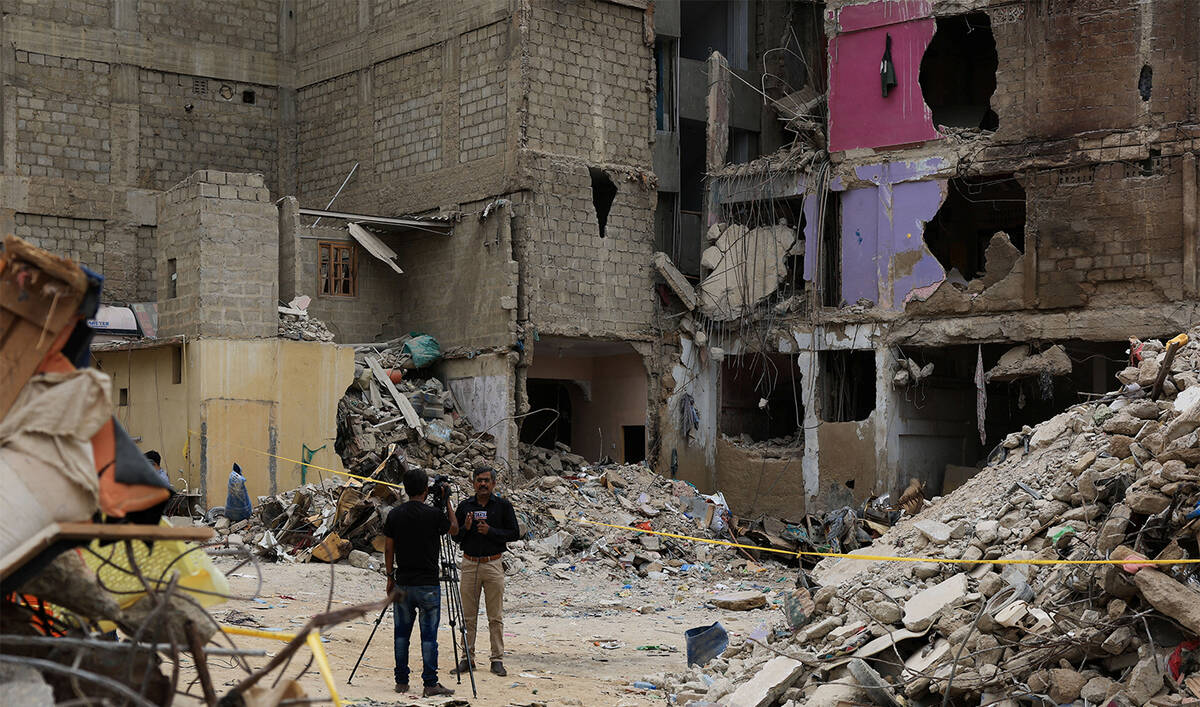


Members of the media report from the ground near a five-storey residential building that collapsed on Friday, July 4, in Karachi, Pakistan, on July 7, 2025. (REUTERS)

He is now sheltering with relatives, and family members are in mourning as they try to figure out what the future holds.

“We’ve lost our home, our people. I don’t know how we’ll start again,” he said.

Officials in Karachi, the capital of the southeastern province of Sindh, said the building had received multiple evacuation notices since 2023, including a final one in late June.

Saeed Ghani, Provincial Minister of Sindh for Local Governments, said the Karachi commissioner — who oversees the city administration — had been tasked with inspecting 51 buildings identified as “extremely dangerous” to prevent similar collapses.
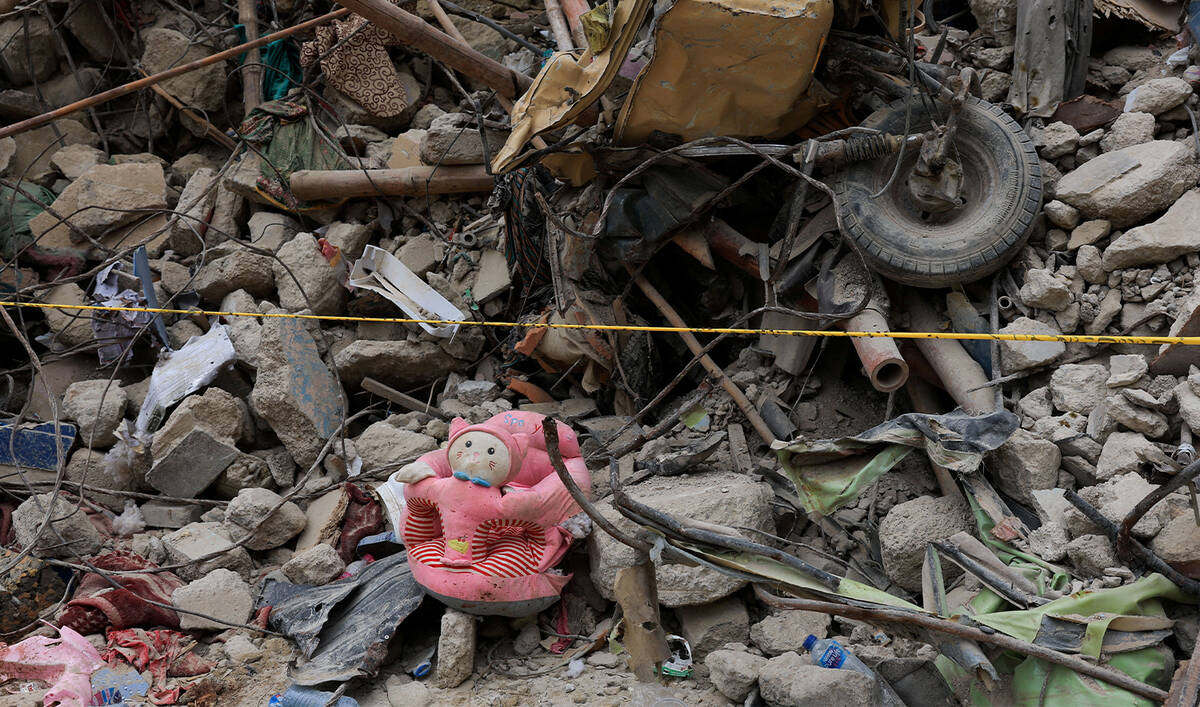


Personal belongings lie amid the rubble of a five-storey residential building that collapsed on Friday, July 4, in Karachi, Pakistan, on July 7, 2025. (REUTERS)

BUILDING SHOOK VIOLENTLY

Residents said the building in Lyari, which has been home to generations of working-class families from minority and migrant backgrounds, shook violently on Friday before collapsing in a cloud of dust.

Rescue workers had been digging through the debris since Friday but declared the search over late on Sunday.

They said about 100 residents from 12 families had been living in the building, and nearly 50 more families had been displaced after three neighboring buildings were declared unsafe and evacuated.
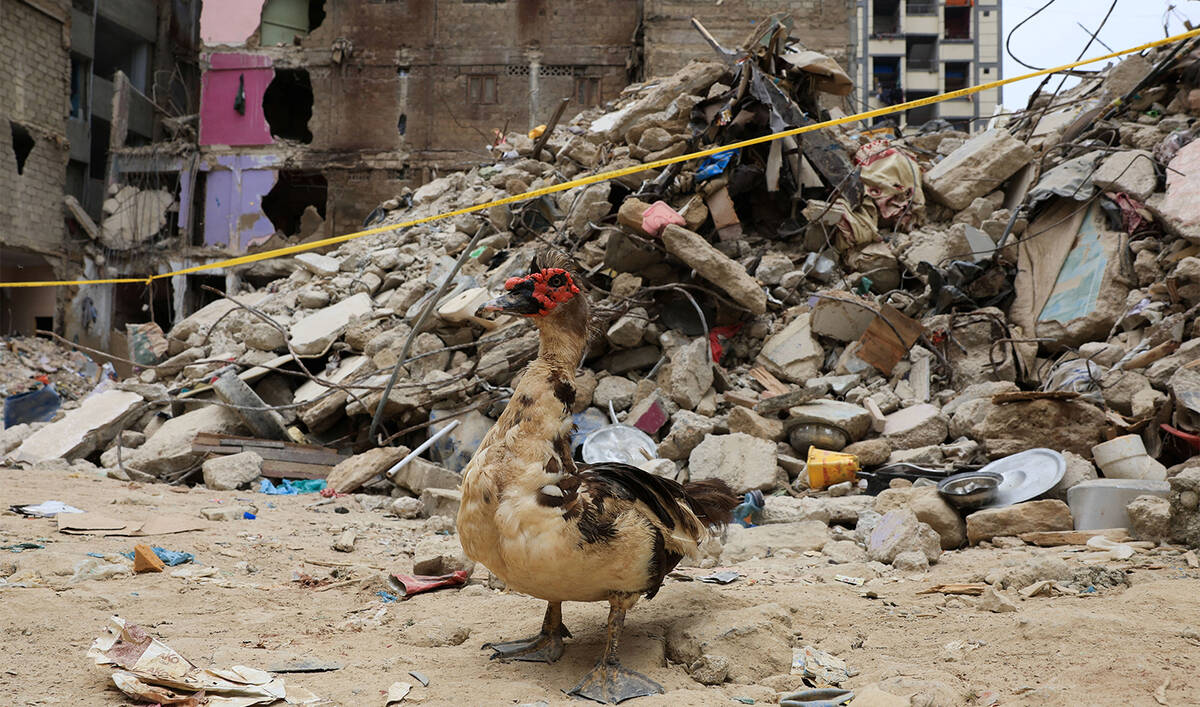


A duck walks near the pile of rubble and belongings after a five-storey residential building collapsed on Friday, July 4, in Karachi, Pakistan, on July 7, 2025. (REUTER)

Lakshmi, a school janitor who lived next door to the collapsed building, said her sister had lived in the building that came down and called moments before it fell to say it was shaking.

Her sister survived, but Lakshmi feared losing the gold she had left with her for safekeeping before her daughter’s wedding.

“We got out with our lives, but everything else is gone, with no certainty about what is to come,” Lakshmi said.


Pakistan’s top military commander hails Saudi defense pact as ‘historic’ at scholars’ conference

Updated 5 sec ago
Follow

Pakistan’s top military commander hails Saudi defense pact as ‘historic’ at scholars’ conference

  • Asim Munir says Pakistan has a unique bond with the Kingdom, citing the ‘honor’ of helping safeguard the holy sites
  • He says only the state can declare jihad, urging religious scholars to counter extremist narratives and promote unity

ISLAMABAD: Chief of Defense Staff Field Marshal Asim Munir on Wednesday described the country’s joint security pact with Saudi Arabia as a “historic” milestone, telling a gathering of religious scholars that Pakistan and the kingdom share a deep strategic relationship.

Signed in September, the Strategic Mutual Defense Agreement has solidified decades of Saudi–Pakistan defense cooperation, covering intelligence-sharing, counterterrorism and regional stability.

The two nations have long coordinated on defense matters, with Pakistani military personnel deployed in the Kingdom.

“The defense agreement [with Saudi Arabia] is historic,” he said in an address to the conference in the federal capital.

The top military commander said Pakistan regarded its connection with the Kingdom as unique.

“Among all Muslim countries, Allah has given Pakistan the honor of helping safeguard the Haramain,” he continued, referring to the two holiest sites of Islam in Makkah and Madinah.

Munir used his speech to warn against extremism, saying that under the Islamic framework, only the state could declare jihad, a pointed reference to groups such as the Tehreek-e-Taliban Pakistan (TTP), which claims to act in the name of religion while carrying out attacks on civilians and security forces.

“When nations abandon knowledge and the pen, disorder takes hold,” he said, urging the religious scholars to help keep society unified and to “broaden the nation’s vision.”

Munir also criticized India, describing “terrorism” as “India’s habit, not Pakistan’s.”

His remarks came months after a four-day military confrontation in May, during which the two nuclear-armed neighbors exchanged artillery and missile fire and deployed drones and fighter jets.

India blamed Pakistan for a militant attack in Indian-administered Kashmir before launching a missile attack. Islamabad denied involvement and called for an international probe.

Pakistan claimed it had shot down six Indian fighter jets before a US-brokered ceasefire took effect.

“We do not hide when confronting the enemy,” Munir said. “We challenge openly.”