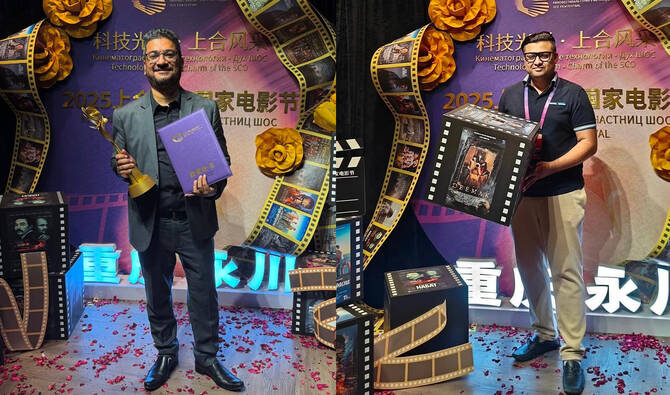

ISLAMABAD: Two Pakistani films, Nayab and Deemak, have won major accolades at the Shanghai Cooperation Organization (SCO) Film Festival in China, state-run news agency APP reported on Monday.
The festival showcased 27 films from SCO member states, including China, Russia, Pakistan, India, and Central Asian countries. Organized to foster regional cinematic exchange, the event featured screenings, industry forums, a film technology expo, and a gala concert, with awards presented in ten categories.
The SCO Film Festival first launched in 2018 and is a cultural initiative of the multilateral bloc to promote cooperation in cinema and the creative industries among member countries.
“Pakistani film Nayab and Deemak received prestigious ‘Jury Special Award’ and ‘Best Editing Award’ respectively at the colorful concluding ceremony of SCO film festival held at Chongqing, China,” Associated Press of Pakistan reported.
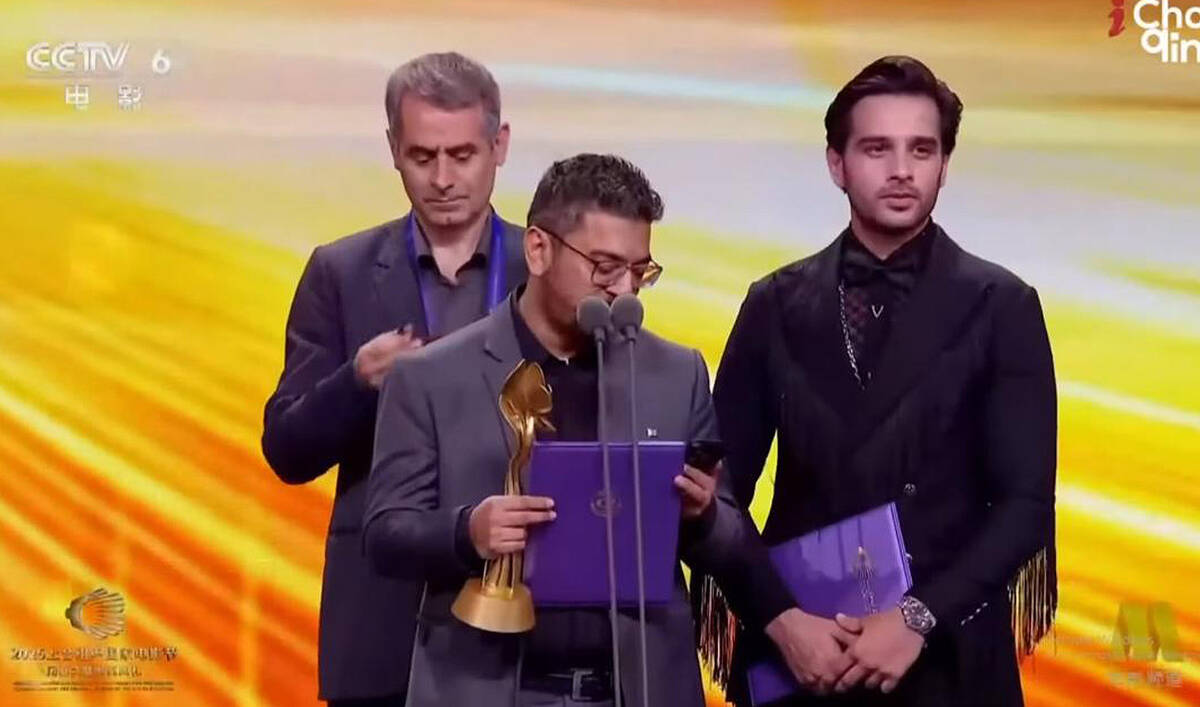
Director of Pakistani movie, Nayab, Umair Nasir Ali (center) giving acceptance speech at the SCO Film Festival for the Jury Special award in China, in a picture shared by the director himself on social media on July 7, 2025. (Umair Nasir Ali/Instagram)
Nayab, released in 2024, is a sports-drama centered on a young woman from Karachi, played by Yumna Zaidi, who aspires to become a professional cricketer despite intense family and societal opposition. The cast includes Fawad Khan, Javed Sheikh, and Adnan Siddiqui.
The film has previously won multiple awards, including Best Foreign Film and Best First-Time Filmmaker (Feature) at the World Film Festival in Cannes, and a Special Jury Diploma at the 30th Minsk International Film Festival.
“The cinema was packed, and what truly moved me was how deeply they engaged with the film,” Nayab’s director Umair Nasir Ali told APP after the film’s screen at the SCO festival. “They picked up on the layers, the emotional arcs and asked thoughtful, relevant questions that showed how closely they had followed the story.”
Deemak is a psychological horror film directed by Rafay Akbar Rashdi and starring Soniya Hussyn, Faysal Quraishi, Samina Peerzada, and Bushra Ansari.
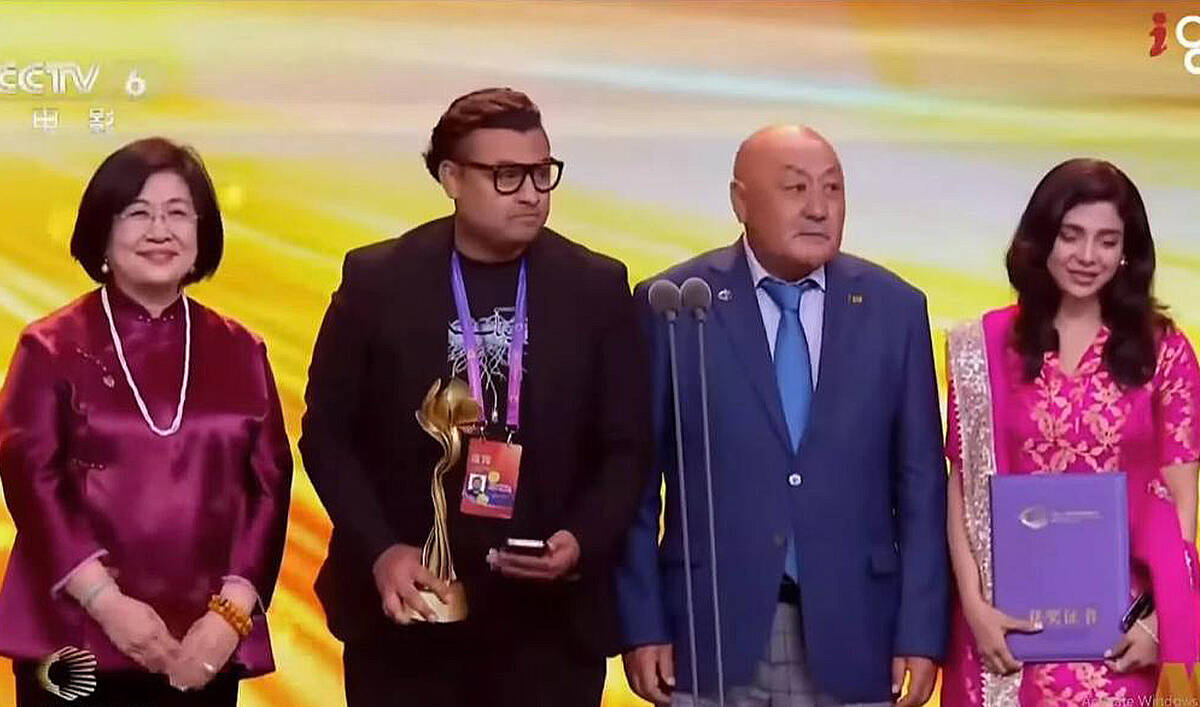
Screengrab of a reel showing director of Pakistani movie, Deemak, Rafay Akbar Rashdi (second left) receiving the best editing award for his movie Deemak at the SCO Film Festival held in China in a video shared on social media on July 7, 2025. (RafayRashidi/Instagram)
Set in an aging home haunted by unexplained phenomena, the film explores family tensions and mental trauma. It became Pakistan’s highest-grossing horror film when it released earlier this year, earning over Rs60 million [$211,173] in its opening week.
Pakistan’s film industry has seen a steady resurgence in recent years, with a new generation of filmmakers experimenting with genres from sports dramas to horror and social realism.
Joyland (2022) became the first Pakistani feature to premiere at the Cannes Film Festival, where it won the Jury Prize in the Un Certain Regard section, and was later selected as Pakistan’s official entry to the Oscars. The country has also received two Academy Award wins in the documentary short category by filmmaker Sharmeen Obaid-Chinoy.
Meanwhile, The Legend of Maula Jatt (2022) set new box office records, becoming Pakistan’s highest-grossing film to date and finding global audiences with its big-budget, Punjabi-language action storytelling.