Saudi PIF enters ‘post-trillion’ era with pivot from scale to substance 

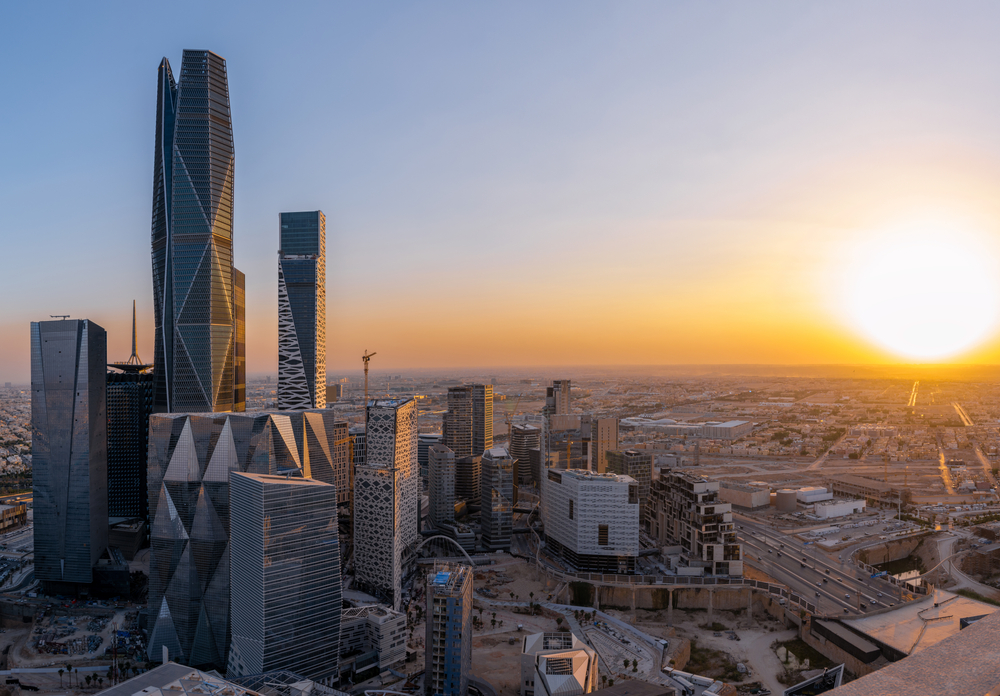
According to Global SWF, the sovereign wealth fund, which recently announced an 18 percent increase in assets under management to SR4.32 trillion ($1.15 trillion) in 2024. Shutterstock
Short Url
Updated 07 July 2025
Follow

Saudi PIF enters ‘post-trillion’ era with pivot from scale to substance 

  • PIF’s net profit down 60% to SR26 billion
  • To address these challenges, it has undertaken a series of strategic shifts

RIYADH: Saudi Arabia’s Public Investment Fund has surpassed $1 trillion in assets, marking a global milestone — but the organization is now pivoting from rapid expansion to a focus on solvency, strategic discipline, and sustainable long-term returns. 

According to Global SWF, the sovereign wealth fund, which recently announced an 18 percent increase in assets under management to SR4.32 trillion ($1.15 trillion) in 2024, is now prioritizing “solvency over scale” and “substance over show.” 

This evolution reflects a broader recalibration of Vision 2030’s investment engine, one that balances domestic megaproject ambitions with liquidity concerns, geopolitical outreach, and disciplined asset rotation. 

While PIF’s top-line revenues surged 25 percent to SR413 billion, net profit fell sharply, down 60 percent to SR26 billion, as rising interest rates, impairments, and project delays eroded returns. 

The decline signals a new reality for one of the world’s most ambitious sovereign investors: returns must be restructured, debt must be optimized, and capital must be deployed with precision. 

To address these challenges, PIF has undertaken a series of strategic shifts. According to Global SWF, these include tighter performance management, a growing reliance on commercial paper and sukuk for short-term funding, and a renewed focus on mature, revenue-generating assets. 

Notably, net profits at AviLease, a PIF-owned aviation leasing firm, increased by 350 percent, while holdings in Uber overtook those in Lucid in PIF’s US public equity portfolio, reflecting a pivot to more resilient assets. 

Meanwhile, PIF’s role is increasingly geopolitical. The fund has been instrumental in securing major international partnerships, including anchoring investment platforms with BlackRock, Goldman Sachs, and Brookfield, as well as government-to-government deals with China, India, France, and the US. 

According to Global SWF, India’s proposal of a 10-year tax holiday and sweeping capital gains exemptions aims to unlock over $100 billion in PIF-led inward investment, underlining its strategic importance. 

PIF’s fiscal and institutional maturity is also earning global recognition. In July, the fund scored a perfect 100 percent in the 2025 Global SWF Governance, Sustainability, and Resilience Scoreboard. 

The ranking, which evaluates 200 sovereign investors globally, placed PIF among just nine funds worldwide and ranked it the highest in the Europe, the Middle East, and Africa region to meet all governance and transparency benchmarks. According to Global SWF, PIF’s strong showing reflects solid progress in disclosures, leadership accountability, and commitment to ESG. 

That commitment is especially evident in the fund’s ESG and green finance activities. In 2024, PIF launched a 100-year green bond as part of its sustainable finance framework, offering a rare long-term issuance that combines ESG impact with Shariah compliance. This approach is helping the fund attract diverse investor interest while aligning capital with climate goals. 

In parallel, the fund is building the Kingdom’s digital and artificial intelligence backbone. In May, it launched HUMAIN, a national AI company tasked with advancing Saudi Arabia’s position in sovereign AI capabilities. 

According to a PIF official statement, HUMAIN aims to invest in foundational models, develop Arabic-language datasets, and partner with global tech leaders, such as NVIDIA. The firm will serve as a vehicle for sovereign AI infrastructure and localization, supporting economic diversification and national security objectives. 

This evolving strategic posture comes at a critical moment for Saudi Arabia’s foreign direct investment ambitions. While cumulative investments remain below Vision 2030 targets, the latest figures from the General Authority for Statistics show that the volume of foreign direct investment inflows reached SR24 billion in the first quarter of this year, marking a 24 percent increase compared to the same period in 2024. 

The figure reflects resilience despite global uncertainties, with PIF expected to play a leading role in accelerating capital deployment and crowding in private investors. 

The fund is also rebalancing its internal structure. As Global SWF noted, several giga-projects, including NEOM’s “The Line,” have been downsized. While originally envisioned as a $1.5 trillion smart city housing 1.5 million people by 2030, current projections suggest that just 300,000 residents and 2.4 km of development will be completed within that timeframe. Accordingly, PIF has trimmed budgets for several large-scale ventures by 20 to 60 percent for 2025. 

Yet this recalibration is not a retreat. It signals a transition to what Global SWF describes as “precision finance,” which uses strategic levers such as commercial paper, asset recycling, co-investments, and sovereign partnerships to preserve liquidity and reduce fiscal strain. 

The fund’s ability to blend long-term Eurobonds with short-term sukuk and CP issuance demonstrates a growing sophistication in liability management, which is rare among sovereign wealth funds. 

As PIF deepens its international exposure, its dual role as both an investor and a policy instrument is becoming increasingly evident. According to Global SWF, the fund’s presence in Paris, its alignment with Trump-era Gulf deals, and its expanding memorandum of understanding with Asian markets reveal an increasingly geopolitical deployment of capital. 

Ultimately, the question facing PIF is not whether it can scale — it already has. The real test is whether it can steer Vision 2030 through a period of rising global interest rates, shifting capital flows, and mounting domestic expectations. If PIF can tighten execution, manage costs, and deliver returns across cycles, it may well redefine the playbook for state-driven transformation. 

As 2025 unfolds, the fund’s performance will be closely watched, not only for its financial metrics but for what it reveals about the sustainability of Vision 2030’s ambitions. 


Over 3k flights cancelled across the Middle East after attack on Iran by the US, Israel

Updated 01 March 2026
Follow

Over 3k flights cancelled across the Middle East after attack on Iran by the US, Israel

RIYADH: US and Israeli strikes on Iran led to widespread airspace shutdowns in the Middle East, canceling and rerouting thousands of flights and paralyzing key international travel corridors.

Flight cancellations affected seven airports across the Middle East, including Dubai and Abu Dhabi in the UAE, Doha in Qatar, and Manama in Bahrain.

Emirates Airlines said in a statement: “Due to multiple regional airspace closures, Emirates has temporarily suspended all operations to and from Dubai, up until 1500 hrs UAE time on Monday, 2 March.”

A flydubai spokesperson said the situation is evolving, and the airline is closely monitoring developments while coordinating with authorities to adjust its flight schedule.

“Our teams are working diligently to implement comprehensive welfare for all affected customers. The safety of our passengers and crew remains our highest priority,” the spokesperson said.

He added: “We are currently experiencing a high volume of calls and appreciate our customers’ patience while our teams work to assist everyone as quickly as possible.”

Qatar Airways announced that the airport will remain closed until at least the morning of March 2.

“Qatar Airways flights to, and from, Doha have been temporarily suspended due to the closure of Qatari airspace,” the airline said.

It added: “Qatar Airways will resume operations once the Qatar Civil Aviation Authority announces the safe reopening of Qatari airspace.”

Saudia also said in an official statement that it had canceled a number of flights due to developments in the region and the closure of airspace.

The organization said the decision was taken in line with aviation safety and security standards, noting that its Emergency Coordination Center is closely monitoring developments with relevant authorities.

Saudia urged passengers to verify the status of their flights before heading to the airport and said guests would be notified of updates through the contact details associated with their bookings.

The carrier added that further information would be announced in a subsequent statement if available.

Air Arabia also said its flights were experiencing cancellations, delays, or rerouting as a result of the evolving situation and airspace closures.

Airlines cited airspace closures and safety concerns as the main reasons for flight disruptions, urging passengers to check official channels for updates as the situation develops.

Israeli airspace also remained closed on March 1st. Israeli airline El Al said it was preparing a recovery effort to bring home Israelis stranded abroad once the airspace reopened.

Travelers were either stranded or diverted to other airports on Feb. 28 after Israel, Qatar, Syria, and Iran as well as Iraq, Kuwait and Bahrain, closed their airspace.

After the UAE announced a temporary partial airspace closure, FlightRadar24 recorded no flights over the country.

The closures affected key hub airports in Dubai, Abu Dhabi, and Doha. Emirates, Qatar Airways, and Etihad, airlines that operate from these hubs, normally handle around 90,000 passengers daily, with even more traveling to other Middle Eastern destinations, according to aviation analytics firm Cirium.

Airports hit by attacks

Two airports in the UAE reported incidents as the government there condemned what it called a “blatant attack involving Iranian ballistic missiles” on Feb.28.

Dubai International Airport, the UAE’s largest and one of the world’s busiest, reported four injuries, while Abu Dhabi’s Zayed International Airport said a drone attack killed one person and injured seven others. Strikes were also reported at Kuwait International Airport.

Though Iran did not publicly claim responsibility, the scope of retaliatory strikes that Gulf nations attributed to Iran extended beyond the US bases that it previously said it would target.

Flight delays, cancellations are likely to continue

“For travelers, there’s no way to sugarcoat this,” said Henry Harteveldt, an airline industry analyst and president of Atmosphere Research Group.

“You should prepare for delays or cancellations for the next few days as these attacks evolve and hopefully end,” he added.

To avoid conflict zones, airlines are rerouting Middle East flights over Saudi Arabia, adding hours and fuel costs, which could push ticket prices higher if the tensions persist.

The extra flights will strain air traffic controllers in the Kingdom, who may need to slow traffic for safety. Meanwhile, countries that closed their airspace will lose out on overflight fees from passing airlines.

Mike McCormick, former head of air traffic control at the FAA and now a professor at Embry-Riddle Aeronautical University, said some countries may reopen parts of their airspace in the coming days once US and Israeli officials provide airlines with details on military flight zones and Iran’s missile capabilities.

“Those countries then will be able to go through and say, ok, we can reopen this portion of our space but we’ll keep this portion of our airspace closed,” McCormick said.

“So, I think what we’ll see in the next 24 to 36 hours is how the use of airspace evolves as the kinetic activity gets more well-defined and as the capability of Iran to actually shoot missiles and create additional risk is diminished due to the attacks,” he added.

But it is unclear how long the disruption to flight operations could last. For comparison, the Israeli and US attack on Iran in June 2025 lasted 12 days.