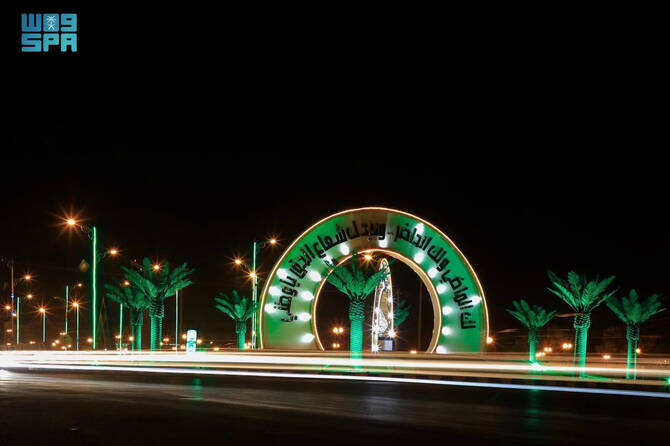


TURAIF: Located in Saudi Arabia’s Northern Borders region, Turaif governorate stands as a crossroads of ancient civilizations and a gateway to Iraq and the Levant.
The governorate is home to a range of rich cultural and heritage sites, many of which date back to pre-Islamic times.

Heritage Commission sign board at the archaeological site of Qasr Duqrah, located 40 kilometers southwest of Turaif governorate. (SPA)
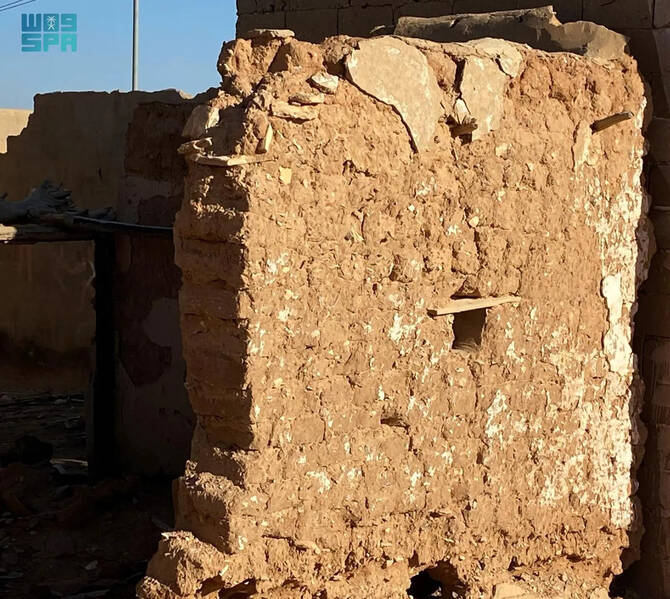
Among the most prominent heritage landmarks is the archaeological site of Qasr Duqrah, situated 40 km southwest of the governorate.
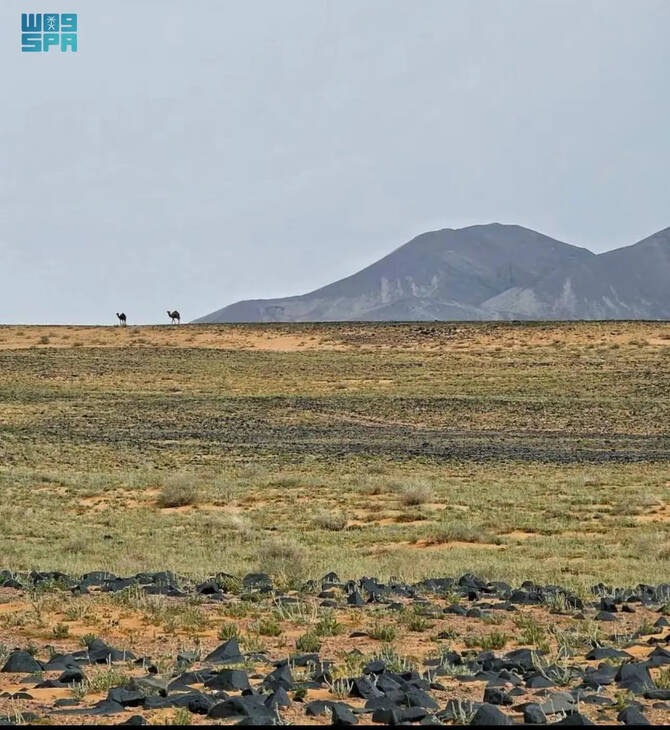
Adjacent to it lies a mountain known as Aqran, also referred to as Duqrah Mount, which has been recorded under the Comprehensive Archaeological Survey Program.
Zahi Al-Khalawi, a member of the Saudi Historical Society, said the site is among the Kingdom’s most significant archaeological locations because there is evidence of human settlements dating to the Stone Age.
He said habitation at the site continued through the later Roman period (2 to 6 centuries C.E.) and persisted into the Umayyad era (661 to 750 C.E.).
Another landmark is the Trans-Arabian Pipeline, or Tapline, one of Saudi Arabia’s most significant industrial heritage sites.
The pipeline stretches from the east of the Kingdom to its north, passing through Turaif, and has been registered in the National Industrial Heritage Register.

Known as the Tapline, this oil pipeline stretches from eastern Saudi Arabia to the northwest, passing through Turaif. (SPA)
It is the first documented industrial heritage site in the Kingdom, representing the early stages of Saudi Arabia’s oil industry and its developmental and economic significance.
Also noteworthy is the culturally significant site of Qaru Turaif, a water source developed by the Tapline Co. in the 1950s to help settle nomadic communities by order of the late King Abdulaziz.
To the east of Turaif, about 25 km away, stands Jabal Umm Waal, a historic landmark and northern gateway into the Arabian Peninsula.
The mountain tells the stories of Bedouin life and the passage of trade caravans and pilgrims traveling from the Levant and Iraq. For centuries, it served as a safe route for travelers making their way southward.