


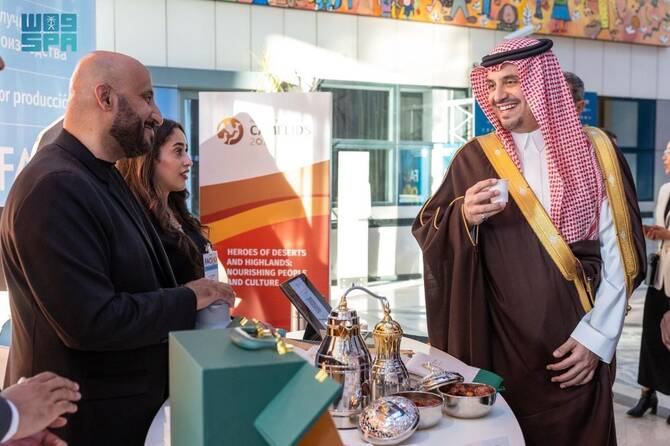
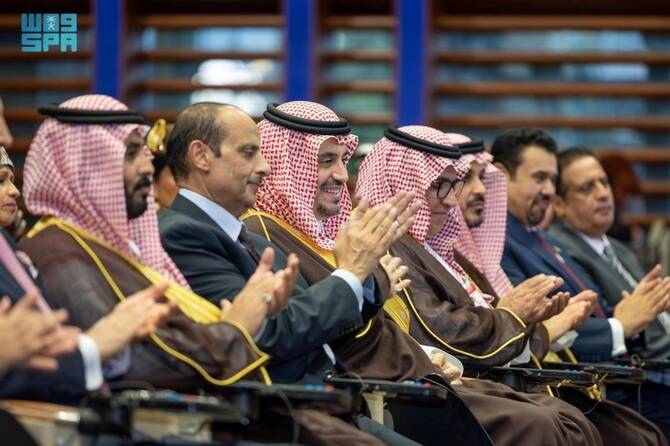


RIYADH: Saudi Arabia has concluded its presidency of the International Year of Camelids, an initiative launched by the UN’s Food and Agriculture Organization to highlight the cultural, social and economic importance of the camel and related species.
The Kingdom used the occasion to raise global awareness and promote research and development related to camelids, the Saudi Press Agency reported.
The initiative began under Saudi Arabia’s leadership in June last year, in partnership with a coalition of Latin American and Caribbean countries led by Bolivia.
The Food and Agriculture Organization hosted a closing ceremony at its headquarters in Rome, attended by Prince Fahd bin Jalawi, president of World Camelids Sports, with officials, diplomats, and international representatives.
The event recognized camelids’ role in food security, sports, economic development, and cultural heritage, the SPA reported.
The observance highlighted camelids’ environmental, economic, and social value, and aimed to support pastoralist communities globally.
The International Camel Organization also participated in the ceremony. The organization played an active role throughout the year in promoting awareness and support for the camel sector.
Fahd bin Falah bin Hathleen, the organization’s chairman, said: “Our involvement in the International Year of Camelids has been rooted in our mission to elevate the camel sector on the global stage.
“Camels are considered a symbol of cultural identity and supporters of rural communities’ sustainability and livelihoods.
“We remain committed to supporting their role across all scientific, cultural, sport, economic, and welfare sectors.”
At the ceremony, Ali Alshaikhi, assistant undersecretary for fisheries and livestock wealth at the Ministry of Environment, Water and Agriculture, reaffirmed the Kingdom’s commitment to recognizing the value of camels.
He said they are a key food source, economic asset, and cultural symbol deserving of greater global attention and investment.
He outlined Saudi Arabia’s efforts during its presidency, including holding more than 50 local and international events, providing 15 research grants, and organizing 18 strategic meetings.
The Kingdom also organized 20 international exhibitions, starting at the Food and Agriculture Organization in Rome and the UN in Geneva, to raise awareness of camels’ vital role in various communities, he added.
Alshaikhi said the initiative strengthened global appreciation for camels and supported their role in food security and economic growth. He added that Saudi Arabia invested more than SR1 billion ($267 million) in related efforts.
He highlighted the Kingdom’s broader leadership in agriculture and food security, driven by a strategic vision focused on sustainability, innovation, resilient food systems, self-sufficiency, and modern technologies.


