

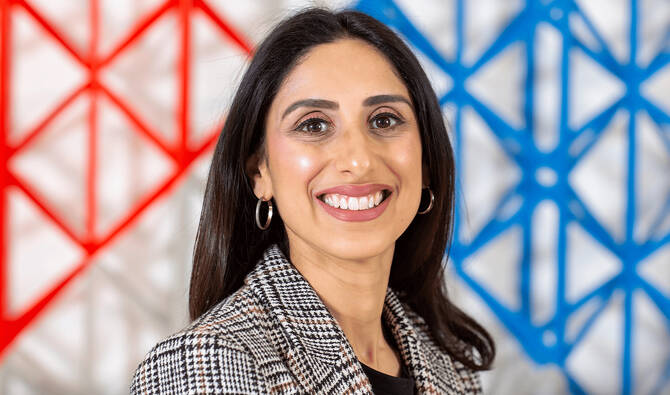

ISLAMABAD: Pakistani academic Dr. Sanaa Alimia has won the 2025 Book Prize awarded by the American Institute of Pakistan Studies (AIPS) for her research on how Afghan refugees have reshaped Pakistan’s cities over the decades, the institute announced on Wednesday.
Dr. Alimia, an associate professor at Aga Khan University and a scholar of urban migration and Muslim political subjectivity, was recognized for her book ‘Refugee Cities: How Afghans Changed Urban Pakistan,’ published by the University of Pennsylvania Press. The book was the unanimous choice of the AIPS Book Prize Committee, which praised it as an “enormous contribution to Pakistan Studies.”
Published by the University of Pennsylvania Press, Refugee Cities examines the lives and labor of Afghan refugees in Pakistan over several decades, focusing on how displaced communities have reshaped the physical, social, and economic fabric of cities like Karachi and Peshawar. Based on over eight years of ethnographic fieldwork and extensive archival research, the book highlights both the contributions Afghan refugees have made and the challenges they continue to face in Pakistan.
“This book explores the life of Afghan refugees in Pakistan with a specific focus upon their contributions to the development of Karachi and Peshawar,” the prize committee said in a statement posted on AIPS’s Facebook page.
“As they settled into the peripheries of urban centers, they created their own communities and with their labor contributed greatly to the overall development of Pakistan’s cities.”
The committee added:
“Alimia’s scholarship is excellent. The book is well-written and easy to read. It draws upon hundreds of interviews and extensive archival research.”
The prize announcement comes at a time when Pakistan’s treatment of Afghan refugees is under renewed international scrutiny.
In 2023, Pakistan launched a controversial crackdown on foreigners it said were in the country illegally, mostly Afghans. Millions of Afghans have fled their homeland over the decades to escape war or poverty.
According to data from the UN refugee agency (UNHCR), more than 900,000 Afghans have left Pakistan since the expulsion drive began. The Pakistan government cites economic stress and security concerns as reasons to push the expulsions campaign while human rights advocates say the move threatens people who have lived in Pakistan for decades and contributed significantly to its informal economy and urban infrastructure.
The mass returns have also upended urban dynamics in cities like Karachi and Quetta, where second- and third-generation Afghans have lived for decades. Many of those affected are informal workers or small business owners with deep roots in Pakistani neighborhoods.
Dr. Alimia’s work sheds light on these long-standing urban entanglements, arguing that Afghan refugees are not merely passive recipients of aid but active agents in shaping Pakistan’s urban evolution. Her research challenges narratives that view refugees solely through the lens of security or humanitarian crisis.
A scholar of migration, urban politics, and Muslim political subjectivities, Dr. Alimia holds a DPhil from the University of Oxford and has previously been affiliated with the Berlin Graduate School for Muslim Cultures and Societies. She is currently based at the Institute for the Study of Muslim Civilizations, Aga Khan University.
The AIPS Book Prize is awarded annually to recognize outstanding scholarship that advances understanding of Pakistan’s society, politics, history, or culture. It is funded through AIPS unrestricted funds and not supported by US federal grants.


