



KARACHI: Russia expects to finalize an agreement with Pakistan this summer to build a new steel mill in Karachi, Consul-General Andrey V. Fedorov said on Monday, the first time a Russian official has publicly confirmed the planned project.
The new project will mark the revival of Cold War-era industrial cooperation as Islamabad seeks fresh foreign investment and closer ties with Moscow.
The Soviet Union built the original Pakistan Steel Mills (PSM) in Karachi in the 1970s as the country’s flagship state-run industrial complex. Once a symbol of national self-sufficiency, PSM has remained dormant since 2015 due to years of mismanagement, political interference and financial decline. By the end of fiscal year 2024, the mill had posted cumulative losses of Rs255.8 billion ($902 million), with liabilities reaching Rs359.9 billion ($1.27 billion). Despite being non-operational, it still employs more than 3,500 workers.
Now, Russian and Pakistani officials are engaged in technical and diplomatic discussions to finalize the framework for a new steel mill. Technical experts from Russia have already inspected the proposed site in Karachi, and another team is expected shortly to advance planning and draft a detailed roadmap.
“The last negotiations were on May 27, so we are working on the final agreement,” Fedorov told Arab News in an interview when asked about the status of the new steel deal.
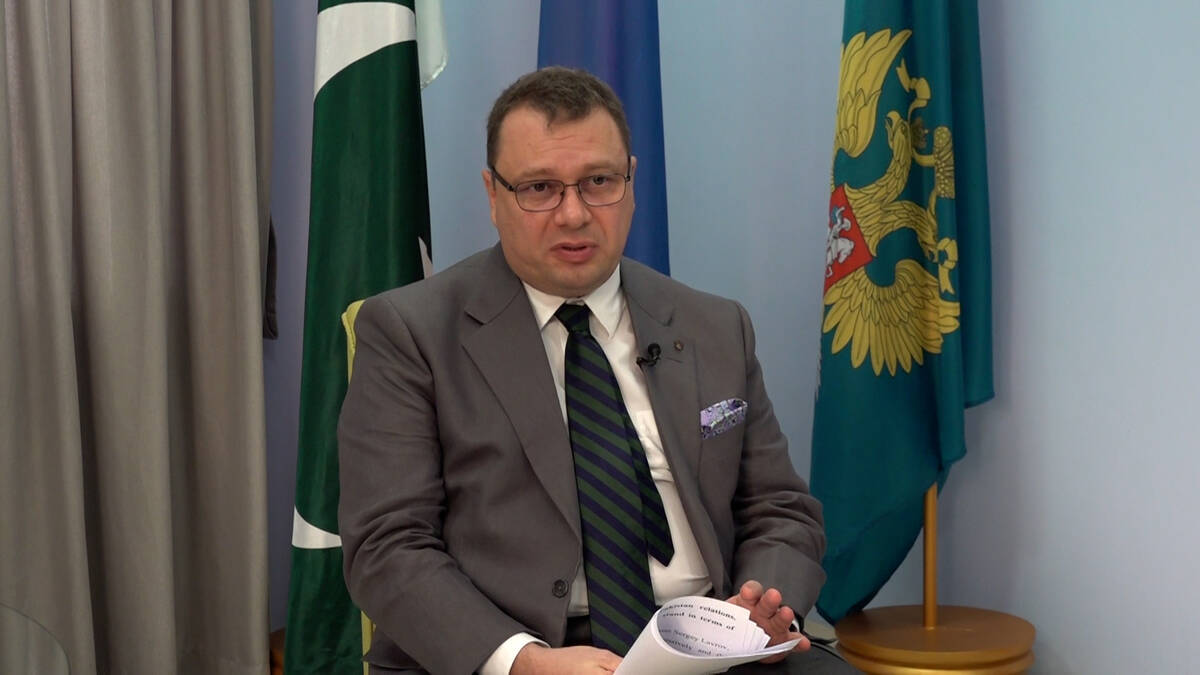
Andrey V. Fedorov, consul-general of Russia in Karachi, speaks during an interview with Arab News in Karachi on June 30, 2025. (AN Photo)
“Our technical experts examined the facility, so maybe one more team would come soon, just to fix out all the preparations and some of the proposals are on the tables, both of Russian and Pakistani sides … We are ready to prepare a roadmap for the constructions of a new steel mill in Karachi.”
Fedorov declined to put a date on when construction would begin but said the teams had discussed a summer deal:
“They were discussing summer, you know, we are in the beginning of summer, so I hope this summer they would come … We would see in nearest time some positive conclusions and we will reach some agreements.”
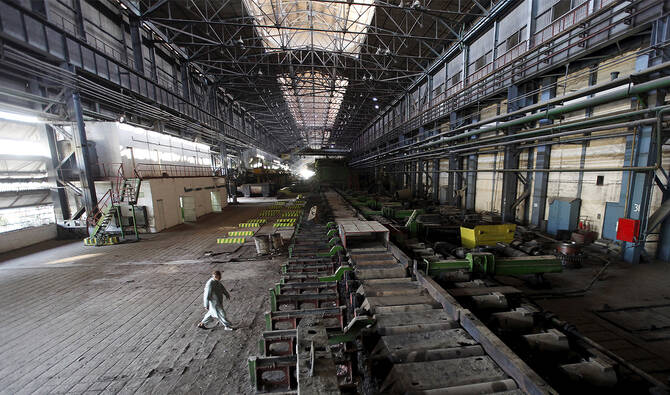
A man walks past machines at the hot strip mill department of the Pakistan Steel Mills (PSM) on the outskirts of Karachi, Pakistan, on February 8, 2016. (REUTERS/File)
The envoy did not share the volume of investment Russia would look to make in the project but said the two sides would be working together now to prepare “mutually beneficial contracts and agreements.”
“Practically, a new factory must be erected,” he said. “Now we should, on the level of experts, discuss that.”
PAKISTAN STREAM GAS PIPELINE PROJECT
Russia has also built other major industrial facilities in Pakistan, including the Guddu Power Station in Sindh in the 1980s, one of the country’s largest electricity sources.
Moscow and Islamabad have expanded cooperation in recent years despite geopolitical tensions over Russia’s invasion of Ukraine. Both countries are exploring deeper energy ties, oil and gas supplies, and even tabled a trilateral Russia-Pakistan-China resolution in the UN Security Council last month, seeking a ceasefire in the Middle East.
Pakistan, a net energy importer, relies on foreign petroleum and LNG supplies to meet domestic demand. Last year, Islamabad received its first-ever shipment of discounted Russian crude oil, marking a shift from its traditional reliance on Middle Eastern suppliers.
Pakistan’s local gas reserves are fast depleting. It imported over $4 billion worth of liquefied petroleum and natural gas through May last fiscal year and $4.7 billion in LNG and LPG imports the year earlier (FY24), mostly from Qatar.
Russia and Pakistan also held the ninth meeting of their intergovernmental commission on trade, economic, scientific and technical cooperation in December and agreed to move ahead with the long-delayed Pakistan Stream Gas Pipeline project.

This handout photograph, taken and released by Karachi Port Trust on June 11, 2023, shows a Russian ship, Pure Point, anchored at the OP2 in Karachi. (Photo courtesy: KPT/File)
The pipeline, signed in 2015 but delayed for years, aims to transport imported liquefied natural gas (LNG) from Karachi to Pakistan’s Punjab province and other energy-deficient regions.
Federov said both sides knew the delays in, and challenges with, the pipeline “must be fixed,” adding:
“We are working ... and I hope that in the nearest time we can prepare some positive surprises for Pakistani people, for Russian people, and for the world.”
Asked what was delaying the pipeline, Federov declined to share details, saying it could “spoil the game” as such projects “do not like a lot of noise and discussions around it.”
“There are nothing that can be a firewall between Russia and Pakistan in implementing this project,” he said.
The main challenges to building the Pakistan Stream Gas Pipeline include unresolved disagreements over project structure, financing terms, and US sanctions on Russian entities involved in the project. Regulatory hurdles and Pakistan’s weak fiscal position have also contributed to repeated delays since the agreement was signed a decade ago.
But despite the challenges, Federov said the two sides remained committed to finding “positive conclusions” on both the new steel mill and the pipeline.
“We know that we can fix them,” he concluded.


