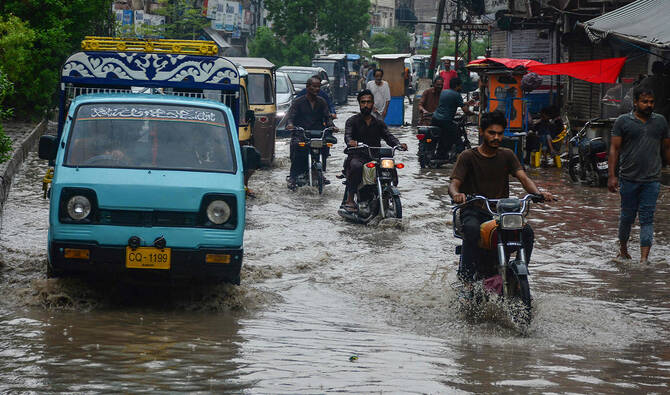

ISLAMABAD: Prime Minister Shehbaz Sharif on Saturday directed the National Disaster Management Authority (NDMA) to enhance coordination with provinces and issue timely weather alerts to citizens via cellphone messages, as heavy monsoon rains continued to wreak havoc across parts of the country.
The directive came during a phone call with NDMA Chairperson Lt. Gen. Inam Haider Malik, amid reports of flash floods, urban inundation and landslides triggered by days of torrential rain.
The provincial disaster authorities of Khyber Pakhtunkhwa (KP) and Punjab reported the death of 31 people amid heavy rains. The downpours, which claimed at least 19 lives in KP and 12 in Punjab, also damaged dozens of homes, disrupted rail operations in the southern Sindh province and prompted the meteorological department to maintain a high alert through early next week.
“Prime Minister Muhammad Shehbaz Sharif instructed the NDMA chairperson to remain in close contact with provincial governments, particularly in the country’s northern regions, and to provide all possible support,” said an official statement issued by the PM Office. “He also directed that weather warnings be proactively communicated to citizens via mobile phone messages.”
The NDMA issued its own emergency alert on Saturday, warning of possible urban flooding over the next 48 hours in low-lying areas of southern Sindh, including Karachi, Thatta, Badin, Sujawal, Hyderaba and Mirpurkhas.
Similar risks were flagged for the northeastern region, including Rawalpindi, Islamabad, Gujranwala, Gujrat, Sialkot and Lahore.
“There is a possibility of increased water flow in southern Balochistan’s Kirthar Range streams,” the NDMA said, adding that flood levels could rise in the Swat and Panjkora rivers and their tributaries, as well as in the Kabul River and northern Punjab’s drainage systems.
The authority advised the public to avoid low-lying areas, stay away from rivers and streams and refrain from unnecessary travel in at-risk regions.
It also urged citizens to download the NDMA Disaster Alert mobile application for real-time updates and guidance.
Pakistan, home to more than 240 million people, is ranked among the most climate-vulnerable countries in the world and faces increasingly severe weather patterns, including heatwaves, droughts and floods.
In 2022, deadly floods brought by record monsoon rains and glacial melt killed over 1,700 people and impacted 33 million in Pakistan. The floods also damaged houses, crop and public infrastructure, with total losses estimated at over $30 billion.
The Pakistan Meteorological Department has forecast further heavy rainfall through Tuesday.