

Rains and floods kill 19 in Khyber Pakhtunkhwa, 12 in Punjab as extreme weather hits Pakistan

Residents and relatives offer funeral prayers for the victims who died in flash floods in Sialkot, in Punjab province, on June 28, 2025. (AFP)
Short Url
Updated 28 June 2025
Follow

Rains and floods kill 19 in Khyber Pakhtunkhwa, 12 in Punjab as extreme weather hits Pakistan

  • Authorities in KP call Swat the most affected district where 13 people lost their lives in flash floods
  • The Met Office warns the risk of heavy rains and floods remains high until the middle of the next week

PESHAWAR/KARACHI: At least 19 people have been killed and six injured in the past 48 hours in Pakistan’s northwestern Khyber Pakhtunkhwa (KP) province while heavy rains claimed another 12 lives in the most populous Punjab province, provincial disaster authorities said on Saturday.

KP’s Provincial Disaster Management Authority (PDMA) said that a total of 56 houses had been damaged in the region — 50 partially and six completely — while rain-related incidents were reported from various districts including Swat, Abbottabad, Charsadda, Malakand, Shangla, Lower Dir and Torghar.

“In the past 48 hours, rain, strong winds, flash floods and landslides in Khyber Pakhtunkhwa province have resulted in the deaths of 19 people and injuries to 6 others,” the PDMA said in a statement.
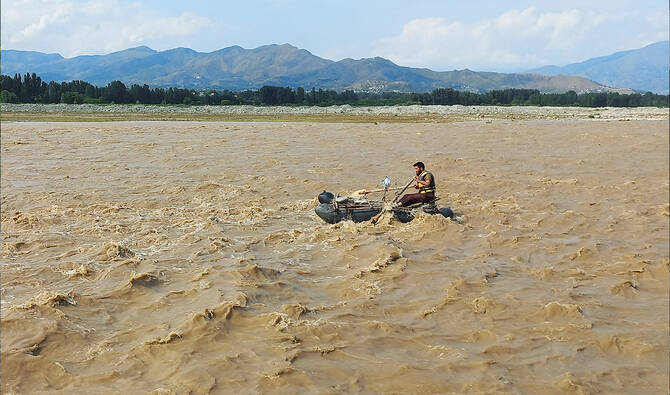


A rescue worker rows a raft while searching for survivors, after tourists, who were on a picnic, were swept away by overflowing floodwaters in the Swat River, in Swat Valley in Pakistan on June 27, 2025. (REUTERS)

“The most affected district was Swat, where 13 people died and six others were injured,” it added.

The overall casualties in the province included six men, five women and eight children.

Local administrations have been instructed to provide immediate relief to affected families and ensure medical care for the injured.

The ongoing spell of rains, which began on June 25, has also claimed 12 lives in Punjab, the country’s most populous province, and caused delays in railway operations in the southern Sindh province.

“Twelve people died and 39 were injured in various accidents,” the Punjab PDMA said in a statement. “Majority of deaths were caused by the collapse of roofs and walls.”
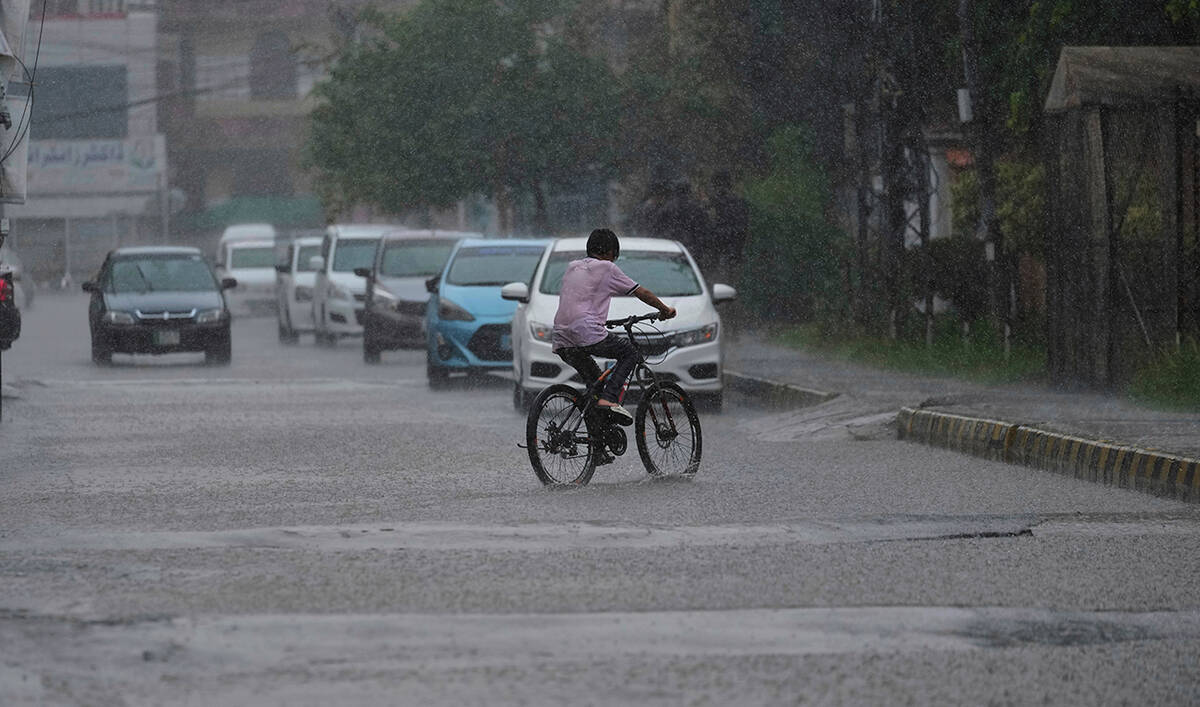


A youngster rides his bicycle on a street during heavy rainfall, in Rawalpindi, Pakistan, on June 27, 2025. (AP)

Punjab PDMA chief Irfan Ali Kathia urged citizens to avoid unnecessary travel and not to stay in dilapidated homes during bad weather.
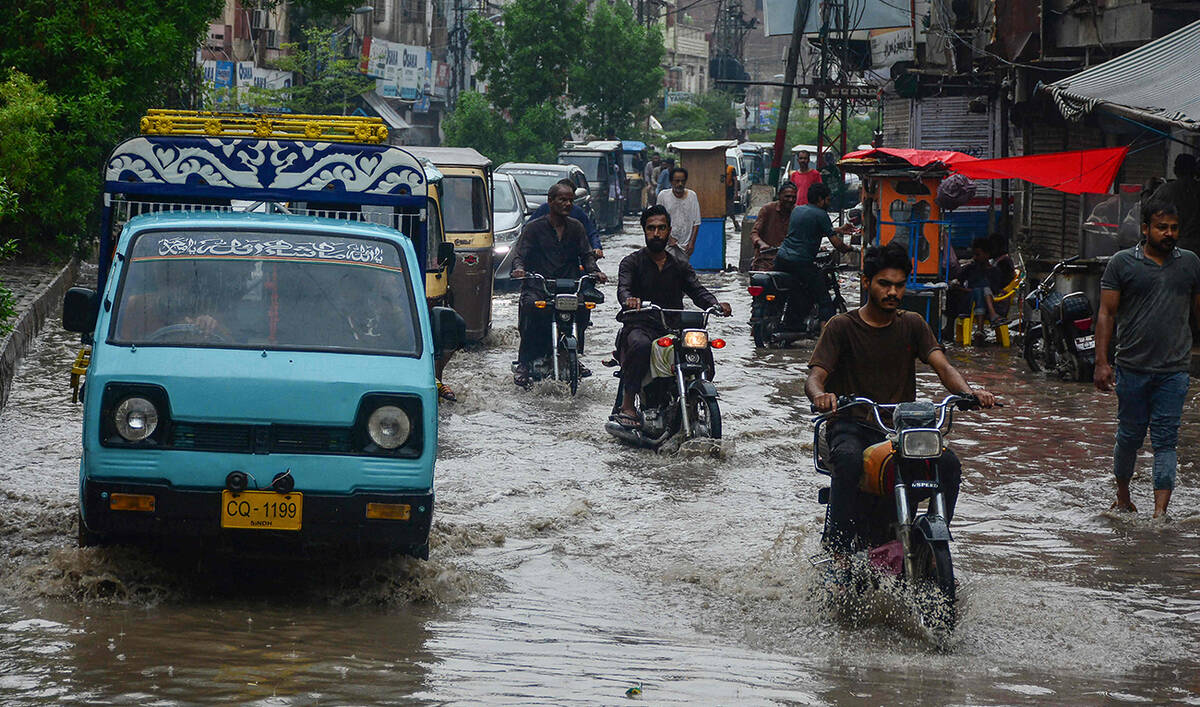


Commuters make their way through a flooded street following heavy rainfall in Hyderabad, in Sindh province on June 27, 2025. (AFP)

The Pakistan Meteorological Department has warned that the risk of heavy rains and possible flash floods will remain high until at least Tuesday.

Babar Raza, a spokesperson for Pakistan Railways, told Arab News the weather had affected the railway signaling system, while the speed of trains had been reduced for safety reasons.

“As a result, some trains are reaching their destinations with a delay of three to four hours,” he said. “No trains have been canceled so far.”

Pakistan, home to over 240 million people, is considered one of the world’s most vulnerable countries to the effects of climate change and faces extreme weather events with increasing frequency.

Last month, at least 24 people were killed in severe storms across the country, which has already experienced multiple extreme weather incidents this year, including hailstorms and spring downpours.


Pakistan bank enables Shariah-compliant digital payment facility for passengers at Islamabad airport

Updated 23 February 2026
Follow

Pakistan bank enables Shariah-compliant digital payment facility for passengers at Islamabad airport

  • Pakistan is a cash-dominated market where a significant portion of transactions in the informal sector are made without any taxes, officials say
  • The move comes amid Pakistan’s efforts to introduce a cashless model at airports under which only digital service providers can provide services

KARACHI: Aik, Pakistan’s first Islamic digital bank, has enabled fully digital payments at Islamabad International Airport to offer travelers and passengers secure, Shariah compliant digital transaction facility.

The development comes amid Pakistan’s efforts to introduce a cashless model at airports across the country, under which only digital service providers can provide services to customers.

Aik, a subsidiary of Bank Islami, said it has onboarded merchants across the Islamabad airport and integrated QR code deployments at key touchpoints to allow passengers and visitors to make secure, seamless, and Shariah-compliant digital transactions at all counters, retail outlets, and service points.

It said the implementation complies with the regulations and framework set by the State Bank of Pakistan (SBP) and is a working model for a large-scale adoption of cashless systems in public infrastructure.

“This deployment reflects our commitment to building practical digital infrastructure that improves everyday transactions,” Aik Chief Officer Ashfaque Ahmed said in a statement.

“By enabling a fully cashless environment at a major national gateway, we are supporting efficiency, transparency, and financial inclusion at scale. This is not only a project; it is a foundation for Pakistan’s cashless future.”

Pakistan is a cash-dominated market where a significant portion of transactions, particularly in the informal sector, are conducted in cash. Officials say many of these transactions are aimed at avoiding taxes.

In recent years, the SBP has taken steps to ensure a transition toward a more cashless economy so that transactions are more traceable, reducing chances of tax evasion and corruption.

By digitizing Islamabad airport, aik said it continues to invest in secure and accessible financial solutions that “expand digital participation and support national economic modernization.”