


ISLAMABAD: Ghulam Ali begins his days in pain, his muscles aching from hauling grain on a rickety cart through the streets of Kabul, homesick for the country he called home for nearly four decades.
Ali is among more than 1.2 million Afghans deported from neighboring Iran since March 2024, according to the International Organization for Migration (IOM), after Tehran pledged mass deportations to counter mounting local discontent over refugees.
Thousands have also fled this month after Israeli and US airstrikes hit Iranian military targets.
For Ali, 51, whose family left Afghanistan during the Soviet invasion in the 1980s when he was just 10, Iran was home.
“I grew up there, worked there, buried my parents there,” he said during a midday break from work in Kabul, sipping green tea with a simple lunch of naan bread.
“But in the end, they threw us out like trash. I lost everything — my home, my little savings in cash, my dignity,” he told the Thomson Reuters Foundation by video link.
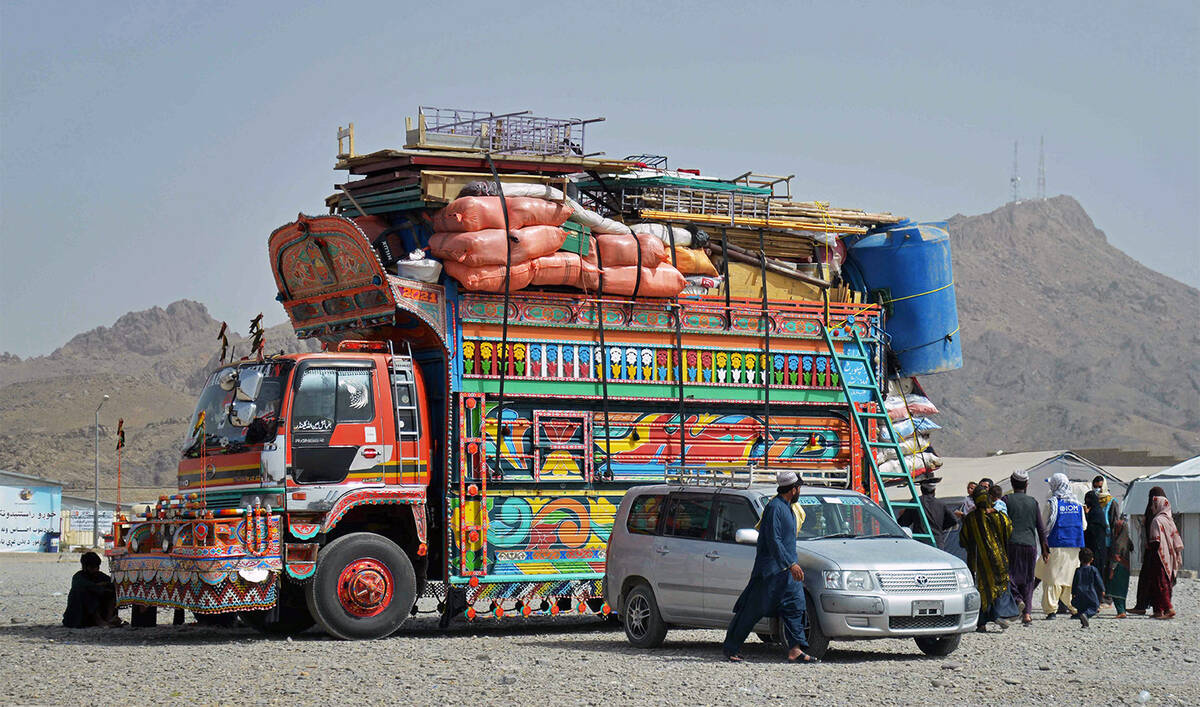
Afghan refugees arrive in a truck from Pakistan, in Takhta Pul district in Kandahar province on June 24, 2025. (AFP)
Like many others, he has returned to a homeland he barely knew and one that has changed drastically.
Outsiders in their own country, many men struggle to support their family while women face severe restrictions on their daily life under the ruling Taliban.
Since late 2023, an estimated 3 million Afghans have been forced out of Iran and Pakistan, where they had sought safety from decades of war and, since the Taliban’s return to Kabul in 2021, from extremist rule.
Unwelcome abroad, they have returned to a homeland facing economic collapse and international indifference.
UN Secretary-General Antonio Guterres, in his latest report on Afghanistan, called on countries hosting Afghan refugees to protect those in need and abide by international obligations to ensure any returns to Afghanistan are voluntary.
“Returnees face immense challenges... in particular securing housing, employment and access to basic services,” he said.
Up to 10,000 Afghan women, men and children are taking the Islam Qala border crossing from Iran on a daily basis, according to the Taliban authorities. Inside Afghanistan, humanitarian aid agencies say conditions are dire, with inadequate shelter, food shortages and no road map for reintegration.
“They return to a homeland that is dramatically unprepared to receive them,” warned Arafat Jamal, the UNHCR representative in Afghanistan in a statement last month.
The Taliban’s deputy minister for border and refugees affairs, Abdul Zahir Rahmani, also told local media this week that Afghanistan had seen a sharp increase in refugee returns since this month’s 12-day air war in Iran.
Many said they had no say in the matter.
Ali said he was arrested at a construction site in Mashhad, Iran’s second-biggest city, lacking documentation during a crackdown on refugees by the Iranian police.
He and his wife, six children, two daughters-in-law and five grandchildren were deported in March.
“We were treated like criminals,” he said. “They didn’t care how law-abiding or in need we were. They just wanted all Afghans out.”
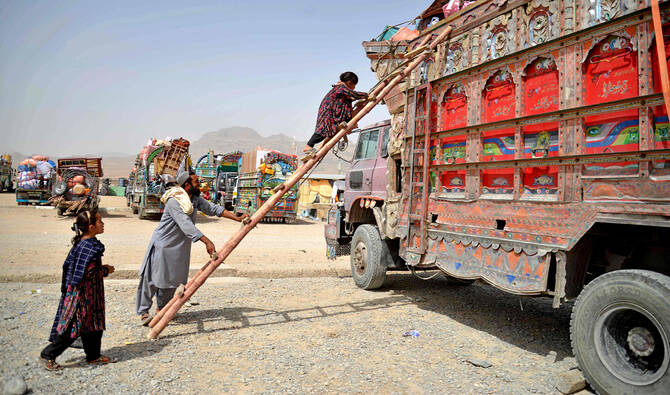
The extended family — 15 people aged 5 to 51 — is now packed into a two-room, mud-brick house on Kabul’s western fringes.
Ali said his Persian-accented Dari draws sneers from fellow laborers – another reminder he doesn’t fit in. But he brushes off their mockery, saying his focus is on feeding his family.
“We can barely afford to eat properly,” his wife Shahla said by video as she sat cross-legged on a worn rug.
“Rent is 4,000 afghanis ($56) a month — but even that is a burden. One of my sons is visually impaired; the other returns home every day empty-handed.”
For women and girls, their return can feel like a double displacement. They are subject to many of the Taliban’s most repressive laws, including restrictions on their movement without a “mahram,” or male companion, and curbs on education and employment.
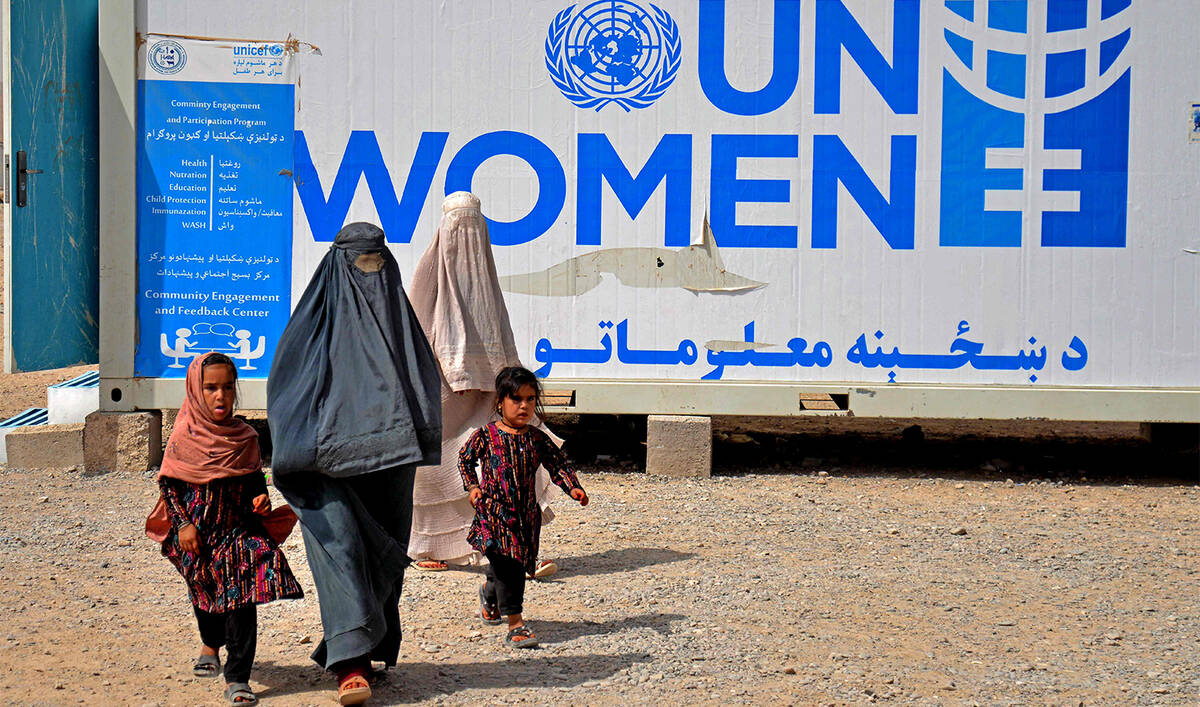
Afghan burqa-clad women and their children, walk at a refugee registration centre after their arrival from Pakistan, in Takhta Pul district in Kandahar province on June 24, 2025. (REUTERS)
On Kabul’s western edge, 38-year-old Safiya and her three daughters spend their days in a rented house packing candies for shops, earning just 50 afghanis for a day’s work, below Afghanistan’s poverty level of $1 a day.
Safiya said they were deported from Iran in February.
“In Tehran, I stitched clothes. My girls worked at a sweet shop,” said Safiya, who declined to give her last name.
“Life was tough, but we had our freedom, as well as hope … Here, there’s no work, no school, no dignity. It’s like we’ve come home only to be exiled again.”
During their deportation, Safiya was separated from her youngest daughter for a week while the family was detained, a spat over documents that still gives the 16-year-old nightmares.
In Iran, said Safiya, “my daughters had inspiring dreams. Now they sit at home all day, waiting.”
Afghans are also being forcibly deported from next-door Pakistan – more than 800,000 people have been expelled since October 2023, according to Amnesty International.
Born in Pakistan to Afghan refugee parents, Nemat Ullah Rahimi had never lived in Afghanistan until last winter, when police barely gave him time to close his Peshawar grocery store before sending him over the Torkham border crossing.
“I wasn’t allowed to sell anything. My wife and kids — all born in Pakistan — had no legal documents there so we had to leave,” said the 34-year-old.
Rahimi now works long hours at a tire repair shop at a dusty intersection on the edge of Kabul as he tries to rebuild a life.
“I can’t say it’s easy. But I have no choice. We’re restarting from zero,” he said.


