



NEW DELHI, India: Beijing’s bid for enhanced regional leadership suffered a setback Thursday when India rejected signing a joint statement put before members of the China-backed Shanghai Cooperation Organization, saying it was pro-Pakistan in not mentioning April’s terror attack on Indian tourists.
Indian Defense Minister Rajnath Singh said the statement diluted India’s position on critical issues such as terrorism and regional security, a person familiar with the matter told The Associated Press on condition of anonymity because he wasn’t authorized to speak to the media.
India blames Pakistan for backing the gunmen behind the April 22 killing of 26 people, most of them Indian Hindu tourists, in India-controlled Kashmir, and has described it as a terror attack. Islamabad denies the charge.
Singh alleged that the joint statement “suited Pakistan’s narrative” because it did not include that attack but mentioned militant activities in Balochistan, the person said. Pakistan has repeatedly accused India of backing Balochistan freedom movement, allegations that India denies.
The signing ceremony came during a meeting of defense ministers of the Shanghai Cooperation Organization, a regional grouping formed by China and Russia to counter US influence in Asia.
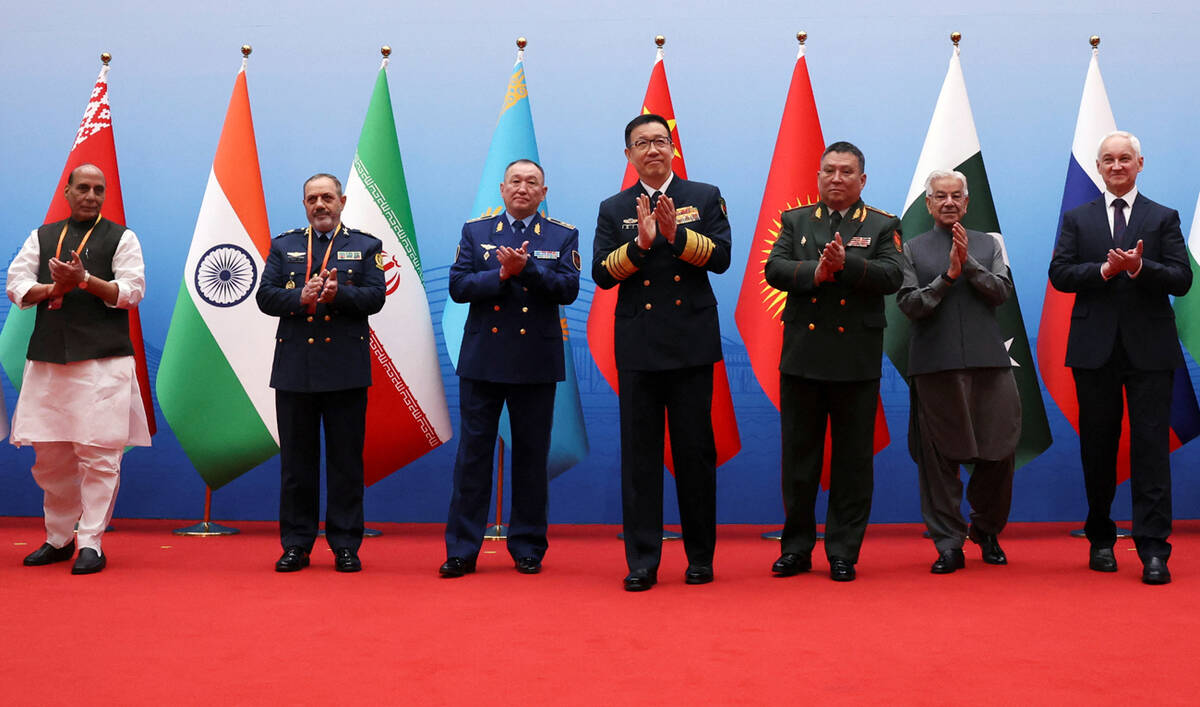
Chinese Defense Minister Dong Jun, India’s Defense Minister Rajnath Singh, Iran’s Defense Minister Aziz Nasirzadeh, Kazakhstan’s Defense Minister Dauren Kosanov, Kyrgyzstan’s Defense Minister Ruslan Mukambetov, Pakistan’s Defense Minister Khawaja Asif and Russia’s Defense Minister Andrei Belousov applaud following a group photo, before the Shanghai Cooperation Organization (SCO) Defense Ministers’ Meeting in Qingdao, Shandong province, China on June 26, 2025. (REUTERS)
China has largely taken over running the SCO, staging joint drills and holding summits, while Russia is embroiled in its full-scale invasion of Ukraine and international isolation.
While little known globally, the SCO has become one of China’s main instruments to expand its political and economic reach into areas traditionally neutral, such as India, or closely linked to Russia such as Central Asia.
Thursday’s meeting took place in the east China city of Qingdao, home to China’s northern fleet.
Singh, without explicitly naming Pakistan, urged the SCO to criticize countries that use “cross-border terrorism as an instrument of policy and provide shelter to terrorists.” He said members should unite in eliminating terrorism and ensure accountability for those who aid such activities.
“Peace and prosperity cannot co-exist with terrorism and proliferation of weapons of mass destruction in the hands of non-state actors and terror groups. Dealing with these challenges requires decisive action,” said Singh, according to a defense ministry statement.
The April 22 killings embroiled the two nuclear-armed nations in the most serious military confrontation in decades. After days of exchanging fire, they agreed to end all military actions under a US-brokered ceasefire.
On Wednesday, Chinese Defense Minister Dong Jun held one-on-one meetings with his counterparts from Belarus, Iran, Pakistan, Kyrgyzstan and Russia. India, Kazakhstan, Tajikistan and Uzbekistan are also members.
“Unilateralism and protectionism are surging, while hegemonic, high-handed, and bullying acts severely undermine the international order, making these practices the biggest sources of chaos and harm,” Dong said according to the official Xinhua News Agency, in a swipe at the US and its allies.
China and India have decades-old border disputes and Beijing has become one of Pakistan’s closest allies.


