

Turning plastic into fuel: Photos of Gaza’s youth surviving with makeshift burners

1 / 4
Residents ride through black smoke from makeshift burners used to extract fuel from melted plastic to sell along the Sea Road south of Gaza City, Sunday, June 22, 2025. (AP)
2 / 4
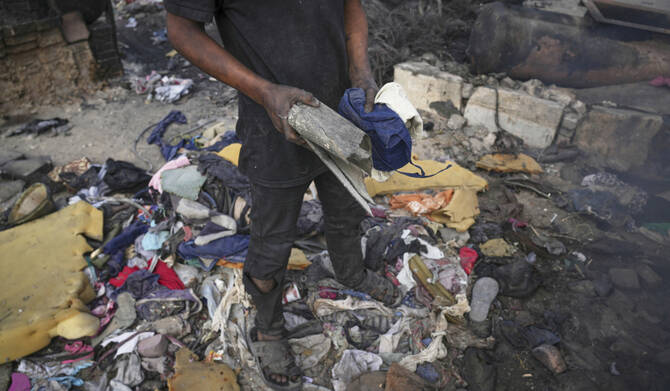
A Palestinian youth collects plastic to be used at a makeshift burner to extract fuel to sell along the Sea Road south of Gaza City, Sunday, June 22, 2025. (AP)
3 / 4
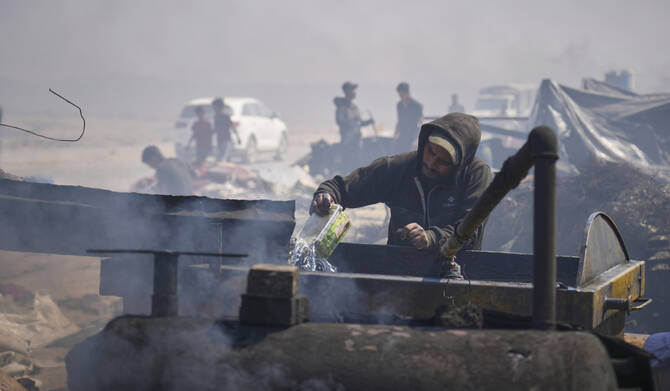
A Palestinian uses water to cool fuel extracted from melted plastic in a makeshift burner, to be sold along the Sea Road south of Gaza City, Tuesday, June 24, 2025. (AP)
4 / 4
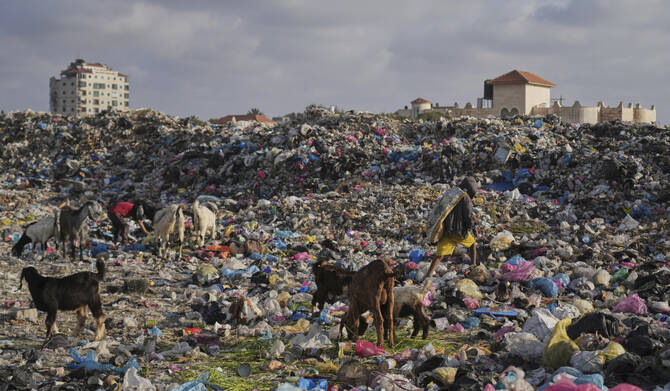
Goats graze grass amid the waste at a landfill in Al-Zawaideh, Gaza Strip, on Tuesday, June 24, 2025. (AP)
Short Url
Updated 24 June 2025
Follow

Turning plastic into fuel: Photos of Gaza’s youth surviving with makeshift burners

  • The fuel they produce is used locally, often for generators or transport, and sold at a lower price than commercial alternatives

GAZA CITY, Gaza Strip: South of Gaza City, along the Sea Road that runs beside the Mediterranean, Palestinian youth are producing fuel by melting plastic in makeshift burners. With limited access to commercial fuel, they collect plastic waste, process it in metal drums to extract crude fuel, and then bottle and sell it to passersby.
The work unfolds in the open air, where black smoke billows from the burners, blanketing the roadside. The area is lined with small tents where the youth store materials and rest between shifts. Horse-drawn carts and pedestrians regularly pass through the smoke-filled stretch, moving between northern and southern Gaza.
Most of those involved in the trade are displaced and have few other sources of income. The fuel they produce is used locally, often for generators or transport, and sold at a lower price than commercial alternatives.
Though the process is simple, it involves long hours and exposure to fumes and open flames. For these youth, it has become a way to earn money and support their families in a difficult and unstable environment.
This is a photo gallery curated by AP photo editors.


Lebanese government imposes immediate ban on Hezbollah’s military activities

Updated 02 March 2026
Follow

Lebanese government imposes immediate ban on Hezbollah’s military activities


BERUIT: Lebanon's government said Hezbollah’s overnight attack against Israel were “illegal” and imposed an immediate ban on the group’s military activities, while also demanding its hand over its weapons.

Lebanese Prime Minister Nawaf Salam said only the state could decide whether to go to war and called on the Lebanese military to prevent the firing of projectiles and detain anyone involved.

The move comes after Iran-backed Hezbollah launched rockets at Israel, provoking retaliatory Israeli strikes. The government convened for five hours and 15 minutes in an early morning meeting on Monday before reaching its decision.

The Lebanese cabinet meeting, chaired by President Joseph Aoun, started at 8am with ministers discussing the repercussions Hezbollah's launching of missiles from southern Lebanon into Israel and the Israeli attacks on Lebanon.

Sources initially told Arab News that ministers were “pushing for a decisive response to Hezbollah’s recklessness, regardless of the consequences.”

Lebanese MP Melhem Khalaf said the priority was to “shelter people that are evacuating their homes in relatively safe places. What happened at dawn on Monday has taken us from one stage to another, and we don't know where they've taken us.”

As US-Israeli attacks on Iran continued, Hezbollah said it fired missiles from Lebanon into Israel early Monday in response to the killing of Iranian Supreme Leader Ali Khamenei and “repeated Israeli aggressions.”

There were no reports of injuries or damage, and Israel said it had intercepted one projectile, while several fell in open areas.

Israel retaliated with strikes on Lebanon, killing at least 31 people and wounding 149 others, according to Lebanon's Health Ministry. Around two thirds of the dead were in the south of the country.

Lebanon’s government said it was holding an emergency meeting after Hezbollah’s attack triggered the Israeli airstrikes.

Iran has been firing missiles at Israel and Arab states in a counter-offensive since the joint America-Israeli attack Saturday that killed Khamenei and other top Iranian officials. The war has quickly expanded to proxy forces, including Hezbollah firing out of Lebanon.

MP Bilal Abdullah told Arab News: “All the appeals issued by officials in Lebanon not to embroil us in this destructive war seem to have been in vain. We were supposed to protect Lebanon.

“Whoever launched the missiles and drones from Lebanon has slaughtered Lebanon. Displacing people is a major tragedy. We are in the winter season, and the cold is severe.”