DAKAR: Armed men killed 34 soldiers and wounded 14 others in western Niger near the tri-state border with Mali and Burkina Faso, the defense ministry said.
The attack was carred out around 9 a.m. Thursday in Banibangou by attackers using eight vehicles and more than 200 motorbikes, the ministry said in a statement.
The government said its forces killed dozens of attackers it called “terrorists,” adding that search operations by land and air were being conduted to find additional assailants.
Niger, along with its neighbors Burkina Faso and Mali, has for more than a decade battled an insurgency fought by jihadi groups, including some allied with Al-Qaeda and the Daesh group.
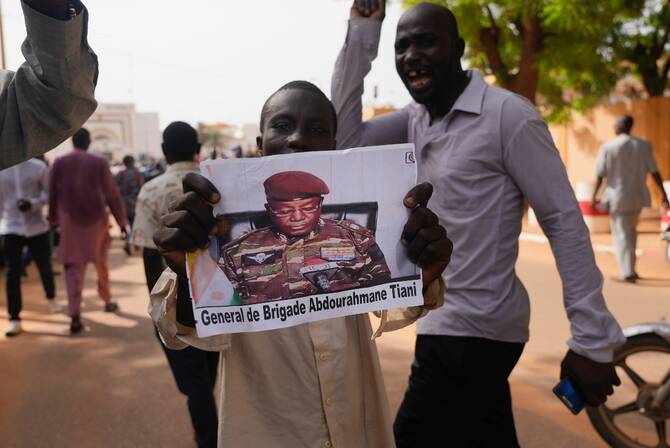
Following military coups in the three nations in recent years, the ruling juntas have expelled French forces and turned to Russia’s mercenary units for security assistance. The three countries have vowed to strengthen their cooperation by establishing a new security alliance, the Alliance of Sahel States.
But the security situation in the Sahel, a vast region on the fringes of the Sahara Desert, has significantly worsened since the juntas took power, analysts say, with a record number of attacks and civilians killed by Islamic militants and government forces.

Armed men in western Niger kill 34 soldiers and wound 14, authorities say
https://arab.news/pa4xw
Armed men in western Niger kill 34 soldiers and wound 14, authorities say
Britain needs to step up defense spending faster, says Starmer
- Britain’s budget watchdog, the Office for Budget Responsibility, said last year that raising defense spending to 3 percent of the GDP would cost an additional £17.3 billion a year ($24 billion) in 2029-30
LONDON: Britain should step up and accelerate its defense spending, Prime Minister Keir Starmer said on Monday, following a report that the government was considering bringing forward its target to spend 3 percent of economic output on defense.
Britain, which has warned of the risks posed by Russia, said in February 2025 that it would lift annual defense spending to 2.5 percent of the GDP by 2027 and aim for 3 percent in the next Parliament, which is expected to begin after an election due in 2029.
The BBC reported that the government was now exploring ways to reach the 3 percent target by 2029. It said no decision had been taken but the government recognized current plans would not cover rising defense costs.
HIGHLIGHT
The BBC reported that the government is now exploring ways to reach the 3 percent target by 2029.
Asked whether he would bring the target forward to 2029, Starmer echoed comments he made at the Munich Security Conference, where he said Europe had united to support Ukraine with the supply of weapons and munitions and to strengthen military readiness.
“We need to step up. That means on defense spending, we need to go faster,” Starmer told reporters on Monday. “We’ve obviously made commitments already in relation to that, but it goes beyond just how much you spend.”
Latest NATO estimates show that Britain spent 2.3 percent of the GDP on defense in 2024, above the alliance’s 2 percent guideline. But like other European countries, it has faced US pressure to spend more to protect the continent. Struggling with high debt and spending commitments, the government last year cut its international aid budget to fund the hike in defense spending to 2.5 percent of GDP but is yet to publish an investment plan with spending priorities, something that has frustrated the defense industry.
Britain’s budget watchdog, the Office for Budget Responsibility, said last year that raising defense spending to 3 percent of the GDP would cost an additional £17.3 billion a year ($24 billion) in 2029-30.
Finance Minister Rachel Reeves has struggled to stay on track with her plans to repair the public finances. The BBC said the Finance Ministry was believed to be cautious about the new defense spending proposals.
A government spokesperson said Britain was “delivering the largest sustained increase in defense spending since the Cold War.”


