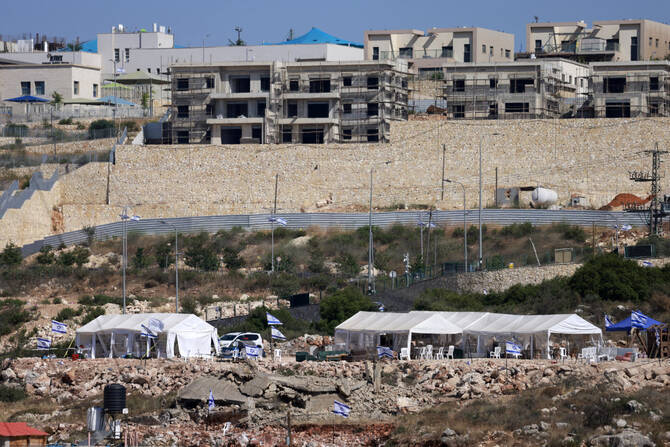
BRUSSELS: Nine European Union countries have called on the European Commission to come up with proposals on how to discontinue EU trade with Israeli settlements in the occupied Palestinian territories, according to a letter seen by Reuters on Thursday.
The letter, addressed to EU foreign policy chief Kaja Kallas, was signed by foreign ministers from Belgium, Finland, Ireland, Luxembourg, Poland, Portugal, Slovenia, Spain and Sweden.
The EU is Israel’s biggest trading partner, accounting about a third of its total goods trade. Two-way goods trade between the bloc and Israel stood at 42.6 billion euros ($48.91 billion) last year, though it was unclear how much of that trade involved settlements.
The ministers pointed to a July 2024 advisory opinion from the International Court of Justice, which said Israel’s occupation of Palestinian territories and settlements there are illegal. It said states should take steps to prevent trade or investment relations that help maintain the situation.
“We have not seen a proposal to initiate discussions on how to effectively discontinue trade of goods and services with the illegal settlements,” the ministers wrote.
“We need the European Commission to develop proposals for concrete measures to ensure compliance by the Union with the obligations identified by the Court,” they added.
Israel’s diplomatic mission to the EU did not immediately respond to a request for comment.
Belgian Foreign Minister Maxime Prevot said Europe must ensure trade policy is in line with international law.
“Trade cannot be disconnected from our legal and moral responsibilities,” the minister said in a statement to Reuters.
“This is about ensuring that EU policies do not contribute, directly or indirectly, to the perpetuation of an illegal situation,” he said.
The ministers’ letter comes ahead of a meeting in Brussels on June 23 where EU foreign ministers are set to discuss the bloc’s relationship with Israel.
Ministers are expected to receive an assessment on whether Israel is complying with a human rights clause in a pact governing its political and economic ties with Europe, after the bloc decided to review Israel’s adherence to the agreement due to the situation in Gaza.


![]()

EU countries seek ban on trade with illegal zones of Israel
Short Url
https://arab.news/9rtx8
EU countries seek ban on trade with illegal zones of Israel
- Bloc set to discuss relations with Israel next week
- ICJ says countries’ trade should not support settlements


Latest updates


© 2026 SAUDI RESEARCH & PUBLISHING COMPANY, All Rights Reserved And subject to Terms of Use Agreement.