Industrial cities in Saudi Arabia’s Qassim region hit 77% occupancy rate, official reveals

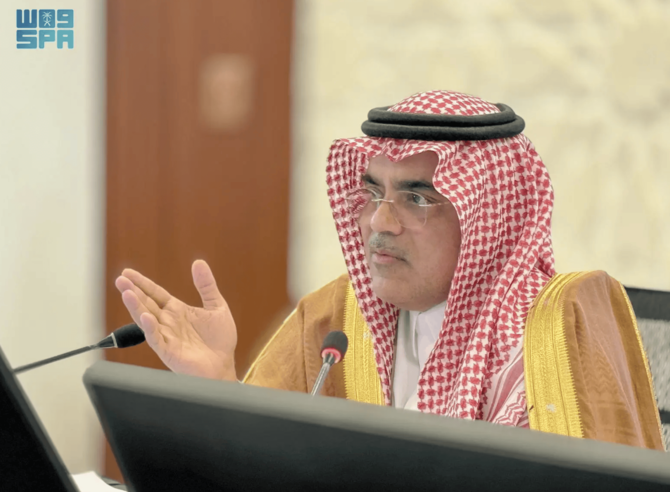
Saudi Arabia’s Deputy Minister of Industry and Mineral Resources for Industrial Affairs Khalil Ibrahim bin Salamah. SPA
Short Url
Updated 19 June 2025
Follow

Industrial cities in Saudi Arabia’s Qassim region hit 77% occupancy rate, official reveals

RIYADH: Industrial cities in Saudi Arabia’s Qassim region are performing at occupancy rates of up to 77 percent, with 158 factories currently in operation, reflecting strong growth and a supportive business environment, according to a top official.

During a meeting organized by the the area’s chamber of commerce, the Kingdom’s Deputy Minister of Industry and Mineral Resources for Industrial Affairs Khalil Ibrahim bin Salamah explained that the value of industrial investments in the region during the first quarter of 2025 reached SR700 million ($186 million), with the city of Buraydah accounting for the largest share, the Saudi Press Agency reported.

This reflects the impact of the Kingdom’s National Industrial Strategy, introduced in October 2022, which aims to increase the number of factories in the Kingdom to approximately 36,000 by 2035. 

The SPA statement said: “The meeting aimed to introduce the most prominent ministerial services and programs and discuss the sector’s aspirations to achieve continued growth in development and investment.”

It added: “The meeting addressed several topics related to the industrial sector, including standard incentives for the industrial sector, which enhance the competitive sustainability of the industrial sector in the Kingdom.”

The statement further revealed that the assembly addressed the environmental impact of industrial facilities and presented solutions to help improve efficiency and quality.

It also included a review and introduction to the Factories of the Future Program, as well as the process of converting these facilities to adopt modern manufacturing practices, automation, and digitization, which directly contribute to the development of the industrial sector in the Kingdom.

The gathering also saw a review of the Industrial Links Program, which connects manufacturers with major projects to achieve the goals of the national strategy for increasing local content.

The Qassim region experienced 25 percent growth in its business sector over the past seven years, reflecting increased economic activity and contributing to the Kingdom’s goal of balanced development, the Ministry of Commerce reported in a post on its official X account in May.

The number of commercial records in the central region rose from 68,000 in 2018 to 85,000 by the end of the first quarter of this year, the ministry said at the time. 

In 2024, Qassim Municipality announced that the region had successfully concluded 711 investment contracts, with a total value exceeding SR740 million. The municipality also provided 1050 diverse investment opportunities aimed at supporting economic development and enhancing the quality of life in the region.

The increase comes as the Kingdom pushes ahead with its economic diversification strategy, aiming to increase the private sector’s share of the gross domestic product from 40 percent to 65 percent by 2030.


Saudi Maaden reports 156% profit surge to $2bn on strong commodity prices, record production

Updated 05 March 2026
Follow

Saudi Maaden reports 156% profit surge to $2bn on strong commodity prices, record production

RIYADH: Saudi mining and metals company Maaden has reported a 156 percent jump in its net profit attributable to shareholders for 2025, driven by higher commodity prices, record production volumes, and a one-off bargain purchase gain.

The state-backed giant posted a net profit of SR7.35 billion ($1.95 billion) for the full year 2025, an increase from SR2.87 billion in the previous year. The firm’s revenue surged by 19 percent to SR38.58 billion, up from SR32.55 billion in 2024.

This comes as Saudi Arabia steps up efforts to expand its mining sector as a pillar of economic diversification, encouraging international participation and private investment to unlock the Kingdom’s estimated $2.5 trillion in untapped mineral resources under Vision 2030.    

In a statement on Tadawul, the company said: “Performance was led by record phosphate production, near record aluminum production, an increase in all three of Maaden’s main output commodity prices.”

The performance was also fueled by a 60 percent increase in gross profit, which reached SR14.79 billion. In its annual results announcement, Maaden attributed the top-line growth to “higher commodity market prices for phosphate, aluminum and gold business units,” as well as increased sales volumes in its phosphate and aluminum segments. This was partially offset by slightly lower sales volume in the gold unit.

Maaden’s CEO, Bob Wilt, hailed 2025 as a transformative year for the company, marked by strategic growth and operational excellence. “This was a great year for Maaden’s strategic growth. We delivered strong financial results and sustained operational excellence across the business,” he said in a statement.

“This was driven by growth in production across all businesses, including record-breaking DAP (di-ammonium phosphatevolumes), disciplined cost control across and a clear commitment to our role as a cornerstone of the Saudi economy,” Wilt added.

Profitability was further bolstered by an increased share of net profit from joint ventures and an associate. This included a one-off bargain purchase gain of SR768 million related to Maaden’s investment in Aluminium Bahrain B.S.C. The company also benefited from lower finance costs.

The fourth quarter of 2025 was strong, with Maaden swinging to a net profit of SR1.67 billion, compared to a loss of SR106 million in the same period of the prior year. Quarterly revenue rose 7 percent to SR10.64 billion.

The firm achieved record production of di-ammonium phosphate, reaching 6.72 million tonnes for the year, a 9 percent increase. Aluminum production remained near-record levels, while the company added a net 7.8 million ounces to its reportable gold mineral resources through discovery and resource development.

The phosphate division saw sales jump 17 percent to SR20.77 billion, with the earnings before interest, taxes, depreciation, and amortization margin expanding to 47 percent. The aluminum business reported a 9 percent increase in sales to SR10.99 billion, with EBITDA more than doubling in the fourth quarter.

Looking ahead, Wilt emphasized that the pace of growth will accelerate as the company advances key initiatives, including the Phosphate 3 Phase 1 and Ar Rjum projects, which remain on budget and schedule. Maaden has also secured a gas supply for its future Phosphate 4 project.

“This pace of growth will only accelerate. Not only as we advance projects and increase the scale of our exploration program, but as we continue to grow production and implement technology that will further modernize, streamline and unlock value,” Wilt added.

Earnings per share for the year rose sharply to SR1.91, up from SR0.78 in 2024. Total shareholders’ equity increased by 18.7 percent to SR61.59 billion.