- Thai PM says leak shows ‘trust problem’ with Cambodian ex-premier
BANGKOK, Phnom Penh: Relations between Thailand and Cambodia suffered a major blow on Wednesday after a leak of a telephone conversation between Thai Prime Minister Paetongtarn Shinawatra and influential former Cambodian Premier Hun Sen that could further escalate tensions.
Ties between the two neighbors are at their worst in more than a decade after a row over border territory that has sparked fears of a military confrontation following a sharp rise in nationalist rhetoric and the mobilization of troops on both sides of their frontier.
The leaked June 15 phone call, which has been confirmed as authentic by both Hun Sen and Paetongtarn, shows the Thai premier telling Hun Sen, whom she called uncle, that she is under domestic pressure and urging him not to listen to “the opposite side” which includes a prominent Thai military commander at the border.
“He just want to look cool and saying things that are not useful to the nation, but in truth what we want is peace,” she told Hun Sen through a translator in the leaked audio clip, referring to the general.
Paetongtarn later told reporters her conversation with Hun Sen was part of a negotiation tactic and she has no problem with the Thai army.
“I won’t be talking privately with him (Hun Sen) anymore because there is a trust problem,” she said.
Hun Sen said the leak came from one of the 80 politicians he shared the audio recording with. Self-styled strongman Hun Sen was Cambodia’s premier for nearly four decades and has maintained a high public profile since handing over power in 2023 to his son, Prime Minister Hun Manet.
The two governments had until recently enjoyed warm ties, helped by the close relationship between Hun Sen and Thailand’s former premier Thaksin Shinawatra, Paetongtarn’s influential father. Both former leaders are still active in politics.
Fierce rhetoric
The leak could put that relationship in jeopardy and will add to speculation in Thailand that Paetongtarn and the powerful Thai military are at odds on how to respond to the border crisis with Cambodia.
Cambodia’s rhetoric has become more fierce in the past week, with Hun Sen blaming Thai “extremists” and the Thai army for stoking tensions, saying Paetongtarn’s government was “unable to control its military the way our country can.”
The billionaire Shinawatra family has a troubled history with the army, with two of its governments ousted by generals in coups in 2006 and 2014.
Lt. Gen. Boonsin Padklang, commander of Thailand’s Second Army Area overseeing the eastern border, on Wednesday told local media that Paetongtarn had called him to explain the leak.
“I don’t have any issue, I understand,” Boonsin said. The weeks-long standoff followed a brief border skirmish on May 28 that left a Cambodian soldier dead. Both countries have called for calm while vowing to defend their sovereignty over contested stretches of a 820-km (510-mile) land border, parts of which are undemarcated. Attempts to settle the issue have failed, with Cambodia on Sunday delivering on its vow to seek resolution at the International Court of Justice, the jurisdiction of which Thailand says it does not recognize.
On Wednesday, Cambodia’s defense ministry said Thailand had again violated its sovereignty with drone flights, trench digging and troop deployments, which Bangkok rejected.
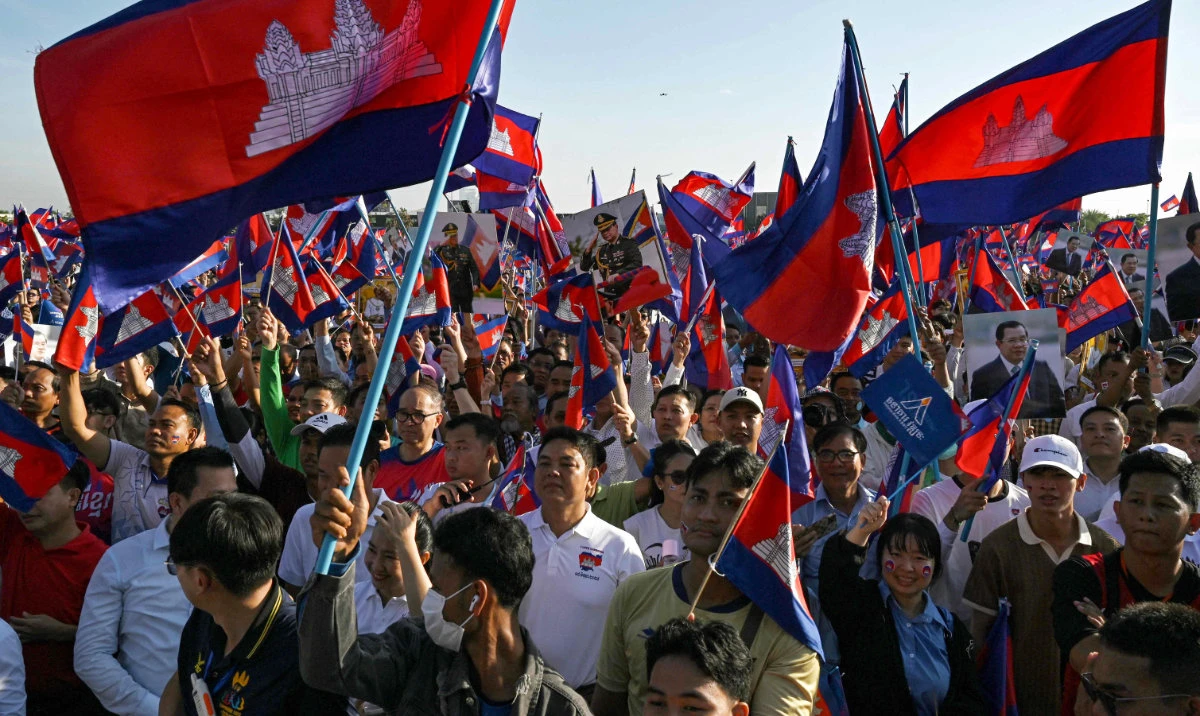
Thousands of Cambodians joined a state-organized march in the capital Phnom Penh on Wednesday to support the government, shouting slogans, waving national flags and holding portraits of Hun Manet and Hun Sen.
“Cambodia’s land! We won’t take others’ land, we keep our land!” some chanted.