

FSB Sports Show Riyadh spotlights exhibitors powering sports, leisure solutions for urban future

1 / 4
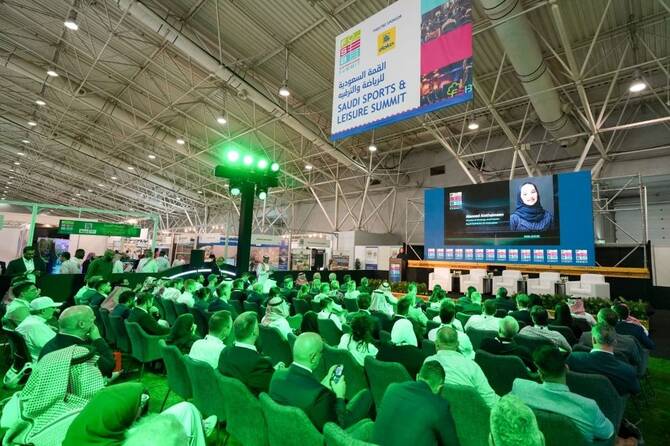
FSB Sports Show Riyadh — organized by DMG Events and Koelnmesse — welcomed thousands of industry leaders and professionals to the Riyadh International Convention and Exhibition Center. (Supplied)
2 / 4
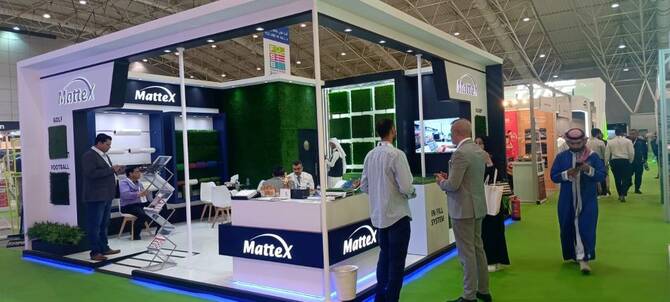
FSB Sports Show Riyadh — organized by DMG Events and Koelnmesse — welcomed thousands of industry leaders and professionals to the Riyadh International Convention and Exhibition Center. (Supplied)
3 / 4
FSB Sports Show Riyadh — organized by DMG Events and Koelnmesse — welcomed thousands of industry leaders and professionals to the Riyadh International Convention and Exhibition Center. (Supplied)
4 / 4
FSB Sports Show Riyadh — organized by DMG Events and Koelnmesse — welcomed thousands of industry leaders and professionals to the Riyadh International Convention and Exhibition Center. (Supplied)
Short Url
Updated 18 June 2025
Follow

FSB Sports Show Riyadh spotlights exhibitors powering sports, leisure solutions for urban future

  • Saudi Arabia’s plan to become center for world-class sports infrastructure gaining momentum

RIYADH: Saudi Arabia’s ambitious plans to be a center for world-class sports infrastructure and recreation spaces are gaining momentum, with more than $2 billion in committed investments and a projected $5.9 billion in sports sector revenue by 2030.

With major international events, including the AFC Asian Cup Saudi Arabia 2027, Asian Winter Games in NEOM’s Trojena in 2029, Riyadh Expo 2030, FIFA World Cup 2034 and the Asian Games in Riyadh in 2034 on the horizon, the Kingdom is accelerating development as part of Vision 2030.

Aligned with this ambition, the inaugural FSB Sports Show Riyadh — organized by DMG Events and Koelnmesse — welcomed thousands of industry leaders and professionals this week at the Riyadh International Convention and Exhibition Center.

Rob Hetherington, group business development director at Gebal Group, which was among the exhibitors, said: “Saudi is our most important market that we are focusing on right now.

“We have been working in Saudi for five years now and have already developed over 40 to 50 outdoor spaces. So we have got a team that’s growing into double figures. Our company has 400-plus people and we are going to rapidly grow into the Saudi market.”

The company designs and supplies outdoor recreation areas and has developed skate parks for the Red Sea Project and at the Qiddiyah entertainment city, NEOM and Sports Boulevard, among other places.

“We delivered lots of fanzone spaces in Qatar for the World Cup. Our plan is to do the same thing for the World Cup in Saudi Arabia,” Hetherington said.

Muhammed Kazi, senior vice president for construction at DMG, said: “From active cities and giga-projects to school playgrounds and public parks, Saudi Arabia is transforming how it designs and delivers spaces for sports, wellness and recreation.”

Denis Steker, senior international vice president at Koelnmesse, said: “FSB is the international benchmark for innovations in sports and leisure facilities. As Saudi Arabia scales up investment across public parks, playgrounds or stadiums to increase the health and well-being of the public, now is the ideal time to bring this event to Riyadh.”

At the show, which ran from Monday to Wednesday, Scott Van Der Kleij, sales director at exhibitor GreenFields, told Arab News: “We are here to get a better understanding of what the Saudi market is and especially towards the FIFA World Cup 2034.”

Ramsha Asghar, director for sports flooring at Neo Sports, said the event had “been a really good opportunity to showcase our material and speak to really high-end individuals, and I am really excited for what’s to come from the sports projects.”

Bill Lennox, managing director at Yardex, which supplies artificial grass and is FIFA-certified, told Arab News he saw “tremendous volume and potential for the product” in Saudi Arabia.

The sports show was held concurrently with the International Hardware Fair Saudi Arabia.

Gerald Bose, president and CEO of Koelnmesse, said: “Launching both FSB Sports Show and International Hardware Fair marks a significant step in connecting global expertise with Saudi Arabia’s rapidly advancing sectors.”

With more than 200 exhibitors and brands, the FSB Sports Show supported the Kingdom’s plans to develop inclusive and modern environments for community wellness and active living.

Among the standout attractions were TeleiosX, which gave visitors the chance to experience competitive, full-motion racing on the show floor, and a virtual golf simulator presented by Marafei Almarefah.


Ramadan the Hijazi way, a festive season of memories and togetherness

Updated 24 sec ago
Follow

Ramadan the Hijazi way, a festive season of memories and togetherness

  • Local customs, cherished recipes and family reunions define the holy month along the Red Sea coast
  • Abir Abusulayman: People like to prepare before its arrival. It’s part of the joy

JEDDAH: Across Saudi Arabia, the arrival of Ramadan is not simply marked on a calendar; it is felt in homes, streets, markets and hearts. 

Preparations begin well before the crescent moon is sighted, transforming daily life into a tapestry of devotion, generosity and celebration.

In the Hijaz region, many revive culturally rooted traditions that celebrate the moment wholeheartedly.

Abir Abusulayman, an expert in Hijazi traditions, a tour guide in Al-Balad, and the CEO of Aloula charitable organization, shared insights into these customs.

“People like to prepare before its arrival. It’s part of the joy,” she told Arab News.

The first signs of Ramadan appear in grocery baskets. Families stock up on essential ingredients and traditional beverages that define the month’s evenings.

“Families start to buy groceries, especially for Ramadan dishes,” she said. “Qamareddine and subia are very popular. They are local beverages linked to Ramadan, served cold during iftar or sahoor.”

Alongside these refreshing drinks, certain dishes hold almost ceremonial status. “Al-Hab soup is the queen of the Ramadan table,” she added. Made from hearty grains, it is often purchased in large quantities and stored for the entire month.

She added that preparing sambusa with different fillings and storing it in large quantities is a cherished tradition. Most households begin preparing it at least two weeks before the holy month, as these savory parcels are equally indispensable.

“These are not just foods,” she said. “These are rituals.”

Soups vary from lentil to vegetable to shish barak, offering nourishment after long fasting hours. Healthy, warm and comforting, they are staples of the iftar spread.

“Saudi Arabia has the best dates in the world, hundreds of types,” she said. “But in Ramadan, they are presented in very attractive ways.”

Rather than serving them plain, Hijazi families like to get creative by stuffing dates with walnuts, hazelnuts or almonds, sprinkling them with sesame or black seeds, and sometimes serving them with tahini on the side, along with Saudi coffee.

“We start to break our fast with dates, like the Prophet Muhammad, peace be upon him,” she explains. “And we drink water and buttermilk.”

Zamzam water in Hijaz is often prepared in advance and infused with aromatic mastika, giving it a distinctive flavor associated with the holy month.

Decoration is another essential expression of Ramadan’s joy. “It is a must,” she says. “It’s part of the happiness for citizens and expats alike.”

Whether installed by municipalities, illuminating streets and lamps, or lovingly arranged by families at home entrances and interiors, Ramadan lights glow across neighborhoods. The festive spirit extends to personal preparation as well.

“Ladies like to wear their thobes during Ramadan,” she said. Families dress in their finest, particularly when gathering for prayers or hosting guests.

Spiritual readiness is equally important. Prayer mats and women’s prayer garments are washed and perfumed, ensuring that worship spaces are fresh and inviting.

“In the worshipping space, everything should have a nice smell,” she said, adding it is “a sensory reflection of inner purification.”

“Usually, the first day for Hijazi families is marked by gatherings at the grandmother’s or grandfather’s house,” she explained. “It’s an opportunity to greet each other and wish one another a blissful Ramadan.”

Children and grandchildren fill the home, turning the first iftar into a celebration of kinship. “The first day is a feast by itself,” she said.

This year, as in the last, Ramadan falls in February and March, bringing gentle weather to the Hijaz region. In Jeddah and along the Red Sea coast, families take advantage of the pleasant climate.

“Jeddawis enjoy iftar and sahoor outside, sometimes as a picnic near the Red Sea,” she said. Invitations flow throughout the month, strengthening social bonds.

When speaking of Ramadan in Jeddah, one name inevitably arises: Al-Balad, the city’s historic heart.

“When we say Jeddah, we say Al-Balad,” Abusulayman said.

Visiting Al-Balad during Ramadan has become a cherished ritual. Last year, visitor numbers exceeded three million, excluding international tourists. Families return once, sometimes several times throughout the month.

“Grandfathers like to show their grandchildren where their houses used to be, where they played and gathered with siblings,” she says. “It’s not only nostalgia. It’s about sharing reality and memories.”

Throughout the Kingdom, Ramadan weaves together worship, cuisine, fashion, decoration, memory and family. It is a month where sensory details, such as the scent of incense, the sweetness of stuffed dates and the glow of streetlights, reflect spiritual devotion.

“These are not only customs,” she added. “They are part of who we are.”