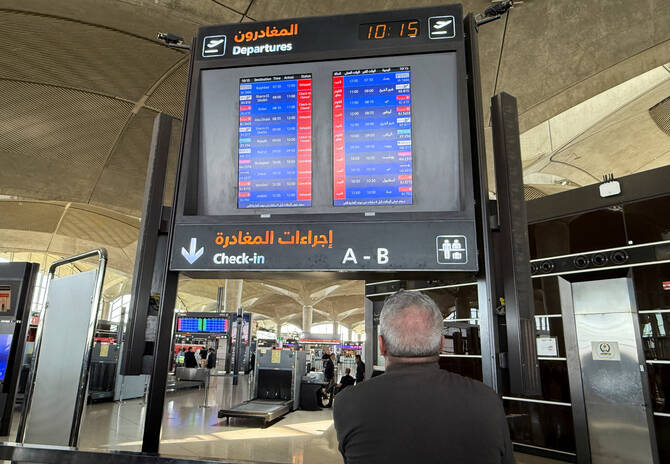
DUBAI: Jordan has reopened its airspace to civilian aircraft on Saturday, signaling belief there was no longer an immediate danger of further attacks after crossfire between Israel and Iran disrupted East-West travel through the Middle East.
But the country “is continuing to assess risks to civil aviation and monitor developments after Jordan’s airspace was reopened this morning,” a statement from the civil aviation authority said, and reported by state-run Petra news.
The Kingdom on Friday closed its airspace to all flights due to the barrage of missiles and rockets from Iran.
The statement also said airlines would be provided with the “necessary” information to notify passengers and stakeholders of the latest data on air traffic.
Lebanon’s government also temporarily reopened its airspace on Saturday.
Lebanon reopened its airspace on Saturday at 10:00 a.m. (0700 GMT).
The airspace will be shut again starting from 10:30 p.m. (1930 GMT) until 6:00 a.m. (0300 GMT) on Sunday, NNA reported, citing the Lebanese civil aviation authority.


![]()

Jordan reopens airspace to civilian aircraft
Short Url
https://arab.news/rq3fv
Jordan reopens airspace to civilian aircraft
- Jordan said airlines would be provided with the “necessary” information to notify passengers and stakeholders of the latest data on air traffic


Latest updates


© 2026 SAUDI RESEARCH & PUBLISHING COMPANY, All Rights Reserved And subject to Terms of Use Agreement.